# Zero-Shot Voice Cloning: The Future of AI Voiceovers for Video Producers

Published: June 30, 2025 · Author: Govind Kumar

Zero-shot voice cloning makes an AI speak in a new voice from a short audio sample, without training a new model for that speaker. The model has already learned from many voices. At use time, it listens to a reference clip, often just seconds long, and copies that voice for any text you type.

*Last updated: October 6, 2026. Research papers and tool docs below were checked on that date.*

This guide is for video producers and creators who want to understand the technology behind instant voice clones before they use one. It explains how zero-shot cloning works, how it differs from few-shot and fine-tuned cloning, which tools offer it, and where it still falls short.

<div style="margin:28px 0;padding:20px 22px;background:#ffffff;border:1px solid #dbeafe;border-left:4px solid #1d4ed8;border-radius:12px"><div style="font:700 18px/1.3 var(--kv-font-heading);color:#172554;margin-bottom:12px">Key Takeaways</div><ul style="list-style:none;margin:0;padding:0"><li style="margin:0 0 10px;padding-left:28px;position:relative;font:400 16px/1.6 var(--kv-font-body);color:#1f2937"><span aria-hidden="true" style="position:absolute;left:0;top:2px;width:20px;height:20px;border-radius:50%;background:#1d4ed8;color:#ffffff;font:700 12px/20px var(--kv-font-body);text-align:center">&#10003;</span><strong>Zero-shot means no speaker-specific training.</strong> The model copies a voice it never saw in training, using only a short reference clip.</li><li style="margin:0 0 10px;padding-left:28px;position:relative;font:400 16px/1.6 var(--kv-font-body);color:#1f2937"><span aria-hidden="true" style="position:absolute;left:0;top:2px;width:20px;height:20px;border-radius:50%;background:#1d4ed8;color:#ffffff;font:700 12px/20px var(--kv-font-body);text-align:center">&#10003;</span><strong>Samples can be very short.</strong> Microsoft's VALL-E research used a 3-second recording, and Coqui's XTTS-v2 model card asks for a 6-second clip.</li><li style="margin:0 0 10px;padding-left:28px;position:relative;font:400 16px/1.6 var(--kv-font-body);color:#1f2937"><span aria-hidden="true" style="position:absolute;left:0;top:2px;width:20px;height:20px;border-radius:50%;background:#1d4ed8;color:#ffffff;font:700 12px/20px var(--kv-font-body);text-align:center">&#10003;</span><strong>Short samples have limits.</strong> A clone from seconds of audio usually captures the timbre well, but accent, emotion range and consistency are weaker.</li><li style="margin:0 0 10px;padding-left:28px;position:relative;font:400 16px/1.6 var(--kv-font-body);color:#1f2937"><span aria-hidden="true" style="position:absolute;left:0;top:2px;width:20px;height:20px;border-radius:50%;background:#1d4ed8;color:#ffffff;font:700 12px/20px var(--kv-font-body);text-align:center">&#10003;</span><strong>Few-shot and fine-tuned clones need more audio but sound closer.</strong> ElevenLabs' Professional Voice Cloning, for example, uses 30 to 180 minutes.</li><li style="margin:0 0 10px;padding-left:28px;position:relative;font:400 16px/1.6 var(--kv-font-body);color:#1f2937"><span aria-hidden="true" style="position:absolute;left:0;top:2px;width:20px;height:20px;border-radius:50%;background:#1d4ed8;color:#ffffff;font:700 12px/20px var(--kv-font-body);text-align:center">&#10003;</span><strong>Consent comes first.</strong> Only clone your own voice or a voice you have clear permission to use.</li></ul></div>

**On this page:** [What it is](#what-is-zero-shot-cloning) · [How it works](#how-zero-shot-cloning-works) · [Zero-shot vs few-shot](#zero-shot-vs-few-shot-vs-fine-tuned) · [Tools](#tools-for-zero-shot-cloning) · [Voice agents](#zero-shot-for-voice-agents) · [Better clones](#better-clones-from-short-samples) · [Limits](#limits-and-risks) · [For video](#zero-shot-for-video-voiceovers) · [FAQ](#frequently-asked-questions)

## What is zero-shot cloning?

Zero-shot voice cloning is voice cloning with **zero training examples** of the target speaker. "Shot" is machine-learning slang for a training example. Zero-shot means the model never trains on the new voice. It only hears a short sample at the moment you generate speech.

That's different from older voice cloning. Older systems needed hours of studio recordings of one person, then trained a model just for that voice. Zero-shot systems flip this. They train once on thousands of speakers, so they learn what makes voices different. Then they apply that knowledge to any new voice on the spot.

You'll also see the term "zero-shot TTS" (text-to-speech). It means the same thing: a TTS model that can speak in an unseen voice from a short prompt.

## How zero-shot cloning works

Most zero-shot systems follow 4 steps. The details differ by model, but the idea is the same.

1. **Listen to the reference clip.** You give the system a few seconds of clean speech from the target voice.
2. **Turn the voice into numbers.** A speaker encoder squeezes the clip into a compact "voice fingerprint", called a speaker embedding. It captures timbre, pitch range and some speaking style.
3. **Generate speech for new text.** The TTS model reads your script and uses the voice fingerprint to shape how it should sound.
4. **Turn features into audio.** A vocoder converts the model's output into a waveform you can play and download.

If these steps are new to you, start with our plain-English guide on [how text-to-speech AI works](https://kveeky.com/blog/how-does-text-to-speech-work).

<figure>
<svg viewBox="0 0 1200 680" xmlns="http://www.w3.org/2000/svg" role="img" aria-labelledby="zero-shot-voice-cloning-ai-voiceovers-fig-t zero-shot-voice-cloning-ai-voiceovers-fig-d" style="width:100%;height:auto;display:block">
<title id="zero-shot-voice-cloning-ai-voiceovers-fig-t">From short clip to voice</title>
<desc id="zero-shot-voice-cloning-ai-voiceovers-fig-d">Four steps in order. 1: a reference clip gives seconds of clean speech. 2: a speaker encoder makes a voice fingerprint. 3: the TTS model combines your script with the fingerprint. 4: a vocoder turns the output into audio. A side panel explains that before use, the model was trained once on thousands of speakers to learn how voices differ, and that when you clone there is no training on the new voice, which is what zero-shot means.</desc>
<rect x="0" y="0" width="1200" height="680" rx="16" fill="#ffffff"/>
<g font-family="var(--kv-font-body)">
<text x="600" y="66" text-anchor="middle" font-family="var(--kv-font-heading)" font-weight="700" font-size="36" fill="#111827">From short clip to voice</text>
<text x="600" y="106" text-anchor="middle" font-size="26" fill="#6b7280">4 steps most systems follow</text>
<rect x="40" y="140" width="730" height="100" rx="14" fill="#eff6ff" stroke="#dbeafe" stroke-width="3"/>
<circle cx="96" cy="190" r="28" fill="#1d4ed8"/>
<text x="96" y="200" text-anchor="middle" font-weight="700" font-size="28" fill="#ffffff">1</text>
<text x="144" y="184" font-weight="700" font-size="30" fill="#1e40af">Reference clip</text>
<text x="144" y="222" font-size="26" fill="#374151">Seconds of clean speech</text>
<rect x="40" y="270" width="730" height="100" rx="14" fill="#eff6ff" stroke="#dbeafe" stroke-width="3"/>
<circle cx="96" cy="320" r="28" fill="#1d4ed8"/>
<text x="96" y="330" text-anchor="middle" font-weight="700" font-size="28" fill="#ffffff">2</text>
<text x="144" y="314" font-weight="700" font-size="30" fill="#1e40af">Speaker encoder</text>
<text x="144" y="352" font-size="26" fill="#374151">Makes a voice fingerprint</text>
<rect x="40" y="400" width="730" height="100" rx="14" fill="#eff6ff" stroke="#dbeafe" stroke-width="3"/>
<circle cx="96" cy="450" r="28" fill="#1d4ed8"/>
<text x="96" y="460" text-anchor="middle" font-weight="700" font-size="28" fill="#ffffff">3</text>
<text x="144" y="444" font-weight="700" font-size="30" fill="#1e40af">TTS model</text>
<text x="144" y="482" font-size="26" fill="#374151">Your script + the fingerprint</text>
<rect x="40" y="530" width="730" height="100" rx="14" fill="#eff6ff" stroke="#dbeafe" stroke-width="3"/>
<circle cx="96" cy="580" r="28" fill="#1d4ed8"/>
<text x="96" y="590" text-anchor="middle" font-weight="700" font-size="28" fill="#ffffff">4</text>
<text x="144" y="574" font-weight="700" font-size="30" fill="#1e40af">Vocoder</text>
<text x="144" y="612" font-size="26" fill="#374151">Turns output into audio</text>
<line x1="405" y1="242" x2="405" y2="254" stroke="#1d4ed8" stroke-width="5"/>
<polygon points="405,268 395,252 415,252" fill="#1d4ed8"/>
<line x1="405" y1="372" x2="405" y2="384" stroke="#1d4ed8" stroke-width="5"/>
<polygon points="405,398 395,382 415,382" fill="#1d4ed8"/>
<line x1="405" y1="502" x2="405" y2="514" stroke="#1d4ed8" stroke-width="5"/>
<polygon points="405,528 395,512 415,512" fill="#1d4ed8"/>
<rect x="810" y="140" width="350" height="240" rx="14" fill="#1e40af"/>
<text x="985" y="192" text-anchor="middle" font-weight="700" font-size="28" fill="#ffffff">Before you use it</text>
<text x="985" y="238" text-anchor="middle" font-size="26" fill="#ffffff">Trained once on</text>
<text x="985" y="273" text-anchor="middle" font-size="26" fill="#ffffff">thousands of speakers</text>
<text x="985" y="318" text-anchor="middle" font-size="26" fill="#dbeafe">to learn how</text>
<text x="985" y="353" text-anchor="middle" font-size="26" fill="#dbeafe">voices differ</text>
<rect x="810" y="410" width="350" height="220" rx="14" fill="#eff6ff" stroke="#dbeafe" stroke-width="3"/>
<text x="985" y="462" text-anchor="middle" font-weight="700" font-size="28" fill="#1e40af">When you clone</text>
<text x="985" y="508" text-anchor="middle" font-size="26" fill="#374151">No training on</text>
<text x="985" y="543" text-anchor="middle" font-size="26" fill="#374151">the new voice</text>
<text x="985" y="595" text-anchor="middle" font-weight="700" font-size="26" fill="#1d4ed8">That is zero-shot</text>
</g>
</svg>
<figcaption>The model learns from many voices once, then copies a new voice from a short clip at the moment you generate speech, with no extra training.</figcaption>
</figure>

Some newer models work like language models for audio. Microsoft's VALL-E, for example, treats speech as a sequence of audio "tokens". It continues the voice from a 3-second enrolled recording used as a prompt ([arXiv 2301.02111](https://arxiv.org/abs/2301.02111), retrieved 2026-10-06).

Research keeps pushing quality up. One 2024 paper added adversarial training, where a second network judges how real the speech sounds, to better capture natural variation and speaker traits ([arXiv 2408.15916](https://arxiv.org/abs/2408.15916), retrieved 2026-10-06). For the bigger picture of these model types, see our explainer on [neural network architectures for AI voice generation](https://kveeky.com/blog/neural-network-voice-synthesis).

## Zero-shot vs few-shot vs fine-tuned

The main trade-off is audio in versus likeness out. More audio of the target speaker usually means a closer, steadier clone.

<table>
<thead>
<tr><th>Method</th><th>Audio needed</th><th>Trains a new model?</th><th>Best for</th></tr>
</thead>
<tbody>
<tr><td>Zero-shot</td><td>Seconds (VALL-E research: 3 seconds; XTTS-v2: 6 seconds)</td><td>No</td><td>Quick tests, drafts, many voices at once</td></tr>
<tr><td>Few-shot / instant</td><td>About 1 to 2 minutes (ElevenLabs Instant Voice Cloning guidance)</td><td>No, the sample is processed directly</td><td>Everyday voiceovers in your own voice</td></tr>
<tr><td>Fine-tuned / professional</td><td>30 to 180 minutes (ElevenLabs Professional Voice Cloning)</td><td>Yes, hours of processing</td><td>Brand voices, long series, audiobooks</td></tr>
</tbody>
</table>

Sources: [VALL-E paper](https://arxiv.org/abs/2301.02111), [XTTS-v2 model card](https://huggingface.co/coqui/XTTS-v2) and [ElevenLabs Instant Voice Cloning docs](https://elevenlabs.io/docs/eleven-creative/voices/voice-cloning/instant-voice-cloning), all retrieved 2026-10-06.

The lines between these groups are blurry. The YourTTS research model, for example, works zero-shot. It can also be fine-tuned with less than 1 minute of speech for voices that differ a lot from its training data ([arXiv 2112.02418](https://arxiv.org/abs/2112.02418), retrieved 2026-10-06).

## Tools for zero-shot cloning

Here are tools and models you can check, with what their own pages say. "Commercial use" is what the vendor's page states, not legal advice.

<table>
<thead>
<tr><th>Tool or model</th><th>Type</th><th>Sample guidance</th><th>Commercial use</th></tr>
</thead>
<tbody>
<tr><td><strong>Kveeky</strong></td><td>AI voice generator (web app)</td><td>Voice clones on paid plans (5 on Basic); not on Free</td><td>Every paid plan includes commercial usage rights</td></tr>
<tr><td><strong>ElevenLabs Instant Voice Cloning</strong></td><td>Web app and API</td><td>About 1 to 2 minutes of clean audio; no model training</td><td>Free plan has no commercial license; IVC starts on the paid Starter plan</td></tr>
<tr><td><strong>XTTS-v2 (Coqui)</strong></td><td>Open model you run yourself</td><td>6-second clip; 17 languages</td><td>Coqui Public Model License, non-commercial only</td></tr>
<tr><td><strong>YourTTS</strong></td><td>Research model</td><td>Zero-shot, or fine-tune with under 1 minute</td><td>Check the model's own license</td></tr>
<tr><td><strong>VALL-E</strong></td><td>Microsoft research paper</td><td>3-second prompt in the paper</td><td>Research, not a product</td></tr>
</tbody>
</table>

[Kveeky](https://kveeky.com/) includes voice cloning on paid plans (the free plan does not include it): 5 clones on Basic, 10 on Pro and Premium, and 20 on Business (Kveeky pricing page, retrieved 2026-10-06). We don't publish which model type sits behind it, so judge it by listening to a test clone.

If you want to run a model yourself, our guide to the [Coqui TTS open-source toolkit](https://kveeky.com/blog/open-source-toolkit-for-text-to-speech-synthesis) covers setup and licenses.

## Zero-shot for voice agents

Yes, but with care. Zero-shot models let a voice agent or phone assistant speak in a custom voice without a long recording session. That makes them handy for prototypes and for brands that want a distinct voice fast.

Voice agents add 3 extra demands:

- **Speed.** The reply must start quickly, or the conversation feels broken. Check that the model can stream audio fast enough on your setup.
- **Consistency.** A zero-shot voice can drift slightly between sentences. Over a long call, users notice. Test the same voice across many replies.
- **Clarity on phone lines.** Phone audio is narrow and noisy. A voice that sounds fine on headphones can be hard to follow on a call.

For a voice users hear daily, a few-shot or fine-tuned clone usually holds up better. For design tips on the conversation itself, see our guide to [voice user interface design](https://kveeky.com/blog/vui-design-ai-voiceovers).

## Better clones from short samples

With zero-shot and few-shot cloning, the sample is everything. The model copies what it hears, including noise and room echo.

1. **Record in a quiet, soft room.** Closets with clothes work well. Turn off fans and air conditioning.
2. **Use one speaker only.** No music, no second voice, no laughter in the background.
3. **Speak the way you want the clone to sound.** If you want a calm narrator, record calm narration.
4. **Keep a steady distance from the mic.** Big volume jumps confuse the model.
5. **Follow the tool's length guidance.** More is not always better. ElevenLabs, for example, warns that going over 3 minutes can sometimes hurt an instant clone.
6. **Test with a hard script.** Include names, numbers and a question. Listen for wrong stress or a flat tone.

<div style="margin:28px 0;padding:20px 22px;background:#eff6ff;border:1px solid #dbeafe;border-radius:12px"><div style="font:700 17px/1.3 var(--kv-font-heading);color:#172554;margin-bottom:6px">Try it: a hard test script</div><p style="margin:0 0 12px;font:400 16px/1.6 var(--kv-font-body);color:#1f2937">Step 6 asks for names, numbers and a question. Read this aloud against your clone, or paste it into your tool, and listen for wrong stress, mangled numbers or a flat question. Swap in your own names.</p><div id="zs-test" style="padding:14px 16px;background:#ffffff;border:1px solid #dbeafe;border-radius:10px;font:400 16px/1.6 var(--kv-font-body);color:#1f2937">Hi, this is Priya from Northfield Studio. Our next webinar is on March 14 at 3:30 p.m. Can you join us? Use the code 4-7-2-9 to register, and ask for Dr. Okonkwo if you get stuck.</div><div style="display:flex;flex-wrap:wrap;align-items:center;gap:12px;margin-top:12px"><button type="button" id="zs-test-copy" aria-live="polite" style="min-height:44px;padding:0 18px;border:0;border-radius:10px;background:#1d4ed8;color:#ffffff;font:600 16px/1 var(--kv-font-body);cursor:pointer" onclick="var t=document.getElementById('zs-test').innerText,b=this;function ok(){b.textContent='Copied';setTimeout(function(){b.textContent='Copy script'},1800)}if(navigator.clipboard&&navigator.clipboard.writeText){navigator.clipboard.writeText(t).then(ok,function(){})}else{var r=document.createRange();r.selectNodeContents(document.getElementById('zs-test'));var s=window.getSelection();s.removeAllRanges();s.addRange(r)}">Copy script</button></div></div>

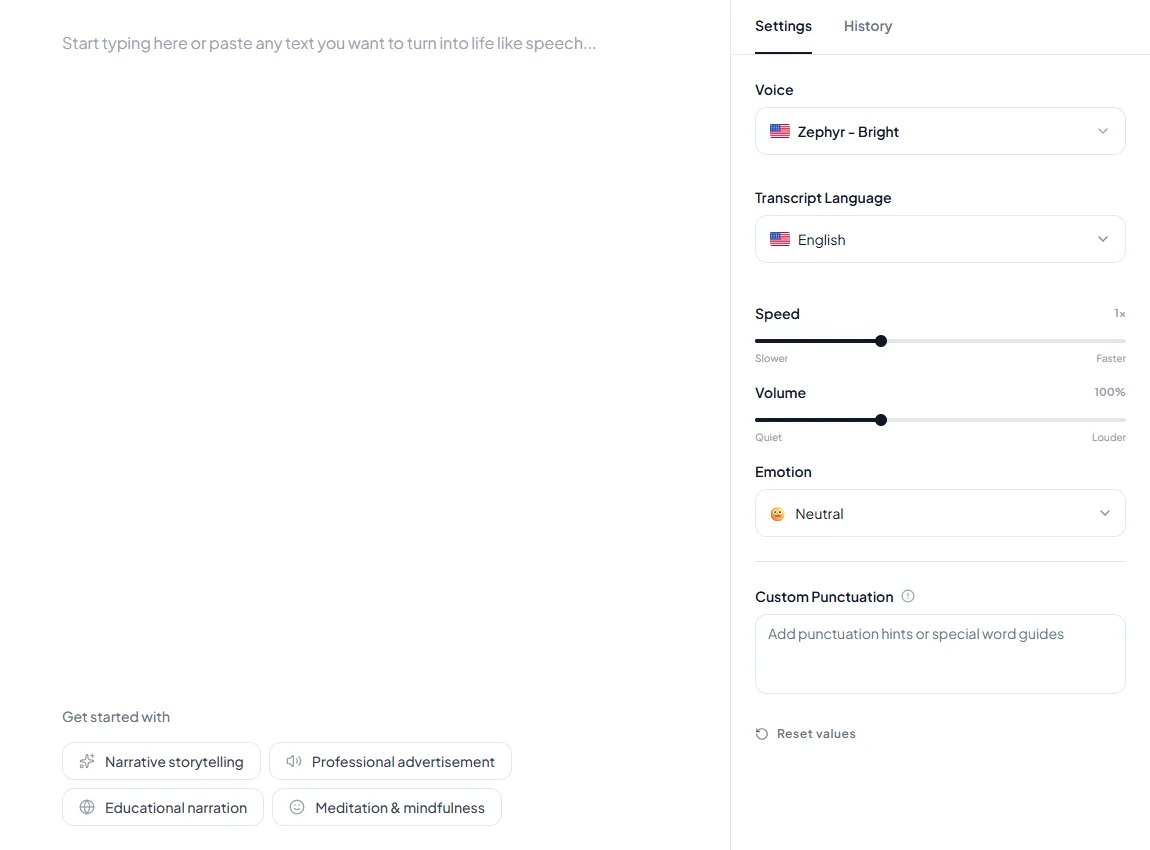
If the clone sounds stiff, delivery controls help. In Kveeky you can adjust speed and volume, choose one of 6 emotions (Neutral, Happy, Love, Angry, Calm, Sad) and add custom punctuation hints.

## Limits and risks

Zero-shot cloning is impressive, but a few seconds of audio can't hold everything about a voice.

- **Accent and rhythm.** The clone may copy the timbre but fall back on the model's default accent or rhythm.
- **Emotion range.** A calm 6-second sample tells the model little about how the person sounds excited or sad.
- **Noise copying.** Echo, hiss or music in the sample can leak into every line.
- **Misuse.** Short samples make it easy to clone someone without asking. ElevenLabs, for example, asks you to confirm you have the right and consent to clone a voice before saving it.

<div style="margin:28px 0;padding:18px 20px;border:1px solid #dbeafe;border-radius:12px;background:#ffffff"><div style="font:700 17px/1.3 var(--kv-font-heading);color:#172554;margin-bottom:6px">Before you clone: 5 quick checks</div><p style="margin:0 0 10px;font:400 15px/1.5 var(--kv-font-body);color:#4b5563">Tick each one as you go. Takes about a minute.</p><label style="display:flex;align-items:flex-start;gap:12px;min-height:44px;padding:8px 0;font:400 16px/1.5 var(--kv-font-body);color:#1f2937;cursor:pointer"><input type="checkbox" style="width:22px;height:22px;margin-top:2px;flex:none;accent-color:#1d4ed8"><span>The voice is mine, or I have written permission from its owner.</span></label><label style="display:flex;align-items:flex-start;gap:12px;min-height:44px;padding:8px 0;font:400 16px/1.5 var(--kv-font-body);color:#1f2937;cursor:pointer"><input type="checkbox" style="width:22px;height:22px;margin-top:2px;flex:none;accent-color:#1d4ed8"><span>The sample has one speaker only, with no music or background laughter.</span></label><label style="display:flex;align-items:flex-start;gap:12px;min-height:44px;padding:8px 0;font:400 16px/1.5 var(--kv-font-body);color:#1f2937;cursor:pointer"><input type="checkbox" style="width:22px;height:22px;margin-top:2px;flex:none;accent-color:#1d4ed8"><span>I recorded in a quiet, soft room at a steady distance from the mic.</span></label><label style="display:flex;align-items:flex-start;gap:12px;min-height:44px;padding:8px 0;font:400 16px/1.5 var(--kv-font-body);color:#1f2937;cursor:pointer"><input type="checkbox" style="width:22px;height:22px;margin-top:2px;flex:none;accent-color:#1d4ed8"><span>I know what the tool's length guidance is, and my sample follows it.</span></label><label style="display:flex;align-items:flex-start;gap:12px;min-height:44px;padding:8px 0;font:400 16px/1.5 var(--kv-font-body);color:#1f2937;cursor:pointer"><input type="checkbox" style="width:22px;height:22px;margin-top:2px;flex:none;accent-color:#1d4ed8"><span>I will tell my audience when the voice is synthetic.</span></label></div>

Always get written permission before cloning anyone else's voice, and tell your audience when a voice is synthetic. Our guide on [whether voice cloning is legal](https://kveeky.com/blog/is-voice-cloning-legal-ai-rights-guide) covers consent and rights in more detail.

## Zero-shot for video voiceovers

For video producers, the main win is a consistent voice across many videos without booking a studio each time. Fix a typo, change a line or add a new language, and the voice stays the same.

A simple workflow:

1. **Clone the voice once** from a clean sample, with the speaker's consent.
2. **Write the script for the ear.** Short sentences, clear pauses, numbers written how they should be said.
3. **Generate a short test** and compare it with the real voice.
4. **Adjust delivery** with speed and emotion controls.
5. **Download the audio** and drop it into your editor.

<figure style="margin:28px 0;padding:0"><img src="/blog/product/app-text-to-speech.webp" alt="The Kveeky text to speech editor with a script box, a Settings tab with Voice, Transcript Language, Speed, Volume and Emotion, and a Generate speech button." width="1150" height="850" loading="lazy" decoding="async" style="display:block;width:100%;height:auto;border-radius:14px;border:1px solid #dbeafe"><figcaption style="margin-top:12px;font:400 15px/1.5 var(--kv-font-body);color:#4b5563">The Kveeky text to speech editor. Paste your script, open Settings to set Speed, Volume and one of 6 Emotions, then press Generate speech and compare the result with your test line.</figcaption></figure>

Want the clone to carry a specific delivery, like a calm documentary read or an upbeat ad? [Voice style transfer](https://kveeky.com/blog/ai-voice-style-transfer-for-video-producers) is the related technique to read about next.

## Frequently asked questions

### What is zero-shot cloning?

Zero-shot cloning is copying a voice from a short sample without training the model on that speaker. The model learned from many other voices first, so it can apply that knowledge to a new voice right away.

### How much audio does zero-shot voice cloning need?

It depends on the model. Microsoft's VALL-E research used a 3-second recording, and Coqui's XTTS-v2 model card asks for a 6-second clip. Instant cloning products often recommend 1 to 2 minutes for better results.

### What is the difference between zero-shot and few-shot voice cloning?

Zero-shot cloning uses only a short reference clip and no extra training. Few-shot cloning uses a bit more audio, from under a minute to a few minutes, and sometimes a short fine-tuning step, which usually gives a closer match.

### Do zero-shot voice models work for voice agents?

Yes, for prototypes and custom voices. For live calls, test response speed, voice consistency across many replies and clarity over phone audio, since these matter more in conversation than in a recorded voiceover.

### Is zero-shot voice cloning legal?

It depends on whose voice it is, how you use it and where you live. Cloning someone else's voice without consent can break platform rules and likeness laws. Get written permission and check the tool's terms before you publish.

## How we checked this guide

This guide is written by Govind Kumar for the Kveeky team. **Disclosure: Kveeky makes an AI voice generator.** No Kveeky usage data is used in this guide.

- VALL-E (3-second enrolled recording): [arXiv 2301.02111](https://arxiv.org/abs/2301.02111), retrieved 2026-10-06.
- Multi-modal adversarial training for zero-shot cloning: [arXiv 2408.15916](https://arxiv.org/abs/2408.15916), retrieved 2026-10-06.
- YourTTS (zero-shot, fine-tuning with under 1 minute): [arXiv 2112.02418](https://arxiv.org/abs/2112.02418), retrieved 2026-10-06.
- XTTS-v2 (6-second clip, 17 languages, Coqui Public Model License): [Hugging Face model card](https://huggingface.co/coqui/XTTS-v2), retrieved 2026-10-06.
- ElevenLabs Instant and Professional Voice Cloning audio guidance and consent step: [ElevenLabs docs](https://elevenlabs.io/docs/eleven-creative/voices/voice-cloning/instant-voice-cloning), and plan details from [ElevenLabs pricing](https://elevenlabs.io/pricing), retrieved 2026-10-06.
- Kveeky clone counts and commercial rights: [kveeky.com/pricing](https://kveeky.com/pricing/), retrieved 2026-10-06.

Ready to try it? Record 1 clean minute of your own voice, make a clone, and generate a 30-second test script. Our main guide on [voice cloning and duplicating your voice](https://kveeky.com/blog/voice-cloning-duplicate-your-voice-in-minutes) walks through the full process.

<script type="application/ld+json">
{"@context":"https://schema.org","@type":"FAQPage","mainEntity":[
{"@type":"Question","name":"What is zero-shot cloning?","acceptedAnswer":{"@type":"Answer","text":"Zero-shot cloning is copying a voice from a short sample without training the model on that speaker. The model learned from many other voices first, so it can apply that knowledge to a new voice right away."}},
{"@type":"Question","name":"How much audio does zero-shot voice cloning need?","acceptedAnswer":{"@type":"Answer","text":"It depends on the model. Microsoft's VALL-E research used a 3-second recording, and Coqui's XTTS-v2 model card asks for a 6-second clip. Instant cloning products often recommend 1 to 2 minutes for better results."}},
{"@type":"Question","name":"What is the difference between zero-shot and few-shot voice cloning?","acceptedAnswer":{"@type":"Answer","text":"Zero-shot cloning uses only a short reference clip and no extra training. Few-shot cloning uses a bit more audio, from under a minute to a few minutes, and sometimes a short fine-tuning step, which usually gives a closer match."}},
{"@type":"Question","name":"Do zero-shot voice models work for voice agents?","acceptedAnswer":{"@type":"Answer","text":"Yes, for prototypes and custom voices. For live calls, test response speed, voice consistency across many replies and clarity over phone audio, since these matter more in conversation than in a recorded voiceover."}},
{"@type":"Question","name":"Is zero-shot voice cloning legal?","acceptedAnswer":{"@type":"Answer","text":"It depends on whose voice it is, how you use it and where you live. Cloning someone else's voice without consent can break platform rules and likeness laws. Get written permission and check the tool's terms before you publish."}}
]}
</script>
