
Google Debuts Neural Expressive Redesign for Gemini AI to Advance Synthetic Voice Quality Standards

TL;DR
- Google introduces 'Neural Expressive' UI to replace text-heavy chat logs.
- Gemini 3.5 Flash delivers faster performance with 33-50% cost reductions.
- Gemini Omni enables creation of editable, high-quality multimodal assets.
- Gemini Spark launches as an autonomous agent for background workflow management.
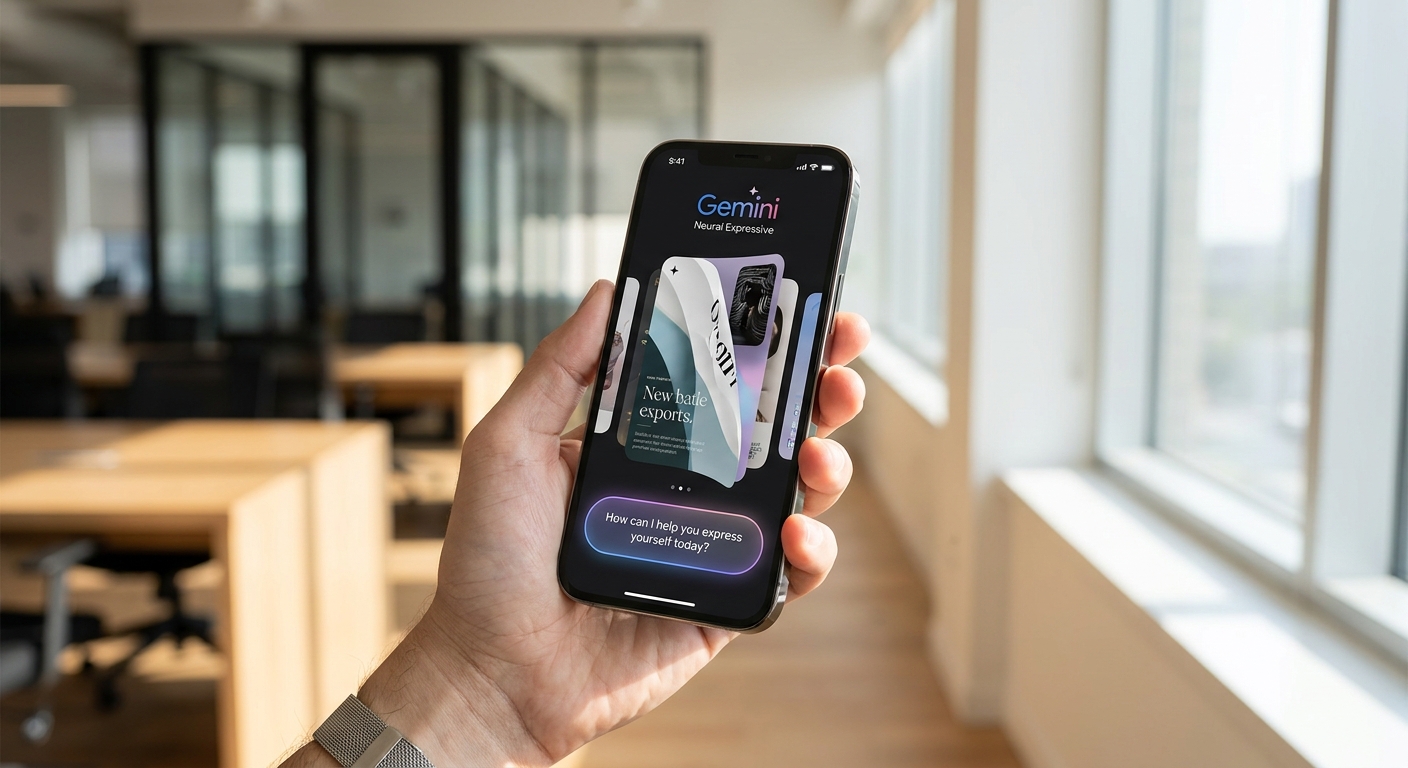
Google just dropped a massive overhaul for its Gemini ecosystem, and frankly, it’s about time. Announced at Google I/O 2026, the update moves the Gemini app away from the stale, text-heavy chat logs we’ve all grown tired of. Instead, they’re rolling out a "Neural Expressive" design language—a dynamic, visually adaptive framework that actually feels like it belongs in the current decade. With 900 million monthly active users now relying on the platform, Google had to do something to stop the interface from feeling like a glorified terminal window.
The "Neural Expressive" philosophy is simple: stop burying the user in walls of text. By swapping out rigid, linear chat bubbles for fluid animations, a slick pill-shaped prompt box, and layouts that feel more like a high-end magazine than a spreadsheet, the interface now breathes. It adjusts its presentation based on what the AI is actually spitting out. If you’re generating code, you get a workspace. If you’re pulling media, you get a visual gallery. It’s a subtle shift, but it changes the entire dynamic of the interaction.
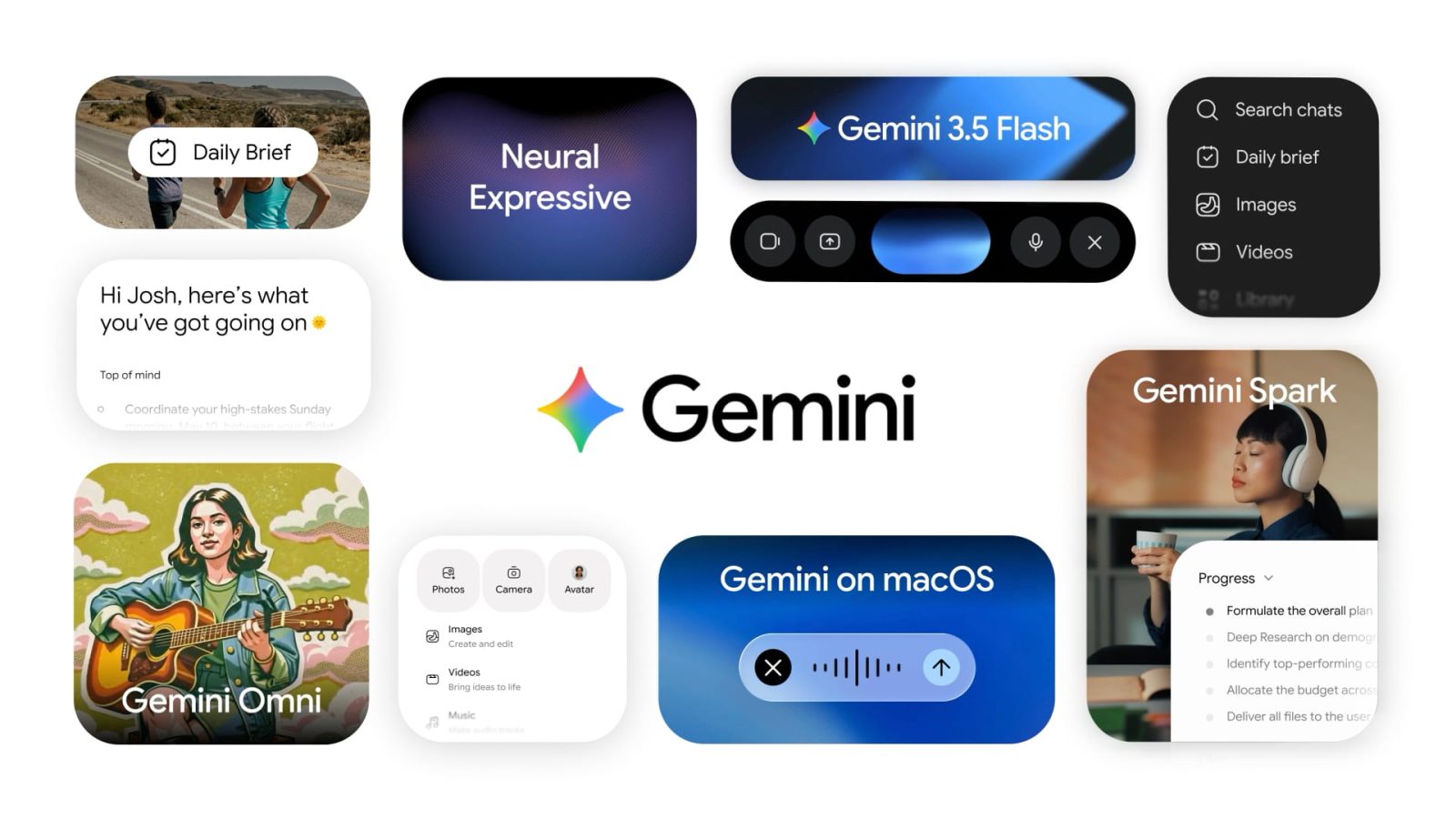
But look, a pretty face only gets you so far. Under the hood, Google has been busy re-engineering the engine. Enter Gemini 3.5 Flash. This model is built for pure, unadulterated speed. According to the technical specs from the event, it’s not just faster than the 3.1 Pro model—it’s outperforming it on coding and multimodal benchmarks while cutting costs by 33% to 50%. In a world where AI compute is getting expensive, that kind of efficiency isn't just a win for Google; it’s a necessity.
Then there’s Gemini Omni. This is where things get genuinely interesting. It’s a multimodal powerhouse capable of synthesizing video, audio, and images from a messy mix of input streams. The real kicker? It produces grounded, text-editable content. You aren’t just getting a static JPEG or a flat video file; you’re getting an asset you can actually tweak. It’s a massive step up from the "take it or leave it" output we’ve been dealing with for the last couple of years.
And for those who want their AI to actually do things rather than just talk, Google launched Gemini Spark. Think of this as a 24/7 agentic service that lives on dedicated Google Cloud virtual machines. It’s not waiting for you to hit "Enter" on a prompt. It’s designed to run in the background, managing workflows and executing commands autonomously. It’s moving the goalposts from "AI as a chatbot" to "AI as a functional utility."
Here is how the new tech stacks up:
| Feature | Primary Function | Key Benefit |
|---|---|---|
| Gemini 3.5 Flash | High-speed processing | 4x faster; 33-50% lower cost |
| Gemini Omni | Multimodal generation | Grounded, text-editable media |
| Gemini Spark | 24/7 agentic tasks | Autonomous operation via Cloud VMs |
| Neural Expressive | UI/UX redesign | Adaptive, graphic-rich layout |
Integrating these pieces into the Gemini app is clearly a strategic play to standardize synthetic media quality across the board. The "Neural Expressive" design isn’t just a skin; it’s the connective tissue for features like Gemini Live. By using fluid animations and inline interfaces, they’re trying to create a more natural interaction loop. It’s meant to feel like a conversation, not a transaction.
The shift toward this design language is likely permanent. As the platform scales toward its next billion users, the "wall of text" just won't cut it anymore. We’re moving toward a future where generative AI acts as a persistent assistant. By offloading the heavy lifting to the Gemini Spark architecture, Google is positioning Gemini as a background utility—something that works for you while you’re doing other things. The efficiency of the 3.5 Flash model is the secret sauce here; it ensures that even with all this multimodal heavy lifting, the system doesn't lag or choke.
Ultimately, the interplay between the UI and the underlying model is where the magic happens. The "Neural Expressive" design is built specifically to handle the output of Gemini Omni. Whether it’s high-fidelity audio or complex video generation, the interface is now capable of presenting that data in a way that’s immediately actionable. You don’t have to hunt for the download button or figure out how to edit the output; the interface presents it to you ready for the next step.
As detailed by 9to5Google, this deployment proves that Google isn't just throwing spaghetti at the wall. They are refining the infrastructure to support that massive 900-million-user base. By focusing on cost-efficient models like 3.5 Flash, they’re playing the long game—sustainable, high-volume utility. We’ve moved past the novelty phase of generative AI. Now, it’s about making these tools functional, persistent, and actually useful for the daily grind. The combination of a smarter interface and true agentic capabilities is a massive evolution, and frankly, it makes the old way of using AI look like a relic of the past.