Exploring the Capabilities of AI in Text-to-Speech Conversion

TL;DR
- ✓ Neural TTS replaces robotic audio with fluid and human-like wave synthesis.
- ✓ SSML allows developers to control rhythm and breathing for natural sounding speech.
- ✓ Emotional prosody enables AI to convey specific moods like empathy or professional grit.
- ✓ Cross-lingual training ensures consistent voice quality during seamless language switching.
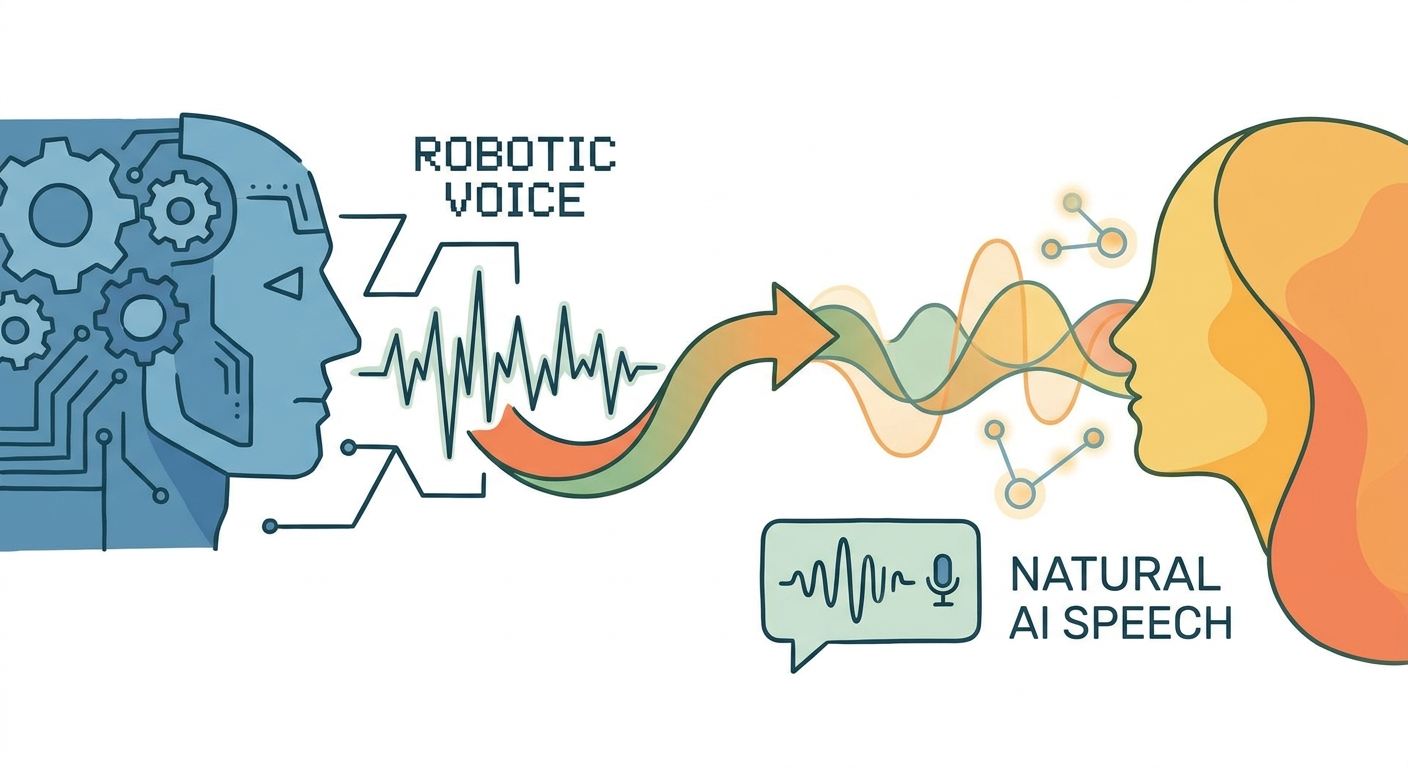
Remember the old GPS voices? That flat, clipped, soul-crushing cadence that turned every turn-by-turn instruction into a hostage situation? Thankfully, that era is dead and buried.
In 2026, text-to-speech (TTS) has evolved. It’s no longer just a digital reader; it’s the heartbeat of modern, agentic, and deeply responsive tech. We’ve moved past the days of stitching together robotic phonemes. Today, synthetic voices carry the nuance of a theater actor. They can whisper a secret, hold back a laugh, or deliver a high-stakes customer support alert with exactly the right amount of urgency. For enterprises, this isn't just about cutting studio costs. It’s about building a human-centric interface that lives everywhere, from our AI Content Solutions at Kveeky to the real-time IVR systems that actually help people instead of frustrating them.
How Modern Neural TTS Actually Works
If you want to know why AI voice suddenly sounds like a real person, you have to look under the hood. Old-school TTS relied on "parametric models"—essentially chopping up recordings of humans and gluing them back together. It sounded like a digital Frankenstein.
Modern Neural TTS (NTTS) is different. It doesn't use audio puzzles. It treats speech as a fluid, continuous waveform.
The magic starts with normalization and SSML (Speech Synthesis Markup Language). Think of SSML as the director’s notes—it tells the AI when to pause, where to lean into a word, and how to breathe. The heart of this beast is the neural model, which predicts duration and prosody—the melody and rhythm of human speech. Finally, the vocoder steps in as the gatekeeper, turning that data into the crisp, high-fidelity audio you hear in your headphones.
The Three Pillars of 2026 Voice Tech
1. Emotional Prosody: Beyond the Monotone
The biggest shift in voice tech is the move from flat delivery to context-aware emotional mapping. If you're building a wellness app, a robotic voice is a liability. By understanding emotional prosody in AI, developers can inject specific "vibes"—empathy, joy, or professional grit—directly into the synthesis. When the voice mirrors the sentiment of the text, trust follows.
2. Fluidity Across Languages
In a global market, your voice agent can’t choke on a foreign word. Modern models are trained on massive, cross-lingual datasets that make code-switching seamless. An agent can pivot from English to Spanish mid-sentence without changing its vocal texture or phonemic consistency. For enterprise customer service, this is non-negotiable. It keeps the brand experience uniform, no matter who is on the other end of the line.
3. Hyper-Personalized Voice Cloning
Voice cloning is no longer a party trick; it’s a strategic asset. By creating a "synthetic identity," brands maintain a consistent voice across every touchpoint—from TikTok ads to internal training modules. The gold standard here is capturing the micro-expressions: the breathiness, the gravel in a low register, or the slight lift at the end of a sentence. When done with consent, you aren't just using a voice; you're building a proprietary asset.
The Architectural Debate: Cloud vs. Local
The big technical fork in the road for 2026 is where you run your models. Cloud-based APIs are easy and powerful, but they bring latency and data sovereignty headaches. If you’re building a real-time conversation, every millisecond is a battle.
That’s why many developers are shifting toward efficient models like Kokoro-82M to handle tasks on the edge. Running locally kills the network round-trip. It gets you into the "Goldilocks zone"—that sweet spot under 300ms where a conversation feels natural. If you're curious about how this fits into your stack, our internal guide on how we integrate AI voice breaks down the trade-offs between speed, cost, and control. And if you're shopping for providers, checking open source TTS benchmarks is a mandatory first step.
The Human-in-the-Loop
Automation isn't "set-and-forget." Even the best neural models have off days—they might misinterpret a sarcastic remark or put the wrong weight on a complex sentence.
This is where the "human-in-the-loop" model shines. Professional editors now act as the final quality assurance layer. They use fine-tuning interfaces to tweak prosody where the AI sounds like it's overacting or going monotone. This marriage of machine speed and human intuition is what separates "good enough" audio from production-grade greatness.
Industry-Specific Benchmarks
Generic voice tests are dead. You can't judge an AI’s worth by how well it reads a Wikipedia entry. Today, procurement officers want industry-specific metrics.
If you're in education, the test is "clarity and pacing over long-form content." If you're in IVR, the test is "interruptibility and low-latency response to user intent." According to the State of AI Voice 2026 Report, enterprise leaders are demanding specialized stress tests that mirror their own high-pressure environments before they sign any contracts.
Accessibility: Radical Inclusivity
The most profound work being done in TTS is in accessibility. This isn't just a screen reader anymore; it’s a navigational guide. By using advanced SSML, developers can provide rich cues—describing the layout of a page or the emotional intent of a text—that would otherwise be lost to a visually impaired user. This is about more than just checking a compliance box. It’s about building a web that works for everyone.
The Ethical Guardrails
With great power comes the "Deepfake" stigma. Responsible implementation in 2026 rests on three pillars: watermarking, consent, and transparency. Every synthetic voice an enterprise uses should be watermarked at the file level to prove where it came from. And legally? The walls are closing in. Obtaining explicit, documented consent for voice likeness isn't just a best practice; it's a requirement to keep your company out of court.
Conclusion: Entering the Voice-First Decade
We are firmly in the "Voice-First" era. As LLMs get better at reasoning, they need a voice that can keep up—not just in speed, but in emotional intelligence. The future isn't about having more voices; it's about having smarter, more contextual ones.
If you're ready to bridge the gap between your digital infrastructure and a truly human-like experience, our AI Content Solutions at Kveeky are built to handle exactly that. The tools are ready. The question is: how will you use them to speak to your audience?
Frequently Asked Questions
Is AI-generated voice legally protected?
The law is still catching up. While the tech might be copyrightable, an individual's "voice likeness" is increasingly protected under personality rights. Always have explicit, written consent before cloning anyone’s voice.
Can AI TTS sound exactly like a specific human?
Yes. With high-fidelity cloning, we can capture the "vocal texture"—the breath patterns, resonance, and those tiny micro-expressions that make a voice unique. It’s the difference between a generic avatar and a digital twin.
How does latency affect user experience in voice agents?
Latency is the silent killer. If an AI takes more than 300ms to respond, the human brain notices a delay. It breaks the flow of conversation. Keeping it under that "Goldilocks zone" is the secret to making an agent feel like a real person.
What is the difference between Neural TTS and standard TTS?
Standard TTS is like a collage; it patches together recorded clips, which makes it sound robotic. Neural TTS is like an artist; it uses deep learning to predict and synthesize speech from scratch, giving it natural cadence and emotional depth.
What are the main challenges of deploying local TTS models?
It requires more hardware overhead and maintenance than a cloud API. The trade-off? You get total data privacy and near-zero latency because you aren't waiting on a third-party server or an internet connection.