
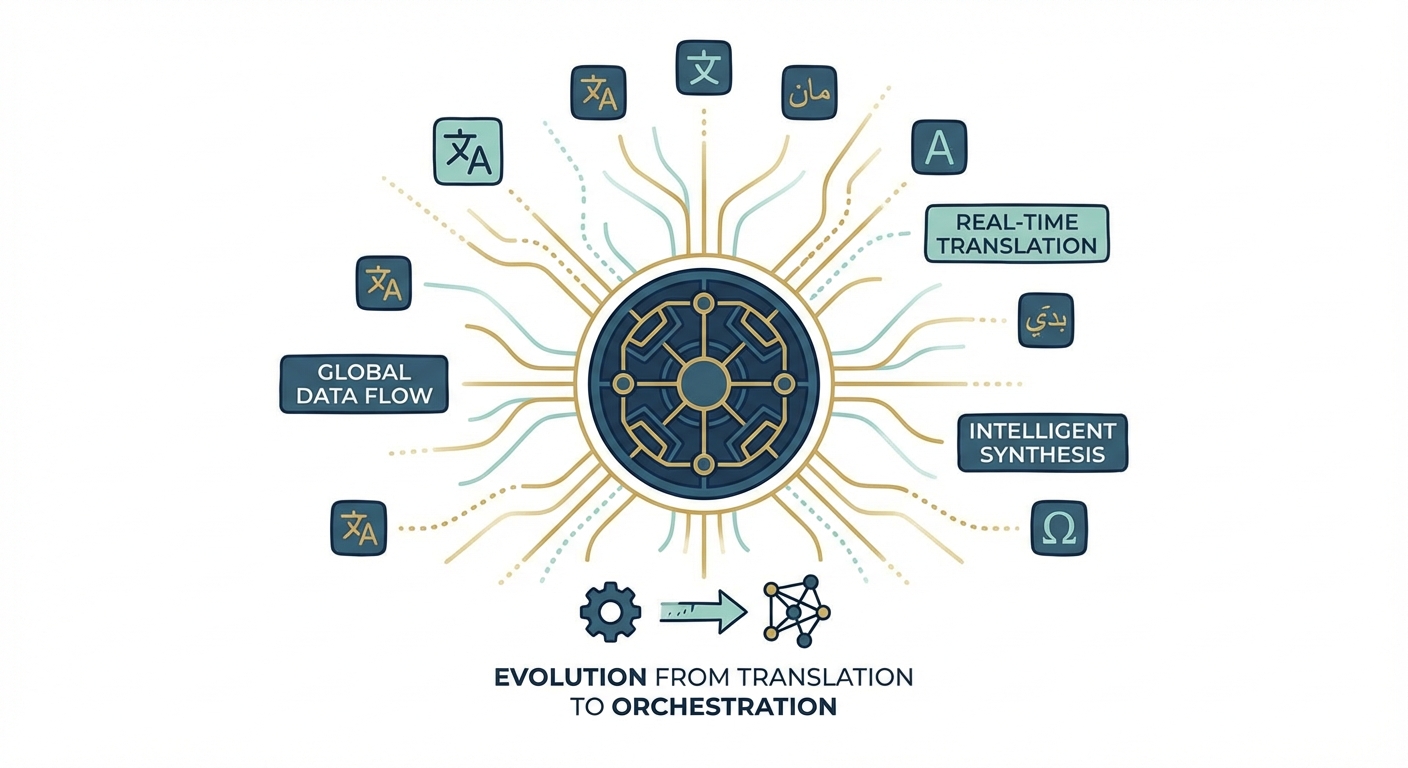
The "copy-paste" era of translation is officially dead. For years, businesses treated translation like a commodity, dumping text into generic models and praying for the best. They sacrificed brand voice, ignored data security, and settled for "good enough."
But it’s 2026. The industry has finally grown up.
We’ve moved past simple machine translation and into the age of AI Orchestration. This isn't just about turning words from Language A to Language B; it’s about gating linguistic capability behind your company’s specific translation memory, style guides, and proprietary glossaries. Today, the challenge isn't finding a tool that can translate. It’s finding a system that actually understands your brand—and keeps your data under lock and key.
How We Evaluated Today’s Top Tools
When we audit translation technology, we don’t care about marketing fluff. We look at the plumbing. We judge platforms on a 1-5 accuracy scale, obsessing over how they handle idiomatic expressions, technical jargon, and those tricky, complex sentences where AI usually "hallucinates" meaning.
Latency is the other side of the coin. If you’re running live deployments, anything slower than 500ms creates a disjointed, frustrating experience. It kills the flow.
Security is our non-negotiable. We prioritize tools that offer private instances or SOC2-compliant environments. If your company’s internal documentation ends up in a public training set, you’ve already failed. For those who love the technical weeds, TAUS (Translation Automation User Society) remains the gold standard for benchmarking machine output against the reality of human expectation.
What is AI Orchestration and Why Does It Matter?
Let’s be honest: when you dump text into a generic chatbot, you get a generic result. It’s plausible, sure, but it lacks the soul of your industry. AI Orchestration is the departure from that "raw" output. It uses RAG—Retrieval-Augmented Generation—to ground the AI in your existing content assets.
The shift is architectural. Instead of a direct pipeline from source to output, the system pauses. It checks your translation memory and brand glossary before the AI generates a single word. This prevents the classic "software switch" error, where a UI toggle gets translated as a light switch.
This isn't just a tech upgrade; it’s a shift in responsibility. The AI handles the heavy lifting, but human experts act as the architects of the message.
The Decision Matrix: Choosing the Right Tool for Your Needs
Not every project needs an enterprise-grade orchestration suite. Sometimes, you just need it done. Your choice should hinge on your biggest constraint: speed, security, or consistency.
If you’re a developer, hunt for API-first platforms that treat translation as a microservice. If you’re a marketing leader, stop looking for raw power and start looking for deep glossary customization. Your brand is at stake.
Top Translation Tools Categorized
Best for Enterprise & Security
If you’re in a regulated industry, data leakage is your biggest nightmare. You need isolated, private-instance environments. These platforms ensure your proprietary data never touches a public cloud, satisfying the most rigid GDPR and HIPAA requirements. They allow you to tune models on your own historical data, creating an engine that sounds like you, not like a generic internet bot.
Best for Developers & Workflow Integration
If you're localizing a product or a website, you need tools that live where your team lives: GitHub, Figma, or your CMS. Stop the file-swapping madness. Developers should be able to push code and get a translation back without leaving their environment. DeepL Translate remains the benchmark for the raw "first-pass" accuracy that these integrations rely on. It provides a foundation of fluency that is still incredibly hard to beat.
Best for Real-Time & Multimodal Translation
The next frontier is video, subtitles, and live UI interfaces. Tools in this category are built for speed—under 500ms latency. They handle multimodal inputs, meaning they can "see" a screenshot of your app, OCR the text, translate it, and render it back while keeping your design layout intact.
Scaling Your Global Content Strategy
Translation isn't a siloed activity. It’s part of the lifecycle. If you’re treating translation as the final step in a project, you’ve already lost.
The best teams bake localization into the content creation process from day one. You save yourself from the "text expansion" issues that break UI designs and the cultural tone-deafness that alienates international markets. For a deeper look at how this fits into your master plan, check out our Content Strategy Guide.
But let’s be real: tools have a ceiling. When the stakes are high—legal contracts, sensitive PR, or high-budget creative campaigns—you need to move beyond software. This is where Professional Localization Services become necessary. Human expertise captures the cultural subtext that remains invisible to even the most advanced AI.
The ROI of Smart Localization
The fiscal impact of "good enough" vs. "expertly localized" is massive. Poor translation leads to high bounce rates, a flood of support tickets, and genuine brand damage. According to market research from CSA Research, companies that get strategic about localization see a measurable bump in global revenue. It shortens the sales cycle. It builds the trust required for long-term customer relationships. It pays for itself.
Frequently Asked Questions
Can AI translation tools fully replace human translators in 2026?
No. AI has evolved into an orchestrator, but it still lacks the deep cultural intuition and strategic weight of a human. The role has changed from "writer" to "editor." You aren't typing the translation from scratch anymore; you are guiding the machine, refining its choices, and ensuring the final message hits home.
How do I ensure my brand voice stays consistent across languages?
Consistency is strictly a function of data grounding. Use tools that support Translation Memory (TM) and custom Glossary uploads. By feeding the AI your preferred terminology and tone-of-voice examples (style guides), you ground the model in your brand reality, preventing that generic, robotic output that plagues unrefined AI.
Is it safe to put proprietary business documents into free translation tools?
Absolutely not. Using public, free translation tools is a security risk. Your data often becomes training fuel for their models. For proprietary work, you must use enterprise-grade, private-instance AI that guarantees your data stays in your silo.
What is the difference between machine translation and AI orchestration?
Machine translation is static: you input text, you get text back. Simple. AI orchestration is dynamic and layered. It wraps that engine in your company’s specific data, context, and workflow logic. It ensures the result isn't just linguistically correct—it’s brand-aligned and operationally integrated.
What is the benchmark for "premium" real-time translation?
In 2026, professional-grade real-time translation—think live virtual meetings or instant customer support—requires a latency of under 500ms. Anything slower creates a lag that breaks the human connection and makes your service feel cheap.