The Legal Implications of AI Voice Technology

TL;DR
- ✓ Synthetic voices are safe if the underlying acoustic models are commercially licensed.
- ✓ Cloned voices require express written consent to avoid Right of Publicity lawsuits.
- ✓ Businesses must navigate a complex patchwork of state-level AI voice protection statutes.
- ✓ Unauthorized use of human voices poses significant financial and reputational risks to enterprises.
The Wild West days of AI voice tech are officially over. If you’re still treating synthetic audio like a playground, you’re playing with fire. By 2026, the landscape has hardened into a complex web of personality rights, strict liability, and state-level enforcement.
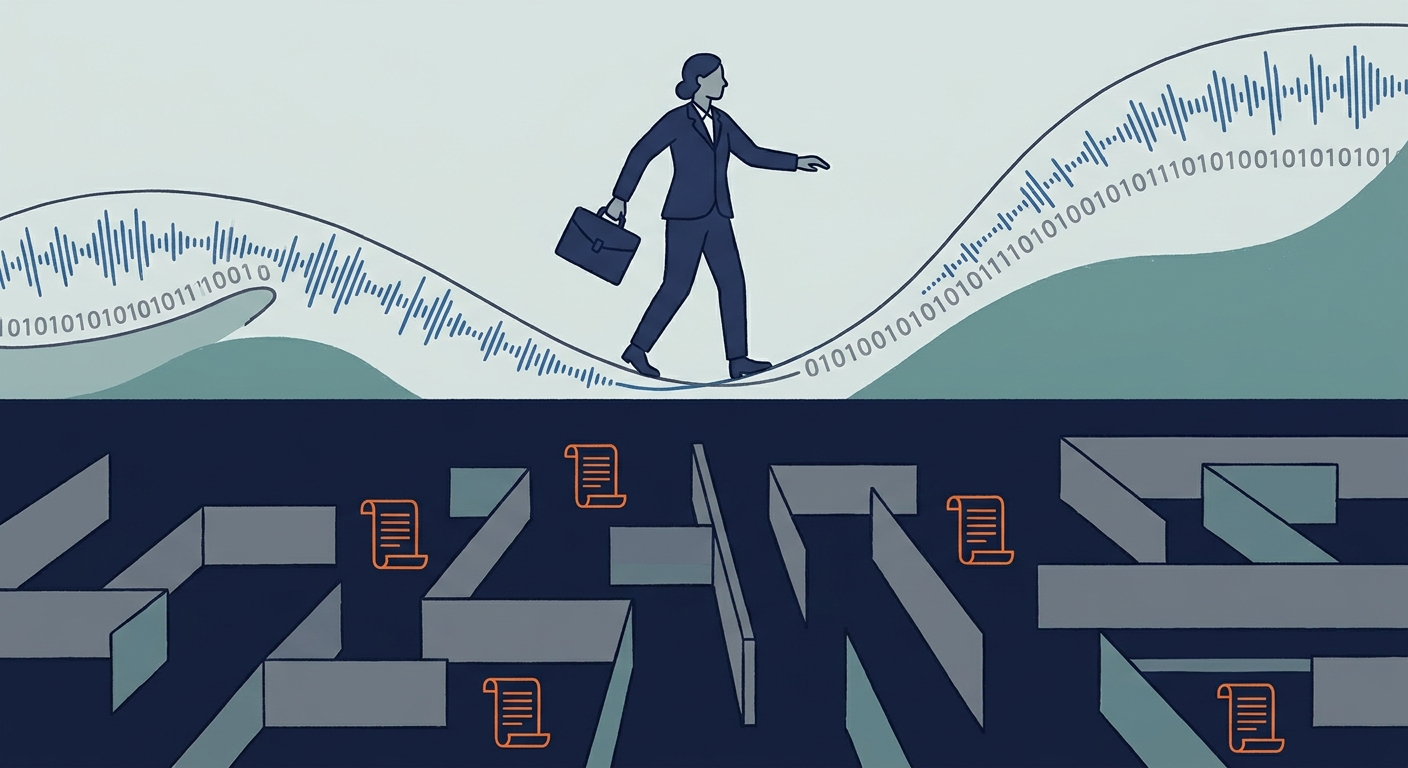
For the modern enterprise, deploying AI-generated audio is no longer just a "tech stack" decision. It’s a high-stakes legal tightrope walk. If you’re rolling out synthetic speech without a firm grip on the "Right of Publicity" or where your training data came from, you aren’t just risking a PR headache—you’re inviting lawsuits that can shred your digital strategy to pieces.
Defining the Divide: Synthetic vs. Cloned Voices
The biggest legal pitfall in 2026? Confusing synthetic voices with cloned ones. Getting this wrong is the fastest way to find yourself in a courtroom.
A synthetic voice is a digital construct. It’s built from scratch, with no specific human DNA behind it. These are generally safe for business, provided the platform behind them has cleared the licenses for the underlying phonemes and acoustic models.
A cloned voice is a different beast entirely. It’s a digital copy of a real human being. When you clone a voice, you’re stepping onto the third rail of intellectual property law. Unless you have ironclad, express written consent, you are in the "Red Zone." You are essentially asking for a misappropriation lawsuit. And trust me, courts are no longer being lenient.
Why the "Right of Publicity" is the New Legal Battleground
Copyright law was the first line of defense, but it’s too clunky for the hyper-realistic AI era. The real power now lies with the "Right of Publicity." It’s the simple, yet powerful idea that you own the commercial value of your own voice. As noted in Skadden Insights on the 2025 New York Court Ruling, judges are increasingly siding with plaintiffs who argue that unauthorized AI mimics are a direct violation of their humanity.
This isn’t just a federal headache. Because there’s no comprehensive national law, we’ve got a messy patchwork of state-level AI Voice Protection Acts. These statutes treat unauthorized cloning as a tort—a fancy way of saying you’re breaking the law and liable for damages that can easily eclipse your entire project budget. Actors, voiceover pros, and public figures are weaponizing these laws to shut down brands. If your marketing campaign uses a voice that’s "close enough" to a famous person, you aren’t clever. You’re a target.
Is Your AI Training Data Actually Legal?
Everything starts with the data. If your foundation is cracked, the house will fall. Many enterprises are stumbling here because they don’t ask the hard questions about their vendors.
The U.S. Copyright Office still maintains that AI-generated audio lacks "human authorship." This creates a massive legal vacuum. You can’t easily copyright your own synthetic output, which makes it a nightmare to protect your brand assets from being scraped by competitors.
Furthermore, the industry is finally waking up to the need for "Ethical Opt-in" models. Smart businesses are auditing their providers. They want to know: Where did this data come from? As we’ve detailed in our Ethical AI Commitment, the only way to scale voice tech long-term is to ensure the original voice contributors are paid and have signed off. Relying on "scraped" data is a ticking time bomb. When the audit comes, and it eventually will, companies that can’t prove their data provenance will face catastrophic compliance failures.
What Happens When AI Voice Technology is Misused?
The risks go beyond corporate litigation. We are talking about criminal liability and deep-level platform accountability. The FTC Report on Voice Cloning Harm highlights the terrifying reality of social engineering. When AI can mimic an executive, the potential for fraud is endless.
The legal burden is shifting to the platform providers. It isn't enough to just provide the software anymore. Providers must include guardrails, like mandatory watermarking—an invisible, forensic signature that identifies audio as synthetic—and robust "Voice ID" verification. If your vendor doesn't have these, they are hanging you out to dry. When a brand’s synthetic voice is hijacked to spread misinformation, the public won't blame the hacker. They will blame the brand that enabled the tech.
How Can Businesses Mitigate Risk in 2026?
Mitigation isn't about hiding behind a Terms of Service page. It’s about being proactive. Here is your survival guide:
- Verify Consent Chains: Don’t just take a platform’s word for it when they claim "all rights cleared." Demand to see the chain of custody for the data.
- Prioritize Informed Consent: If you’re cloning a voice for your brand, your contract needs to be specific. How long can you use it? Where? In what context? Get it in writing.
- Audit Your Vendors: Before you integrate, check their security. If you want to avoid the pitfalls of unauthorized cloning, exploring AI Voice Solutions for Enterprise is the best way to ensure your foundation is built on verified, compliant data.
- Watermarking: Watermark everything. It acts as a deterrent and gives you a way to prove your IP if a dispute ever hits your desk.
What Does the Future of Voice Regulation Look Like?
We’re heading toward a world of "regulatory convergence." The EU AI Act is already pushing global standards toward high-transparency models. Soon, a "Verified Voice ID" will be as standard as an SSL certificate on a website.
As highlighted by the IAPP analysis of legal challenges for voice actors, the future of this tech depends on finding a balance between innovation and labor rights. The companies that thrive won't be the ones that moved the fastest; they'll be the ones that anticipated these standards. The era of unchecked experimentation is dead. Welcome to the era of professional, legally defensible voice orchestration.
Frequently Asked Questions
Can I legally use an AI voice that sounds like a famous actor?
No. Attempting to mimic a famous person’s voice, even using AI, violates the "Right of Publicity." This creates significant legal liability for your company, as these individuals have the right to control the commercial use of their identity.
Who owns the copyright to AI-generated voices?
Under current U.S. Copyright Office guidelines, AI-generated audio lacks human authorship and therefore cannot be copyrighted. This makes it difficult to establish exclusive ownership over synthetic audio assets, which is why working with providers that offer contractual indemnification is vital.
What is the difference between "synthetic" and "cloned" voices?
A synthetic voice is a non-person-derived voice, created from a mix of acoustic data that isn't tied to a specific individual. A cloned voice is a direct digital replica of a specific person, which requires explicit, legally binding consent from that individual to avoid infringement.
Are there any laws protecting my voice from being stolen by AI?
Yes. Both state-level "Right of Publicity" laws and an increasing body of common law are being used to protect individuals from unauthorized voice cloning. These protections are becoming more stringent as the technology evolves.
How can I prove that the AI voice I am using was ethically sourced?
You should demand a "data provenance report" from your AI provider. This document should detail the licensing agreements for the training data and confirm that all contributors have provided express, informed consent for their voices to be used in AI modeling.