Realistic Text-to-Speech Solutions in Multiple Languages

TL;DR
- ✓ Compare top AI voice engines by latency and emotional range for 2026 projects.
- ✓ Learn why sub-200ms latency is critical for modern conversational AI user experiences.
- ✓ Evaluate ElevenLabs, Fish Speech, and CosyVoice2 for your specific enterprise requirements.
- ✓ Understand how cross-lingual fidelity impacts global video content and customer service bots.
It’s 2026. If your AI voice still sounds like a crisp, monotone robot, you’ve already lost the room.
We’ve moved way past the point where "intelligibility" is the benchmark. Nobody is impressed by a machine that can just pronounce words correctly anymore. Today, it’s all about the texture. Can the voice laugh? Does it sound breathless when it’s supposed to? Can it hold onto that unique vocal fingerprint while switching from English to Japanese?
Whether you’re building a customer service bot that doesn't make people want to hang up or you’re scaling global video content, the engine you choose is the make-or-break factor for your user experience. The era of generic synthesis is dead. We’re in the age of conversational AI, where sub-200ms latency and human-like prosody aren't "nice-to-haves"—they are table stakes.
The 2026 Comparison Matrix: Cutting Through the Noise
Picking a voice engine isn't about grabbing the biggest brand on the market; it’s about finding the right tool for your specific architecture. Here is how the current heavyweights stack up when you look at the metrics that actually hit your bottom line.
| Engine | Latency | Emotional Range | Cross-Lingual Fidelity | Enterprise Rights |
|---|---|---|---|---|
| ElevenLabs | Moderate | Exceptional | High | Strong |
| Fish Speech | Low | High | Excellent | Moderate |
| OpenAI (TTS) | High | Moderate | Good | Baseline |
| CosyVoice2 | Low | High | High | N/A (Open) |
| PlayHT | Moderate | High | Moderate | Strong |
- ElevenLabs: Still the king of "hyper-realism." As you can see in their ElevenLabs Voice Benchmarks, they’ve nailed the micro-nuances—that weird, human mix of breath, hesitation, and sarcasm. It’s the gold standard if you’re doing creative, high-fidelity work.
- Fish Speech: The speed demon. If you’re building something real-time where every millisecond is a potential point of friction, this is your go-to.
- CosyVoice2: The open-source powerhouse. It’s perfect for the "I need to own my data" crowd. You get incredible flexibility to fine-tune models on your own datasets without being tethered to a proprietary API.
Realism: The "Uncanny Valley" Test
How do we actually define "realistic"? It’s simple: the moment you stop thinking about the tech and start listening to the message.
To test this, we put these engines through a gauntlet. We ran a 500-word English script focused on heavy prosody, then threw in 200-word chunks of Spanish, Japanese, and German to see if the engine could actually keep the accent intact.
Most engines handle English just fine. They stumble, though, when you ask for sarcasm or a sudden volume spike. A truly great voice model treats a question mark as a shift in curiosity—not just a frequency adjustment. If the model doesn't understand the intent behind the punctuation, the illusion falls apart instantly.
How Cross-Lingual Cloning Works
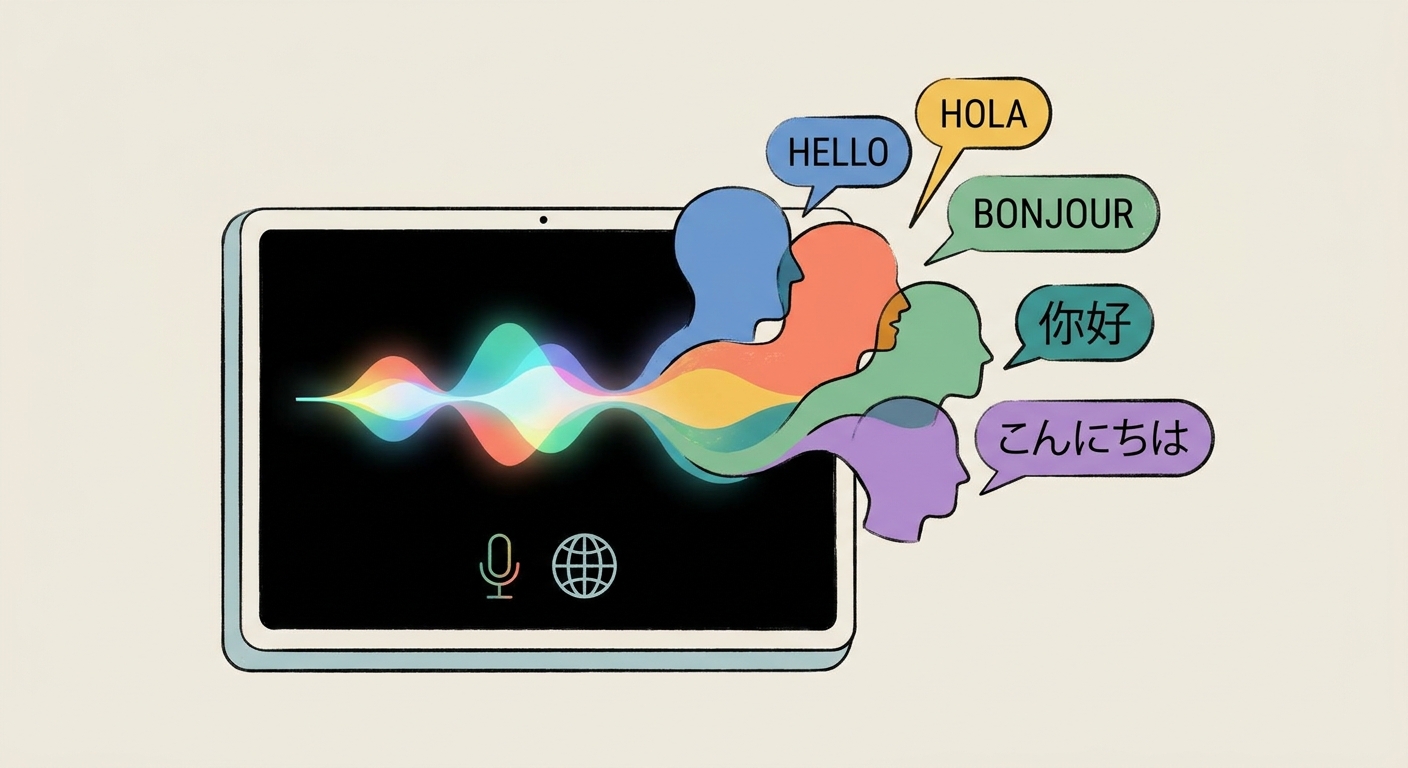
We’ve seen a massive leap in how these models handle translation. It’s not just about turning text into another language anymore; it’s about "vocal texture preservation."
Old-school TTS just translated the words and slapped a generic voice filter on top. It sounded like a dubbed movie from the 70s. Today, advanced models pull the speaker’s unique formant structure—essentially their vocal DNA—and re-synthesize that exact sound in the target language.
The result? When a native English speaker "speaks" Mandarin, they sound like themselves. They keep the same weight, pitch, and timbre. It doesn't default to a generic, synthesized "Mandarin" voice. It’s a game-changer.
The Latency Wall: Why 200ms Matters
If you’re building a digital receptionist or an NPC for a game, anything over 200 milliseconds is basically a death sentence.
Human conversation is a delicate dance of social cues. If you introduce a lag longer than a fifth of a second, the flow breaks. You get awkward pauses. You get people interrupting each other. It feels "laggy," and that kills immersion.
Hitting that sub-200ms mark is hard. Cloud-based models often choke on network overhead. That’s why the smart money is moving toward hybrid deployments. You handle the heavy lifting of inference on edge hardware and keep the linguistic nuance in the cloud. If your app is high-frequency, stop relying solely on the cloud. Look for providers that let you run optimized edge-inference containers.
The Ethics of Voice: Don't Get Sued
Cloning a voice is dangerously easy right now. It’s a total Wild West. But if you think you can just borrow someone's voice without a contract, you’re asking for a legal disaster. The Federal Trade Commission on the Ethics of AI Voice Cloning has made it clear: transparency and consent aren't optional.
Look for providers that offer real "Voice Rights" management. This means cryptographic watermarking and ironclad usage policies. If you’re building a brand identity around a specific voice, make sure you actually own the rights to the model, not just a license to use their service. You don't want to build your entire business on a foundation that could be snatched away by a policy change.
The Open Source Revolution
If you hate being locked into an API, the open-source community has your back. Platforms like Hugging Face AI Voice Models are overflowing with architectures that go toe-to-toe with the big-name proprietary giants.
CosyVoice2 and Fish Speech aren't just toys; they’re high-quality, democratized tools. The real win here is data security. You can train these models on your proprietary data without sending a single byte to a third-party server. The catch? You’re the IT department now. You have to handle the uptime, the hardware costs, and the optimization. It’s freedom, but it comes with a maintenance bill.
Real-World Workflow: Beyond the Hype
Realistic TTS isn't just for tech startups anymore. Content creators are using it to churn out long-form video with a level of emotive variety that used to cost thousands in studio time. If you want to see how this actually moves the needle, check out our Case Study: Scaling Content with TTS. We’ve seen production timelines drop by 70% while engagement actually goes up.
If you’re looking to build custom voice agents, don't just stop at the TTS. You need to hook it into a smart LLM backend. We help teams bridge that gap through our AI Voice Integration Services, making sure the voice doesn't just sound human, but actually understands the context of the business logic you’ve built.
The "Hidden Costs" of Scaling
Character-based pricing looks great on a spreadsheet until you hit the enterprise scale.
Testing with a few thousand characters? No problem. Scaling to millions? That’s when the bill starts to bite. Most people hit those enterprise tiers way faster than they anticipate.
Before you commit to a provider, run a high-volume simulation. Don't look at the price-per-character during a quiet afternoon—look at it during a spike. If you’re pushing massive volume, skip the "pay-as-you-go" plans. The enterprise tiers are usually where the real discounts and the dedicated throughput live. Keep your unit economics in check, or your AI project will bleed you dry.
Frequently Asked Questions
Can AI voice generators perfectly replicate accents in multiple languages?
Modern models are excellent at maintaining the "vocal fingerprint" of a speaker, but accent replication is a spectrum. While they can sound native in multiple languages, they sometimes carry a slight "universal" phonetic smoothing. The best results occur when the model is fine-tuned on native-speaker data for each target language.
Is it legal to clone someone's voice for commercial use?
Generally, no, unless you have explicit consent and a clear licensing agreement. Many jurisdictions are currently updating laws regarding "Right of Publicity" as it pertains to AI. Always ensure you have a written, signed agreement from the voice actor before cloning, and use platforms that verify the identity of the voice owner.
What is the difference between "Basic" and "Pro" AI voices?
Basic voices are typically optimized for speed and low-compute, often resulting in a flatter, more robotic delivery. Pro voices utilize larger, more complex models that account for prosody, emotional inflection, and micro-pauses, resulting in a much more natural, human-like cadence.
How do I choose between an API-based TTS and a web-based generator?
Web-based generators are designed for creators who need a simple "text-in, audio-out" interface for single projects. API-based solutions are designed for developers who need to integrate voice synthesis into a software stack, requiring programmatic control over latency, parameters, and volume.
How can I integrate TTS tools into my existing automation tools like Zapier?
Most high-end TTS providers offer REST APIs that can be connected to automation platforms via "Webhooks" or dedicated integration steps. By using a middleware like Zapier or Make.com, you can trigger a voice generation event whenever a new row is added to a database or a new email arrives in your inbox.