How Text-to-Speech Technology Is Shaping the Future of Branding

TL;DR
- ✓ Modern text-to-speech creates emotional connections rather than robotic interactions.
- ✓ Vocal identity is now as critical to your brand as visual design elements.
- ✓ Synthetic voices act as psychological anchors that signal stability and build customer trust.
- ✓ Multimodal orchestration synchronizes voice and visuals for seamless, personalized user experiences.
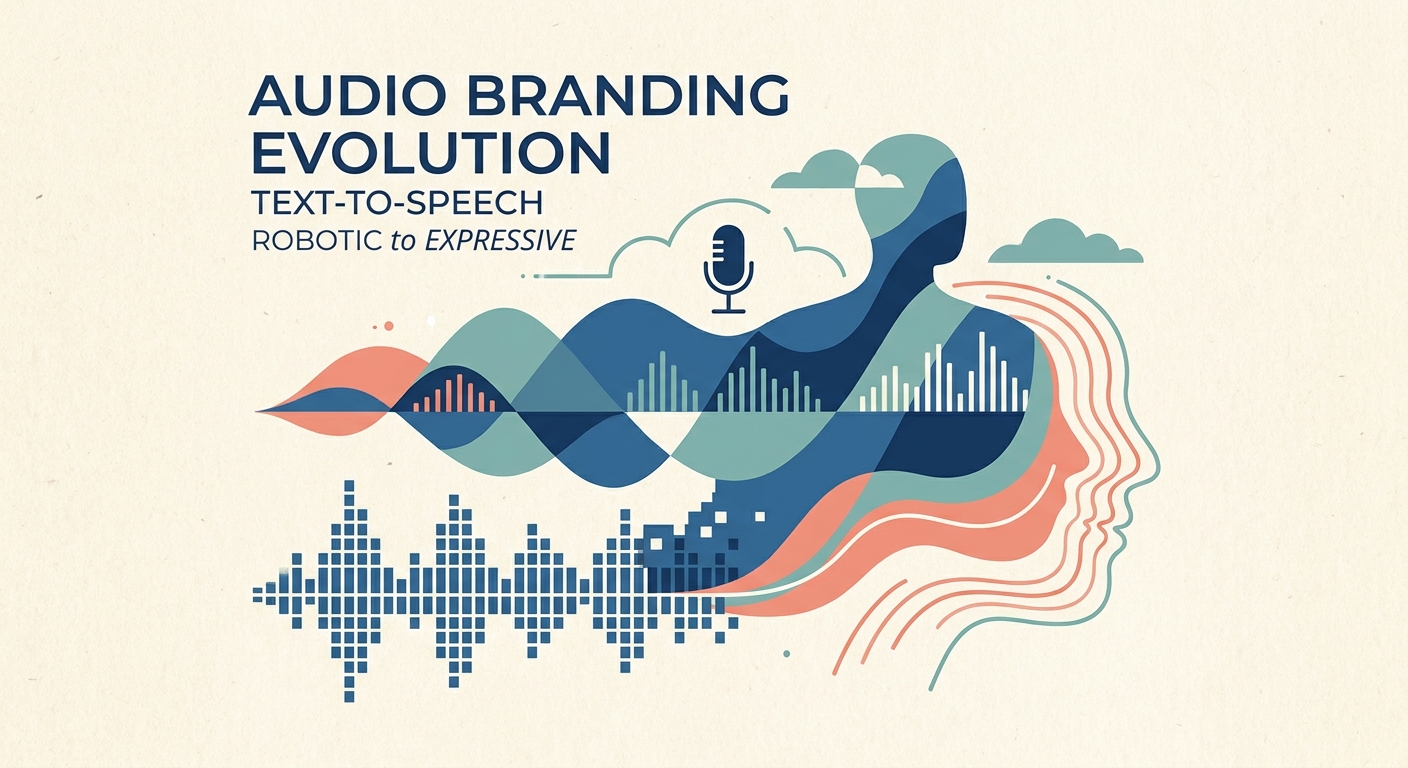
Text-to-speech (TTS) has finally grown up. Gone are the days of the stiff, robotic monotone that sounded like a calculator having a mid-life crisis. We’ve entered an era where your brand’s audio DNA matters just as much as your logo or your font choice.
In 2026, if your company sounds like everyone else, you’re invisible. A brand voice isn’t just an accessibility feature you tack onto a website to check a box. It’s a bridge. It’s the difference between a cold, transactional interaction and a genuine connection. In an AI-first world, consumers are hungry for intimacy. They want to talk to a brand that sounds like it actually has a personality.
Why Is Voice Now a Critical Component of Brand Identity?
For decades, we were obsessed with the visual. Designers spent thousands of hours agonizing over hex codes, kerning, and whitespace. But the pendulum has swung. We’re in the middle of a massive shift toward the auditory, and frankly, it’s about time.
This isn't just about making things sound "nice." It’s behavioral science. When a customer starts a chat with an AI agent, their brain makes a snap judgment based on timbre, warmth, and cadence before they’ve even processed the actual words.
As noted in this Harvard Business Review analysis on what your company’s AI should sound like, vocal confidence is the secret sauce for credibility. If your brand sounds jittery, glitchy, or just plain weird, you’ve lost the customer. It creates a cognitive itch they can’t scratch. A finely tuned synthetic voice, on the other hand, acts as a psychological anchor. It signals stability. It signals empathy.
Think about it: If you’re a high-end investment firm, your audio needs to sound like a steady hand on the wheel. If you’re a fun, direct-to-consumer lifestyle brand, you need warmth and a bit of pep. Using the wrong voice is the audio equivalent of printing your corporate mission statement in Comic Sans. It’s embarrassing, and it kills your credibility. Learn more about the foundational principles of how brand voice matters in our latest insights.
How Does Multimodal Orchestration Change the Customer Journey?
The days of "set it and forget it" voice bots are dead. We’ve moved into the era of multimodal orchestration. Think of voice not as a standalone gadget, but as one player in a symphony.
Imagine a user walking up to a digital kiosk. It doesn't just blurt out a pre-recorded script. It listens. It pulls your data in real-time. It crafts a response that feels personal, and it delivers that response with a voice that matches your brand's style, all while showing relevant visuals on the screen.
This is how you turn a boring transaction into a fluid, human-like conversation. By syncing your TTS engine with your UI and your backend data, you ensure your "voice" is always in the room, whether it’s helping a customer solve a billing issue or guiding them through a complex purchase.
What Are the High-Impact Use Cases for Modern TTS?
High-fidelity TTS is no longer just for e-books. It’s a strategic weapon for businesses that want to stand out.
- Hyper-Personalization: Static audio is a relic. Modern martech lets you adapt tone and content on the fly based on who the user is and how they’re feeling. When you pair this with expert-level content creation services, you can keep your narrative consistent and razor-sharp across every single touchpoint.
- Accessibility as Brand Equity: Accessibility is often treated as a chore. Don't look at it that way. When you provide a premium, inclusive audio experience, you aren't just following rules—you’re building loyalty. A visually impaired customer who experiences your brand with the same polish as everyone else is a customer for life.
- Customer Support Evolution: Scaling empathy is hard. Humans get tired, grumpy, and inconsistent. A well-trained AI, powered by nuanced TTS, can handle high-stress, technical, or emotional queries with a steady, professional tone that never falters.
How Do You Choose the Right AI Voice for Your Brand?
Before you pick a voice, you need to know who your brand is. Are you the Sage? The Hero? The Caregiver? The "Voice AI Maturity Model" is a great way to figure out where you stand.
- The Exploratory Stage: You’re grabbing off-the-shelf voices. It’s a start, but don't expect it to feel like "you."
- The Customization Stage: You’re tweaking pitch and speed. It’s getting closer to your archetype.
- The Proprietary Stage: You’ve built a custom, synthetic model. This is your voice, and yours alone.
When you start digging into the tech, it’s easy to get lost. Make sure you check out resources on choosing the right AI voice generators to ensure the technical output actually matches the personality you’re trying to project.
What Is the Governance Imperative for Synthetic Media?
Look, synthetic media is powerful, but it’s a double-edged sword. As your brand voice becomes a core asset, you’ve got to protect it. You don’t want some random actor or a bad actor cloning your voice to sell knock-off products or scam your customers.
You need a plan. Use strict API controls. Watermark your audio. Have a legal framework that dictates exactly what that voice can and cannot say. Keeping up with the latest Voice AI trends for 2026 isn't just about being a tech geek; it’s about keeping your brand safe in the wild west of the open market.
How Can Brands Build a Cohesive Audio Presence?
Consistency is king. If your mobile app sounds like a whisper and your web kiosk sounds like a megaphone, you’ve got a problem. You need a centralized "brand asset repository" that pushes the same parameters—pitch, tone, cadence—to every single endpoint.
This setup stops "identity drift." It ensures that no matter where a customer meets your brand, the voice is consistent, recognizable, and professional.
What Does the Future of Voice Branding Hold?
We are sprinting toward a 2027 where the "Uncanny Valley" is a thing of the past. We’re seeing emotion modeling that actually works—AI that can hear your frustration and soften its tone to de-escalate. We’re seeing latency drop to sub-millisecond levels, making the conversation feel like it’s happening in real-time.
To stay ahead, your martech stack needs to be modular. Stay voice-agnostic. Build your logic so you can swap out TTS engines as they improve without having to tear down your whole infrastructure. The goal isn't to replace humans with robots; it’s to build a hybrid experience that feels efficient, smart, and—above all—human.
Frequently Asked Questions
How does AI-generated voice affect consumer trust in a brand?
High-quality, consistent AI voice improves trust by providing a reliable and professional interaction. When a brand’s voice is steady and appropriately emotive, it reduces the friction and anxiety often associated with automated support, signaling to the consumer that the company is sophisticated and cares about the quality of the interaction.
What are the primary ethical risks when using text-to-speech for branding?
The primary risks include the unauthorized cloning of a brand’s voice and the potential for "deepfakes" to mimic a company’s spokesperson. Establishing clear usage policies, using watermarked audio, and employing secure API gateways are essential for maintaining ethical control over your synthetic assets.
How do I choose the right AI voice for your brand's personality?
Start by defining your brand archetype. Is your brand the "Sage" (knowledgeable, calm, slow-paced) or the "Hero" (energetic, punchy, authoritative)? Match these characteristics to technical parameters like pitch, speed, and breathiness. Testing these voices against your core audience through A/B testing is the most effective way to validate your choice.
Is text-to-speech technology really ready for customer-facing enterprise use in 2026?
Yes. Modern neural TTS has largely eliminated the robotic artifacts of the past. With optimized latency and advanced emotion modeling, enterprise-grade TTS is now indistinguishable from human speech in most high-frequency customer service scenarios.
What is the measurable ROI of implementing high-quality TTS?
ROI is measured through reduced support costs (via higher containment rates in automated agents), increased session duration on content-heavy pages, and improved customer satisfaction scores (CSAT) due to more natural and empathetic brand interactions.