Advanced Text-to-Speech: Creating Natural Speech

TL;DR
- Modern TTS has evolved from robotic concatenation to fluid, neural-based synthesis.
- Emotional intelligence and prosody are now critical for believable, human-like voice interaction.
- Speaker embeddings allow models to mimic unique human timbres and subtle vocal quirks.
- Choosing the right TTS model requires balancing latency needs with high-fidelity output requirements.
Forget the "GPS voice." You know the one—that flat, soulless drone that sounds like it’s being held hostage by a calculator. We’ve finally moved past the era where "intelligible" was considered good enough.
In 2026, creating natural-sounding AI speech isn't about stringing phonemes together. It’s about orchestration. It’s about rhythm, breath, and the kind of emotional weight that actually lands. Today’s Text-to-Speech (TTS) systems are built on generative neural architectures that don't just read words—they understand the intent behind them.
The End of the "Robotic Era": Where is TTS Heading?
For years, the industry was obsessed with clarity. If the machine could be understood, it was a win. But the goalposts have shifted. Now, the metric is "believability."
We are living in the golden age of prosody-driven AI. If you feed a modern model a line about a tragic loss, it knows to drop its pitch and stretch the cadence. If you’re announcing a high-energy product launch, it breathes life into the vowels. It’s not just synthesizing sound; it’s synthesizing personality.
This shift is changing how brands talk to their customers. According to recent Voice AI Trends 2026, emotional intelligence is the single biggest factor in keeping users from drifting away. When a voice feels human, the user stays. It’s that simple.
How Does Modern Neural TTS Actually Work?
Remember the old days of "concatenation"? That was essentially a digital quilt—stitching together tiny, pre-recorded snippets of human speech. It sounded exactly as choppy as it sounds on paper.
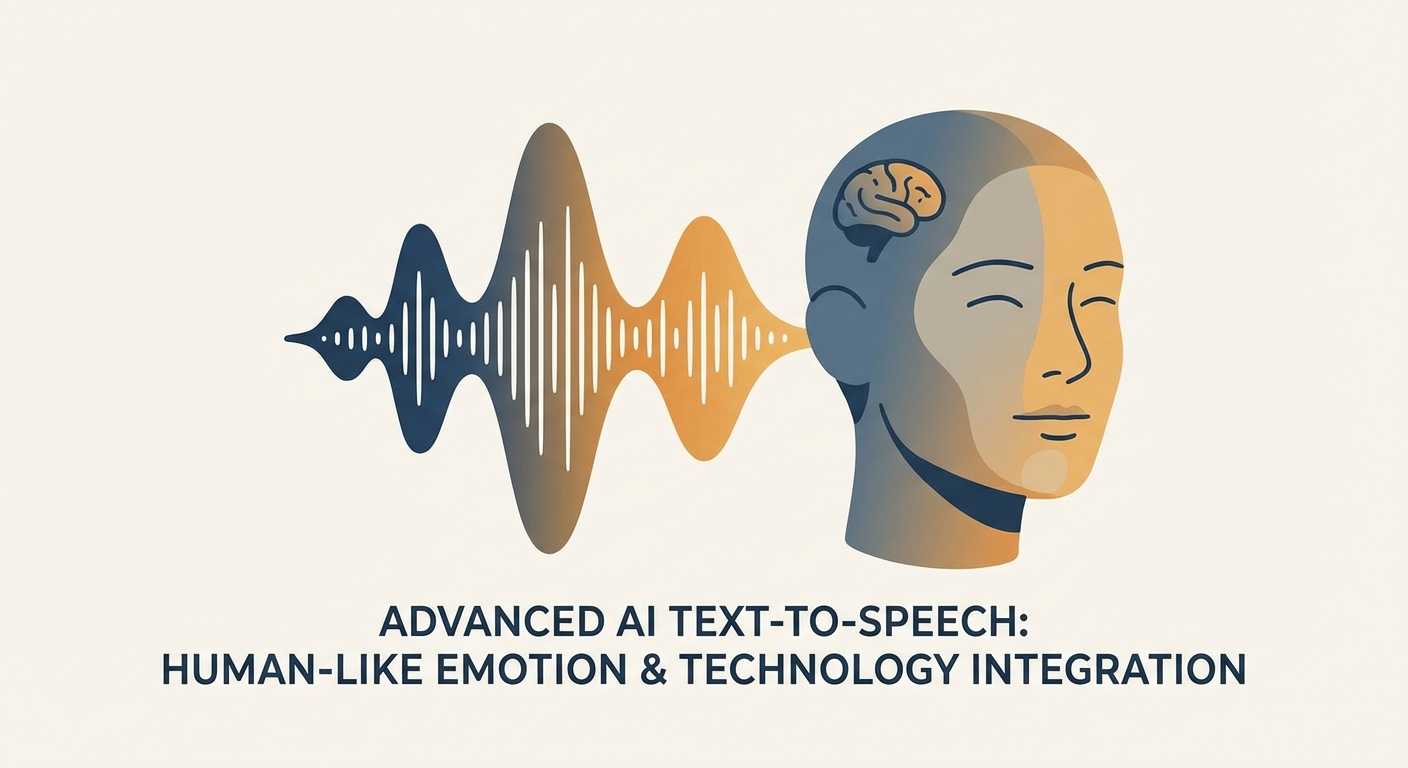
Modern models are different. They use end-to-end neural synthesis. The system takes raw text and runs it through a deep learning pipeline, turning it into a fluid, organic acoustic wave.
The secret sauce? "Speaker Embeddings." Think of these as a digital fingerprint. They capture the timbre, the quirks, and the subtle inflections of a real voice, then project those qualities onto whatever text you throw at them.
By isolating the "prosody/emotion" layer, developers can tweak the output without needing a studio session. You aren't just feeding a machine; you’re conducting it.
What Are the Four Pillars of Modern TTS Models?
Don't fall for the "one-size-fits-all" trap. To build a voice strategy that actually works, you need to know which tool to pick for the job:
- Real-Time/Low-Latency: This is the lifeblood of live support. The benchmark is under 100ms. If your user waits longer than a heartbeat, the illusion breaks. The conversation dies.
- Expressive/High-Fidelity: This is for the storytellers. Media, long-form narration, high-end video—these models prioritize "Production Quality" (PQ). They want every breath and inflection to sound like a professional actor just walked out of a booth.
- On-Device/Edge: Sometimes, you can't touch the cloud. For healthcare or finance, security is everything. Edge models run locally on hardware, keeping data locked away from prying eyes.
- Instruction-Based: This is the new frontier. Instead of just giving the AI text, you give it a director’s note. Tell it to "whisper," "sound hesitant," or "exude professional confidence." For a deeper dive into these model classifications, refer to the CAMB.AI TTS Model Guide.
How Do You Evaluate TTS Quality in 2026?
The "ear test" is a start, but it’s not enough for enterprise. You need hard data. When you’re testing a model, keep these three metrics on your radar:
- PQ (Production Quality): Listen for the signal-to-noise ratio. Are there metallic chirps? Do the breaths sound like a person, or a vacuum cleaner?
- CE (Content Enjoyment): This is the "listener fatigue" factor. If a voice is perfectly clear but grating after three minutes, it’s a failure.
- TTFB (Time-to-First-Byte): The latency king. This is the difference between a fluid response and a stuttering, awkward gap.
| Model Tier | Latency (TTFB) | Naturalness (CE) | Fidelity (PQ) |
|---|---|---|---|
| Ultra-Fast Edge | < 50ms | Moderate | High |
| Conversational | 50-150ms | High | High |
| Creative/Studio | > 200ms | Ultra-High | Studio-Grade |
The "Pro" Workflow: How to Prompt for Emotion
Here’s the truth: most people treat TTS like a search engine. They paste text and hope for the best. Big mistake. Your TTS model is an instrument—treat your script like a screenplay.
Use modifiers. Don’t just paste the text. Define the vibe. Example: "[Tone: Warm, conversational, slight hesitation at the beginning]. Hello, I think we have a solution for you."
Better yet, use a "Human-in-the-Loop" approach. Let the AI do the heavy lifting, then bring in a human editor to polish the emphasis and timing. It’s the ultimate hybrid strategy—efficiency meets artisanal quality. It’s the backbone of a modern AI-Powered Content Strategy.
How Do You Select the Right Model for Your Use Case?
If you’re building an interactive kiosk, prioritize speed. If you’re producing an audiobook, prioritize texture.
For many, the battle is between off-the-shelf APIs and custom solutions. APIs are great for prototyping, but they lack that unique "brand identity." If you want your AI voice to be as distinct as your logo, you might need Custom Voice Solutions. For those looking to compare the current heavy hitters, this WellSaid Labs Voice Generator Comparison is a solid place to start.
What Are the Ethical and Legal Guardrails?
In 2026, your voice is a digital asset. As cloning tech becomes easier, the legal side of things is catching up fast. Unauthorized cloning isn't just a tech issue; it’s a massive legal liability.
When you’re setting up your TTS, make sure your provider has clear governance. Are they watermarking the audio to stop deepfakes? Is there explicit, revocable consent from the voice talent? If the answer is "no," walk away. Platform governance isn't optional anymore—it’s the foundation.
Frequently Asked Questions
Can I make AI speech sound truly emotional, or is it still robotic?
Modern neural TTS models are lightyears beyond the robotic synthesis of the past. By utilizing instruction-based prompting, you can dictate specific emotions—such as excitement, concern, or professional calm—allowing the AI to adjust its prosody and cadence to match the intended sentiment.
What is the difference between "voice cloning" and "text-to-speech"?
Text-to-speech is the broad category of technology that turns text into audio. Voice cloning is a specialized subset of TTS that uses a small sample of a specific person's voice to build a model that mimics their unique timbre, pitch, and speaking style, rather than using a generic synthesized voice.
How do I choose between a cloud-based TTS API and an on-device model?
Choose a cloud-based API when you need the highest possible fidelity and do not have hardware constraints. Choose an on-device/edge model when privacy is paramount, internet connectivity is unreliable, or you require sub-50ms latency for real-time conversational agents.
Is it legal to use AI-generated voices for commercial content in 2026?
Yes, provided you own the rights to the voice model. You must ensure that the voice used in your content is licensed from a reputable provider that compensates the original voice talent or uses a custom-cloned voice where you have explicit ownership of the intellectual property.