Google Gemini Omni Update Advances Multimodal Voice Synthesis and Synthetic Content Authentication Standards

TL;DR
- Gemini Omni natively processes text, audio, image, and video simultaneously.
- Conversational editing replaces traditional non-linear video editing workflows.
- Physics-aware rendering ensures temporal stability and realistic object interactions.
- Gemini Omni Flash integrates directly into YouTube Shorts for creator access.
- The model architecture focuses on consistent character generation and narrative coherence.
Google’s Gemini Omni: A New Era for Multimodal Video Synthesis
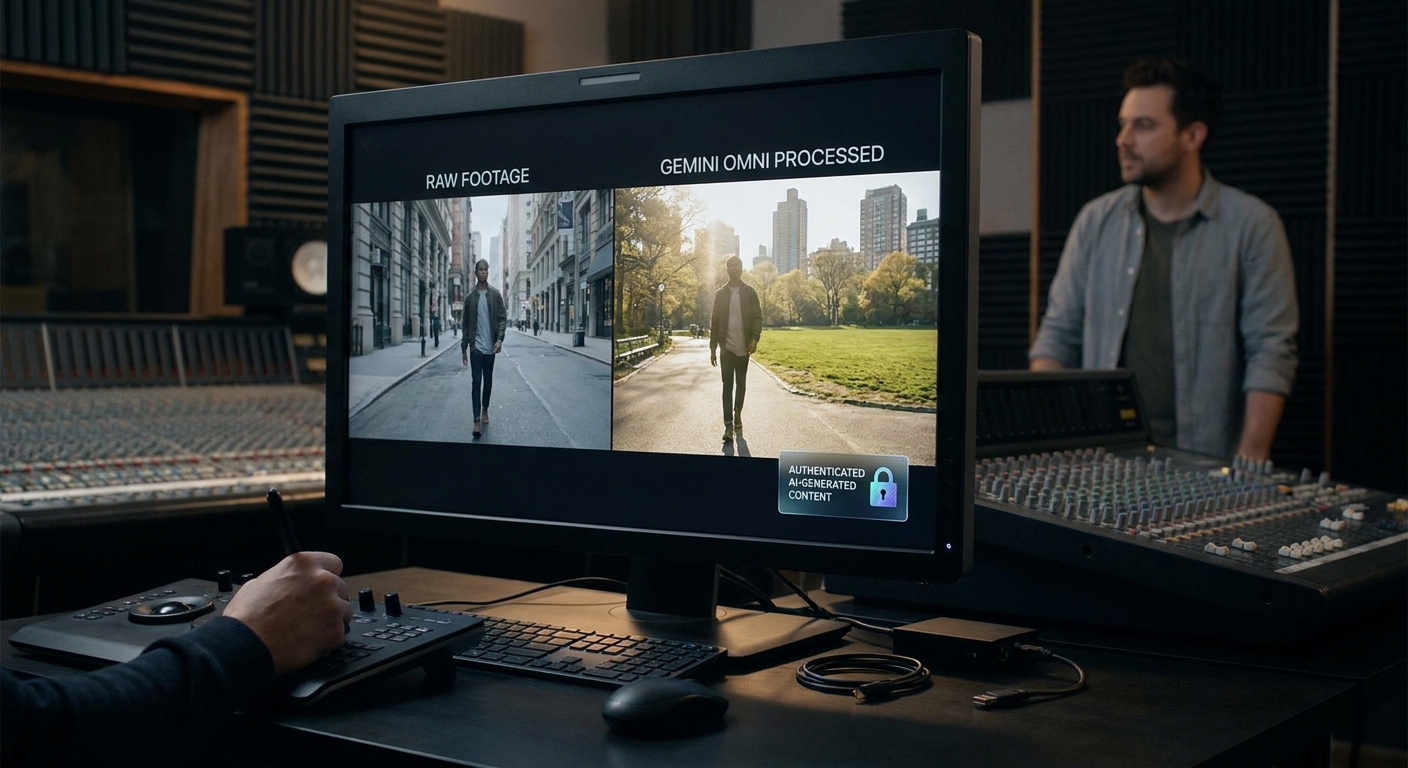
Google just pulled the curtain back on Gemini Omni, a model architecture that doesn’t just "process" data—it lives in the space between text, image, audio, and video. Forget the clunky, disjointed AI tools of yesterday. This is a native multimodal engine designed to generate and edit high-fidelity video on the fly. The rollout kicks off with Gemini Omni Flash, now finding its way into the Gemini app, Google Flow, and, perhaps most tellingly, YouTube Shorts.
This isn't just a minor update. It’s a fundamental shift in how we approach visual media. By leaning into Gemini Omni, Google is effectively turning the video editing suite into a conversation. You want to change the camera angle? Tweak the lighting? Adjust the aesthetic? You don't need a timeline or a stack of non-linear editing plugins anymore. You just talk to it.
The Logic Under the Hood
What makes Gemini Omni different? It’s grounded. Most generative models treat video like a series of hallucinations, leading to the "morphing" issues we’ve all seen. Google claims this architecture is built on a bedrock of real-world physics, history, and scientific principles. The goal is simple: keep the character consistent and the physics believable. According to official documentation, the model processes disparate inputs simultaneously, stitching them into a coherent narrative rather than just guessing what comes next.
Here is what the platform is actually bringing to the table:
- Conversational Editing: Forget keyframes. If you want a scene to feel moodier or a character to move differently, you just ask.
- Multimodal Input: It drinks in text, images, audio, and video all at once to build its output.
- Synthetic Avatars: The platform is built to handle digital personas, making it a potential powerhouse for creators.
- Physics-Aware Rendering: It actually "understands" how objects interact, which is a massive leap forward for temporal stability.
As Aragon Research pointed out, this is a sea change for the industry. We are moving away from brute-force rendering toward a streamlined, iterative pipeline that favors speed and precision.
Deployment and the "Shorts" Factor
Google is being aggressive with the rollout. By integrating Gemini Omni Flash directly into YouTube Shorts, they’re putting high-end generative tools into the hands of millions of creators who don’t have a background in VFX.
| Platform | Primary Functionality |
|---|---|
| Gemini App | Conversational interface for model interaction |
| Google Flow | Workflow automation and content generation |
| YouTube Shorts | Integrated short-form video creation tools |
The real magic here is the "multi-turn" nature of the model. Static models give you one shot—you prompt, it spits out a result, and that’s that. Gemini Omni invites a back-and-forth. You can refine the lighting, shift a character’s position, or tweak the environmental details in a dialogue with the AI. It’s a collaborative process, not a "set it and forget it" gamble.
The New Reality of Synthetic Media
We’re hitting a point where the industry has to reckon with the sheer accessibility of these tools. As CineD notes, the focus on digital avatars and conversational editing is lowering the barrier to entry for complex visual storytelling. You no longer need a studio full of software to produce a compelling scene.
Earlier generative video models were plagued by "temporal instability"—that weird, dreamlike flickering where objects would lose their shape or characters would shift faces mid-shot. By grounding the model in real-world data, Google is trying to solve the "uncanny valley" problem. Furthermore, the way it handles audio is a game-changer. Feed it an audio track, and the model aligns visual cues and character movements to the cadence of the sound. It’s about synchronization, not just generation.
Where Does This Go From Here?
Gemini Omni Flash is clearly just the baseline. The industry is moving away from modular systems—where you have one model for text, one for audio, and one for video—toward a unified architecture that handles everything at once.
The democratization of these tools will change what we expect from digital content. When the line between "filmed" and "generated" blurs, the value shifts. It’s no longer about who has the most expensive camera; it’s about who has the best vision and the ability to articulate it. Creators will need to pivot from being "editors" in the traditional sense to becoming "directors of AI," mastering the art of the prompt and the nuances of the multi-turn iteration.
If you want to see it in action, the additional technical demonstrations show just how well the model handles complex, mid-sequence changes. It maintains consistency even when you throw a curveball at the environment or the character’s actions. For professional workflows, this isn't just a gimmick—it’s a necessity. Google is betting that the future of content isn't just about making things faster; it’s about making them controllable. And with Gemini Omni, they’ve built a foundation that looks very hard to ignore.