OmniOps and Hamsa Partner to Deploy Sovereign Arabic Voice AI Infrastructure in Saudi Arabia
TL;DR
- OmniOps and Hamsa partner to deploy local, sovereign Arabic voice AI.
- The Bunyan platform ensures compliance with Saudi personal data protection laws.
- Hamsa’s models offer superior mastery of regional Arabic dialects and code-switching.
- The hardware-agnostic design prevents vendor lock-in for enterprise deployments.
- System delivers low-latency performance for complex, real-time call center environments.
The gap between global AI capabilities and the specific linguistic needs of the Saudi market just got a lot smaller. OmniOps and Hamsa have officially joined forces, bridging the divide between high-performance voice technology and the strict data sovereignty requirements that define the Kingdom’s digital landscape.
By marrying Hamsa’s specialized, Arabic-first voice models with OmniOps’s sovereign inference engine—known as Bunyan—this partnership isn't just another tech announcement. It’s a pragmatic response to a real-world problem: how to deploy enterprise-grade AI without shipping sensitive data across borders or losing the nuance of a local dialect.
Bridging the Linguistic Divide
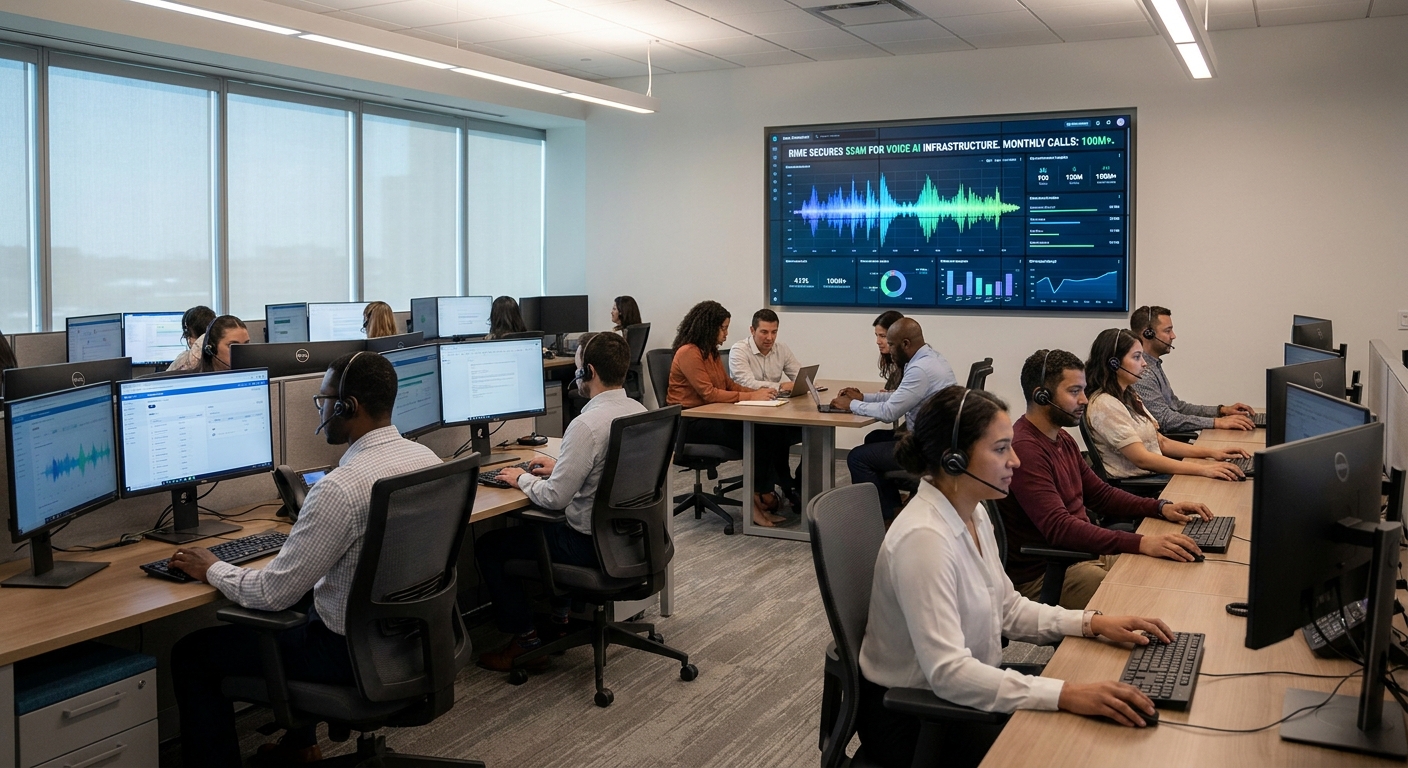
Let’s be honest: most "global" AI models struggle with the subtleties of Arabic. They might get the grammar right, but they often stumble over the regional shifts that define how people actually speak. Hamsa’s technology changes that. It’s built to handle the grit and texture of the language, including the constant code-switching between Arabic and English that’s become second nature in modern Saudi business.
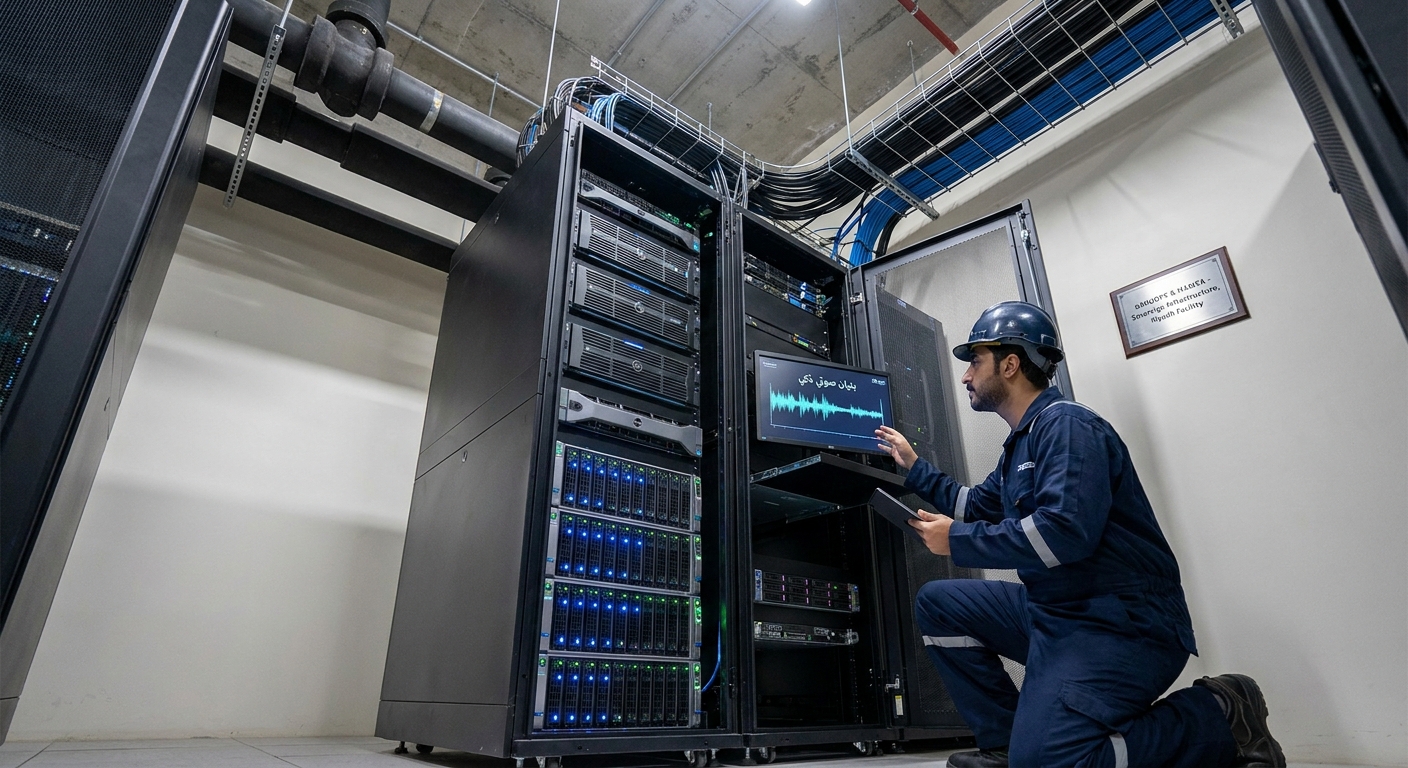
When you pair that linguistic intelligence with the Bunyan platform, you get more than just a chatbot. You get a system that respects the Saudi Personal Data Protection Law. Whether a business needs to run its AI on-premise, in a private cloud, or across a public infrastructure, the data stays where it belongs: within the Kingdom.
Technical Integration: Power Meets Precision
The real magic here is the hardware-agnostic nature of the Bunyan platform. Hamsa’s voice AI acts as the brain, but the infrastructure is the muscle. Because Bunyan is designed to play nice with almost any hardware—from NVIDIA and AMD to Groq, Qualcomm, and SambaNova—it avoids the vendor lock-in that usually plagues large-scale AI deployments.
For an enterprise, this means low-latency performance that actually works in a live call center environment. You aren't just getting a transcript; you’re getting a system capable of speaker diarization and real-time authentication that doesn't choke when the conversation gets complex.
What’s under the hood:
- Dialect Mastery: The models cover the map, from Saudi, Emirati, and Bahraini to Qatari, Kuwaiti, Omani, Palestinian, Jordanian, Lebanese, Syrian, and Iraqi.
- Hardware Flexibility: It’s built to run on the best silicon available, ensuring you aren't tied to a single manufacturer.
- Regulatory Peace of Mind: Local hosting means full compliance with national data governance standards.
- Real-World Utility: Features like code-switching and speaker diarization make this ready for the messy, fast-paced reality of customer service.
A New Standard for the Saudi Market
The push for digital transformation in the Kingdom is moving fast, but it’s hitting a wall when it comes to voice-enabled interfaces. Virtual assistants and automated support systems are only useful if they can be trusted with sensitive data and if they actually understand the user.
As noted in reports from Reuters and Zawya, the goal here is "production-ready" infrastructure. This isn't a pilot project or a research paper; it’s a framework designed to handle the heavy lifting of large-scale enterprise operations.
| Feature | The Value Proposition |
|---|---|
| Sovereignty | Data stays local, satisfying all residency laws. |
| Linguistic Depth | Native fluency across 12+ regional dialects. |
| Deployment | Public, private, or on-premise—your choice. |
| Hardware Support | Multi-vendor compatibility (NVIDIA, AMD, Groq, etc.). |
The Road Ahead
OmniOps is a young player, founded in 2024, but they’ve already secured $8 million in pre-seed funding to prove that sovereign AI isn't just a buzzword. By using the Bunyan platform to host Hamsa’s specialized models, they are effectively creating a blueprint for how other high-demand AI applications can be deployed in the region.
The implications for specific sectors are significant:
- Financial Services: Secure voice authentication that doesn't rely on offshore servers.
- Telecommunications: Support agents that don't need a translator to understand a complex, dialect-heavy query.
- Government Services: Accessible, voice-driven interfaces that make public services easier to navigate.
- Healthcare: Administrative transcription that keeps patient data strictly private and local.
The partnership is clearly focused on the long game. By continuously refining their models against regional voice data, they’re working to close the performance gap that has historically kept Arabic-language AI a step behind its global counterparts. For Saudi enterprises, this means they can finally integrate voice AI into their workflows without having to choose between cutting-edge performance and ironclad security. In a world where data is the new oil, keeping that data within the Kingdom’s borders is the ultimate competitive advantage.