
Rime Secures $24 Million Funding to Accelerate Development of Secure Enterprise Voice AI Infrastructure


TL;DR
- Rime closed a $24 million Series A round led by M13.
- The company focuses on high-fidelity, human-like synthetic speech for enterprises.
- Rime currently processes nearly 100 million phone calls every month.
- New Chief Science Officer Rafael Valle joins from Meta’s Super Intelligence Lab.
- Funding will scale their speech-to-speech platform and proprietary datasets.
Rime Secures $24 Million to Build the Future of Enterprise Voice AI
Voice AI is finally moving past the robotic, monotone era. Rime, a startup that’s been quietly reshaping how machines talk, just closed a $24 million Series A funding round. They aren't just building another chatbot; they’re aiming for the ChatGPT of voice, focusing on the kind of nuance that actually sounds like a human being.
The round, announced on July 15, 2026, was led by M13, with a heavy-hitting supporting cast including Twilio Ventures, Corazon Capital, and Unusual Ventures. This cash isn't just for show—it’s earmarked to scale their speech-to-speech platform, beef up their proprietary datasets, and pull in the kind of engineering talent that can push the boundaries of what synthetic speech can actually do.
Founded in 2022 by Lily Clifford, Brooke Larson, and Ares Geovanis, Rime took a different path than most. Instead of just throwing more compute at a generic language model, they leaned into linguistics. They’re obsessed with the "science of speech"—the rhythm, the prosody, and the emotional inflection that separates a helpful assistant from a frustrating automated phone tree.
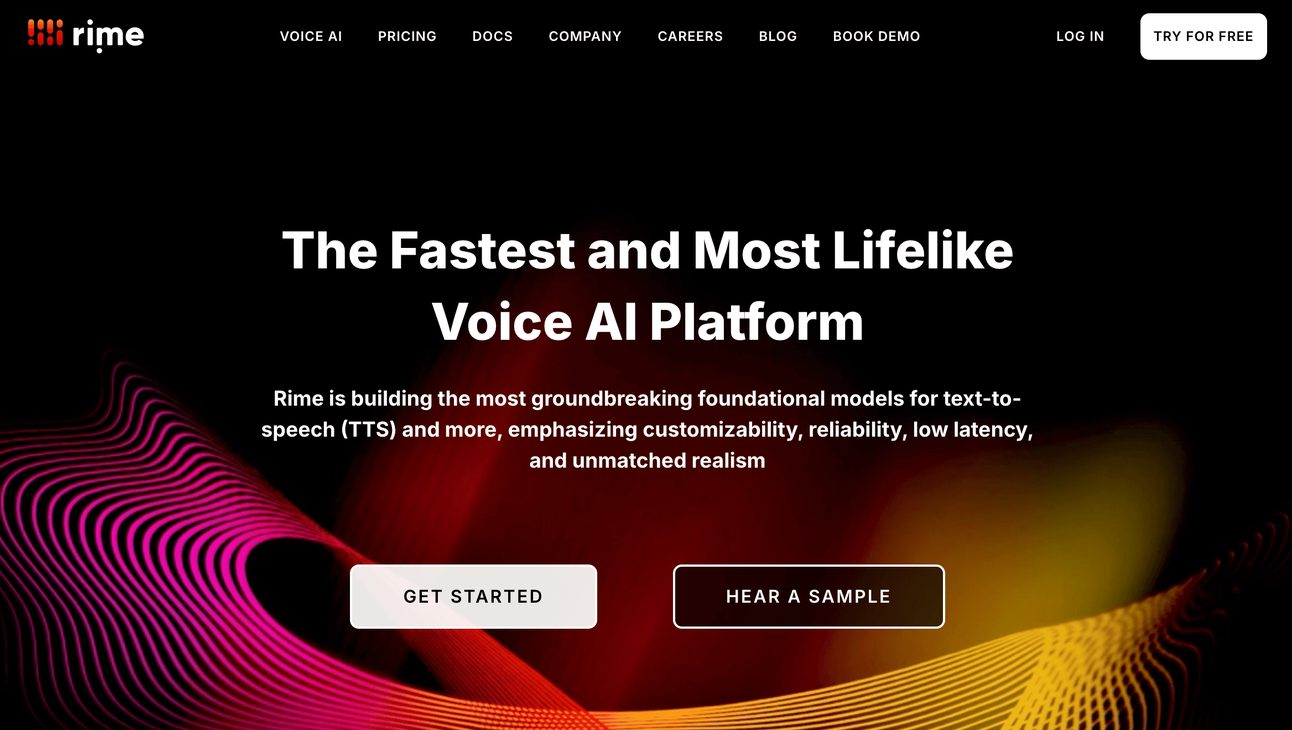
It’s working. Rime is already handling nearly 100 million phone calls every month. If you’ve interacted with a high-end automated system at places like the Mayo Clinic, Dialpad, Upstart, or Asurion, there’s a good chance you’ve already heard their tech in action. These aren't low-stakes demos; these are mission-critical environments where latency and voice fidelity are the difference between a satisfied customer and a hung-up phone.
To keep that momentum going, they’ve tapped Rafael Valle as their new Chief Science Officer. Valle is coming off a stint at Meta’s Super Intelligence Lab, and his arrival signals that Rime is getting serious about deep research. As they scale their voice AI platform, having someone with his pedigree in the room is a clear play to keep their tech ahead of the pack.
The Breakdown: By the Numbers
| Feature | Detail |
|---|---|
| Funding Amount | $24 Million |
| Funding Round | Series A |
| Lead Investor | M13 |
| Founding Year | 2022 |
| Monthly Call Volume | ~100 Million |
What really sets Rime apart is their refusal to treat voice as an afterthought. Most competitors are trying to make a text model "speak." Rime is building a system that understands the mechanics of human conversation from the ground up. In the enterprise world, you can’t get away with "good enough." You need systems that handle accents, interruptions, and complex emotional contexts without sounding like a glitchy recording from the 90s.
Looking ahead, the roadmap is clear. They’re focusing on four main pillars:
- Platform Scaling: They need to handle even more concurrent calls without a millisecond of lag.
- Dataset Expansion: They’re pouring resources into proprietary data to ensure their models understand the infinite variety of human speech patterns.
- Talent Acquisition: They're hunting for the best research and engineering minds to iterate on their models faster.
- Scientific Leadership: With Valle on board, they’re doubling down on the core linguistics that define their competitive edge.
The involvement of a player like Twilio Ventures is telling. It suggests that the industry is finally accepting that high-fidelity, low-latency voice AI is the new baseline for customer experience. As Rime continues to refine its models, the challenge will be balancing that "human" sound with the ironclad security and reliability that massive corporate partners demand.
They’ve got the capital, they’ve got the clients, and they’ve got the research chops. Now, the real test begins: proving that they can scale this level of quality without losing the very thing that makes them special—the ability to sound like us.