
Q2 2026 J.S. Held Report Highlights Rising Copyright Litigation and Liability Risks for AI Voice


TL;DR
- AI litigation saw a 35% spike in Q2 2026, with 42 new filings.
- Legal focus is shifting from copyright to product liability and safety.
- Supreme Court rejection of Thaler v. Perlmutter denies AI authorship rights.
- Industry faces mounting pressure over training data and generative AI ethics.
Q2 2026 J.S. Held Report: AI Litigation Hits a Fever Pitch
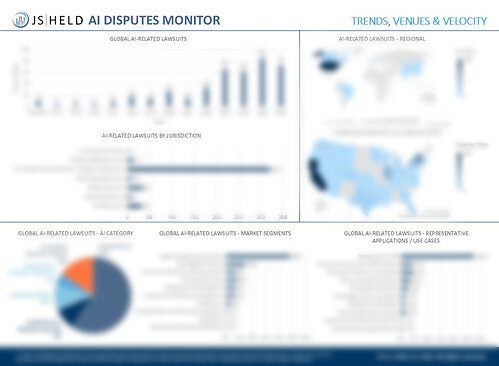
The legal battlefield surrounding artificial intelligence didn't just grow in the second quarter of 2026—it exploded. If you’ve been watching the courts, you know the vibe: the "wild west" era of AI development is slamming head-first into the cold, hard reality of the judicial system. According to the latest J.S. Held AI Disputes Monitor, we saw a 35% jump in AI-related lawsuits between April and June. That’s 42 new filings in just three months. With 426 cases now on the books, we’re on track to more than double the total litigation volume we saw in 2025.
It’s no longer just about who owns the data. While copyright battles remain the bread and butter of these lawsuits, Q2 signaled a massive pivot toward the messy, high-stakes world of product liability and regulatory overreach. The legal community is finally peeling back the curtain on the "black box," moving past simple training-data disputes to tackle the real-world consequences of generative AI safety and state-level governance.
The Copyright Tug-of-War
Copyright and intellectual property (IP) remain the heavy hitters in the courtroom. At the heart of it all, two questions keep lawyers awake at night: Does scraping the internet to train a model count as "fair use," and who is on the hook when an AI spits out something that looks suspiciously like a protected work?
The US Copyright Office hasn't budged an inch: if a human didn't write it or paint it, it doesn't get a copyright. The Supreme Court backed this up on March 2, 2026, when it refused to hear Thaler v. Perlmutter. By denying certiorari, the Court effectively slammed the door on the idea that autonomous machine generation deserves the same legal protection as human creativity. It’s a bright line in the sand that’s forcing every tech company to rethink how they market their "AI-assisted" tools.
As noted in recent industry analyses, the docket is packed with heavy-hitters fighting over these exact boundaries:
- Thaler v. Perlmutter: The definitive "no" on AI-only authorship.
- Thomson Reuters v. Ross Intelligence: A test case for whether proprietary databases can be cannibalized for research tools.
- Bartz et al. v. Anthropic: A direct challenge to how models are trained on copyrighted works.
- Kadrey et al. v. Meta Platforms Inc.: A massive fight over the scope of fair use in large-scale development.
- In Re OpenAI, Inc. Copyright Infringement Litigation: The consolidated effort to hold the industry leader accountable for its training data.
- Disney et al. v. Midjourney: A high-stakes clash over generative imagery and the rights of legacy creators.
New Frontiers: The Regulatory and Liability Shift
Copyright is the headline, but the subtext is changing. We are entering a phase where constitutional law and consumer protection are taking center stage. Take the xAI challenge to Colorado’s AI Act (SB24-205), for example. This isn't just about a local rule; it’s a constitutional showdown. It asks the ultimate question: can a state regulate AI, or does that step on the toes of federal commerce and free speech?
Then there’s the rise of product liability. We’re seeing a shift from "is this copyright infringement?" to "is this product actually safe for the public?" Florida Attorney General James Uthmeier’s lawsuit against OpenAI and Sam Altman is the perfect case study. It alleges that the models aren't just potentially infringing—they’re potentially dangerous. When you start talking about biometric privacy and safety guardrails, you’re no longer talking about abstract IP rights. You’re talking about corporate accountability.
| Litigation Category | Primary Focus |
|---|---|
| Copyright & IP | Training data usage and authorship rights |
| Regulatory | Constitutional challenges to state AI laws |
| Product Liability | Safety guardrails and consumer protection |
| Biometric Privacy | Data collection and user consent |
The Legal Landscape: What to Watch
The data from the J.S. Held AI Disputes Monitor suggests the legal environment is maturing—or at least, it’s getting much more aggressive. The days of treating AI litigation as a niche hobby for IP lawyers are long gone.
Here is what the current trend line tells us:
- The Pace is Relentless: Forty-two new cases in one quarter proves that plaintiffs and legal departments have found their rhythm. They aren't just testing the waters anymore; they’re diving in.
- The "Human" Requirement: Thaler v. Perlmutter has set a precedent that companies can’t ignore. If you’re building a business model on AI-generated content, you’re building on shaky ground.
- State vs. Federal: The Colorado case is a bellwether. If states win the right to regulate AI, tech companies are looking at a fragmented, nightmare regulatory environment.
- Safety is the New Liability: The "black box" defense is crumbling. Courts are showing a growing appetite to hold companies responsible for how their models behave in the wild.
With 426 cases now in the pipeline, we are watching the birth of a new legal framework in real-time. The focus on copyright is still the anchor, but the diversification into constitutional and liability law proves that AI risks are becoming as multifaceted as the technology itself.
As legal experts keep pointing out, the judiciary is still feeling its way through the dark. They are applying old statutes to new problems, and the results are often unpredictable. One thing is certain: as these cases wind their way through the system, the rulings handed down will define the boundaries of AI for the next decade. The era of "move fast and break things" is officially meeting the era of "litigate and settle."