OpenAI, Nvidia, and Eleven Labs Adopt Google SynthID to Standardize Synthetic Media Watermarking

TL;DR
- Google expands SynthID to OpenAI, Nvidia, and ElevenLabs for industry-wide watermarking.
- SynthID embeds invisible, resilient signals into AI-generated images, video, audio, and text.
- Over 100 billion media files already use SynthID to combat AI misinformation.
- New Content Detection API allows developers to verify media provenance easily.
The Wild West of AI-generated content is finally getting a sheriff. As of May 19, 2026, Google has officially pulled the trigger on a massive expansion of its SynthID watermarking technology, bringing some of the biggest names in the business—OpenAI, Nvidia, Kakao, and ElevenLabs—into the fold.
For years, we’ve been playing a high-stakes game of "is this real?" every time we scroll through a feed. Now, these industry titans are committing to a unified standard. By embedding imperceptible digital signals directly into the DNA of images, videos, audio, and text, they’re aiming to make machine-made content leave a permanent, detectable footprint.
The Scale of the Shift
This isn't a pilot program or a small-scale experiment. Google has been stress-testing SynthID within its own walls for a long time, and the numbers are staggering. We’re talking about 100 billion images and videos already watermarked, along with a mind-boggling 60,000 years of audio content. The Gemini app alone has fielded over 50 million verification requests. It’s clear the tech works, and it works at a scale that actually matters.
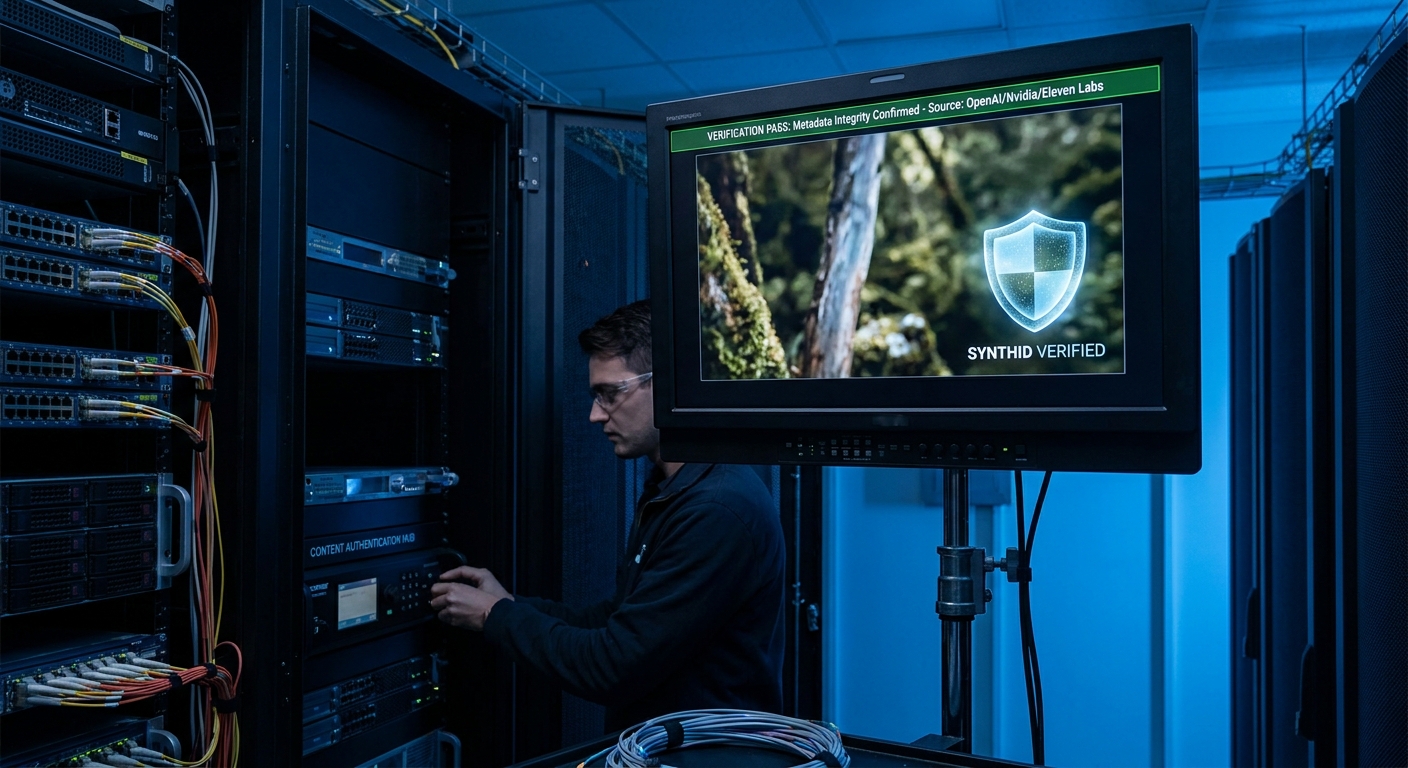
The brilliance of SynthID lies in its resilience. You can crop an image, compress a video, or tweak the colors until the cows come home, but those digital signatures? They stay put. They’re invisible to the human eye and ear, but to the right verification tools, they’re as clear as a neon sign.
How It Works: A New Standard for Trust
The integration of SynthID by partners like OpenAI and Nvidia is a direct response to the rising tide of AI-generated misinformation. It’s a necessary pivot toward transparency. Google has already flipped the switch on SynthID verification within Google Search, and Chrome support is just around the corner.
| Feature | Functionality |
|---|---|
| Watermarking | Embeds invisible signals into images, video, audio, and text. |
| Resilience | Signals remain detectable after compression, editing, or cropping. |
| Search Integration | Users can verify media provenance directly via Google Search. |
| API Access | Developers can utilize the new Content Detection API for verification. |
Strengthening the Digital Paper Trail
To keep the momentum going, Google has rolled out a preview of its Content Detection API. Think of this as a toolkit for the rest of the developer community. By giving organizations a standardized way to spot AI-generated content, the goal is to clean up the digital environment. We want to know where our media comes from, and this API is the bridge to that reality.
As noted in a recent analysis by Ars Technica, this is a clear signal that the industry is finally moving toward a unified standard for AI provenance. It’s a key pillar of a wider Google strategy to improve the identification of AI-generated media across the web.
The Technical Heavy Lifting
The technical specs behind SynthID are documented for developers via Google’s responsible AI guidelines, and the focus is on being non-intrusive. The watermarks don’t degrade quality or mess with your workflow; they just sit there, silently verifying the source.
The inclusion of ElevenLabs is particularly interesting. As synthetic voice technology becomes indistinguishable from the real thing, the ability to verify audio provenance is becoming a cornerstone of digital security. Industry observers, including reports from MLQ.ai, have pointed out that this is a critical development for the audio sector.
If you’re curious about the mechanics, Google has launched a dedicated portal explaining the SynthID content detector, which pulls back the curtain on how the detection process actually functions for the public.
Who’s on Board?
The current list of partners adopting the SynthID standard reads like a who’s-who of the AI revolution:
- OpenAI: Integrating watermarking into their generative models.
- Nvidia: Implementing detection and watermarking capabilities for their AI platforms.
- ElevenLabs: Applying signals to synthetic audio outputs.
- Kakao: Adopting the standard for their AI-driven content services.
The Road Ahead
This collective effort acknowledges a simple truth: we can’t just hope for honesty in the age of generative AI. We need technical guardrails. By aligning on a single, resilient standard, these companies are trying to cut through the ambiguity that currently plagues our digital lives.
As the Content Detection API moves out of its preview phase, expect to see these verification tools popping up everywhere—from your favorite social media platforms to news aggregators and beyond. It’s a massive undertaking, but for the first time, it feels like the industry is finally moving in the right direction. We aren't just building faster models anymore; we're building a system that can actually be trusted.