The Role of Text-to-Speech Technology in Modern Journalism


TL;DR
- AI answer engines are cannibalizing traditional news search traffic.
- Spoken articles create emotional connections that bots cannot replicate.
- Text-to-Speech technology is now a core business pillar for publishers.
- High-fidelity audio transforms static reporting into a multi-sensory experience.
- Audio solutions help rebuild trust and stop digital audience bleeding.
The Read-Only Web is Dead: Why Journalism’s Future is Spoken
The "read-only" internet isn't just sick. It’s dying.
If you’re a publisher staring at your analytics dashboard in 2026, you know I’m not being dramatic. You’re seeing the red arrows. You’re seeing the drop-off. It is the new baseline. The comfortable era where we could rely solely on eyeballs scanning text on a backlit screen? That’s over.
Here is the reality: AI "Answer Engines"—from SearchGPT to Perplexity—are aggressively cannibalizing traditional search traffic. They serve answers directly on the results page. The user gets the summary, nods, and closes the tab. They never visit your site. They never see your ads. The click-through rate is plummeting because the utility of the click is gone.
To survive, modern journalism has to pivot. We have to stop fighting for the eyes and start fighting for the ears.
We are witnessing the rise of "Spoken Articles." This isn't just a quirky feature for tech blogs; it is a fundamental shift in how news is consumed. It transforms reporting from a broadcast to be read into a conversation to be heard. It is the only format that allows your audience to consume your reporting while they drive, cook, or run on a treadmill.
This isn't a fringe experiment. It is a mass migration. According to the Reuters Institute Trends Report 2026, a staggering 75% of global publishers are now adopting or expanding audio solutions. They aren't doing it because it's cool. They are doing it to stop the bleeding.
Text-to-Speech (TTS) technology has graduated. It used to be a clunky accessibility add-on, hidden in the footer. Now? It’s a core business pillar. It transforms journalism from a static, two-dimensional medium into a multi-sensory experience that drives revenue, ensures true accessibility, and—crucially—rebuilds trust in an age of synthetic noise.
The "Answer Engine" Threat: Why Use High-Fidelity Audio?
The urgency here isn't born from creativity. It’s born from necessity.
The threat from AI search is existential. Picture this: A user asks an AI tool, "What happened in the Senate today?" The AI scrapes your hard work, summarizes it in three bullets, and serves it up. You lose the impression. You lose the ad revenue. You lose the chance to convert a subscriber.
Text is easy for bots to scrape, strip, and summarize. It is low-friction data.
The human voice—even a synthetic one—is different. It creates a "sticky" emotional connection that a bulleted summary cannot replicate. You can summarize a transcript, but you cannot summarize the experience of listening to a story unfold. By converting your text to high-fidelity audio, you are creating a product that is harder to commoditize. You are creating a destination.
The Myth of the "Lazy" Reader
Publishers often mistake lack of time for lack of interest.
We are living in the age of the "Time-Poor" reader. Your audience is intelligent. They want to consume high-quality, deep-dive journalism. But let’s be honest: they physically lack the time to sit, scroll, and read 2,000 words on a phone screen.
They are multitasking. They are parents fighting with optimized schedules; they are commuters stuck in gridlock; they are fitness enthusiasts trying to squeeze in a podcast between sets.
Audio unlocks the "dead time" in their day.
This aligns with findings from Nieman Lab, which suggest that AI is turning news into a conversation rather than a monologue. By offering a listenable version of an article, you aren't just offering a feature. You are offering utility. You are meeting the user where they are, rather than demanding they stop their life to read your words.

Beyond Compliance: Universal Design
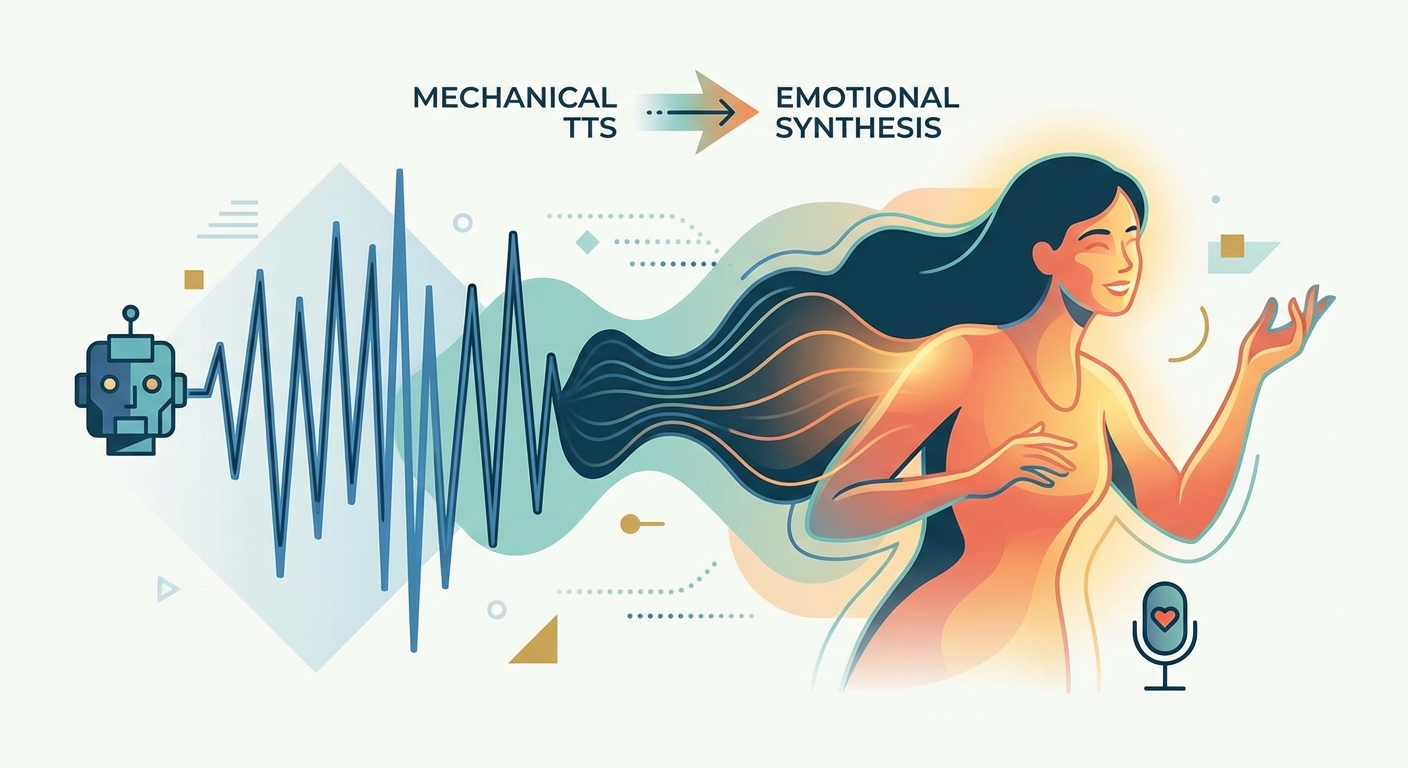
For years, TTS was treated as a "check-box" exercise to satisfy ADA requirements. The voices were robotic, jarring, and frankly, painful to listen to.
That mindset is obsolete. Today, audio is about "Universal Design."
Yes, TTS remains a critical lifeline for the visually impaired. But its utility extends far beyond that demographic.
- The Aging Population: It serves the elderly whose eyesight is failing but whose appetite for world events remains sharp.
- Neurodiversity: It serves the millions of people with dyslexia or ADHD who find listening more effective—and less exhausting—than decoding dense text.
- Language Learners: It serves non-native speakers who use audio to improve their pronunciation and comprehension.
Automated audio allows publishers to meet rigorous standards, such as those outlined by the W3C Web Accessibility Initiative (WAI), without the logistical nightmare of manually recording every single breaking news update.
Modern neural voice engines breathe. They pause. They intonate. They are indistinguishable from human narration. This means accessibility no longer comes at the cost of user experience. It is an inclusive strategy that expands your total addressable market.
Can You Actually Monetize This?
The short answer is yes. But only if you treat it as a product, not a gimmick.
The strongest argument for TTS is the engagement metric. Readers skim; listeners stay.
When a user clicks "Listen," they are committing to a linear experience. They are strapping in. This behavior drives up "Time on Page" metrics significantly. In our own work with Client Name, we observed a 20% increase in time-on-page for articles featuring high-quality audio narration.
That extra time is currency. It signals to advertisers that the user is engaged. It signals to search algorithms that the content is valuable.
Furthermore, audio is becoming a potent lever for direct monetization.
1. The Paywall Wedge
Top-tier publications like The Economist use audio as a wedge. Casual visitors get the text. Paying subscribers get the full audio experience (often called "pod-articles"). It turns convenience into a premium feature. It says: "Your time is valuable, and for $5 a month, we will give it back to you."
2. Audio Advertising
Just as podcasts have normalized mid-roll ads, spoken articles allow for dynamic ad insertion. A 15-second pre-roll on a news brief is high-value real estate that simply didn't exist in a text-only world. It is unskippable, high-intent, and brand-safe.
The Workflow: No More Sound Booths
The days of dragging a journalist into a sound booth to record a 500-word brief are over. That workflow is dead. It is too slow for the 24-hour news cycle, and frankly, your journalists hate it.
The modern newsroom relies on automation.
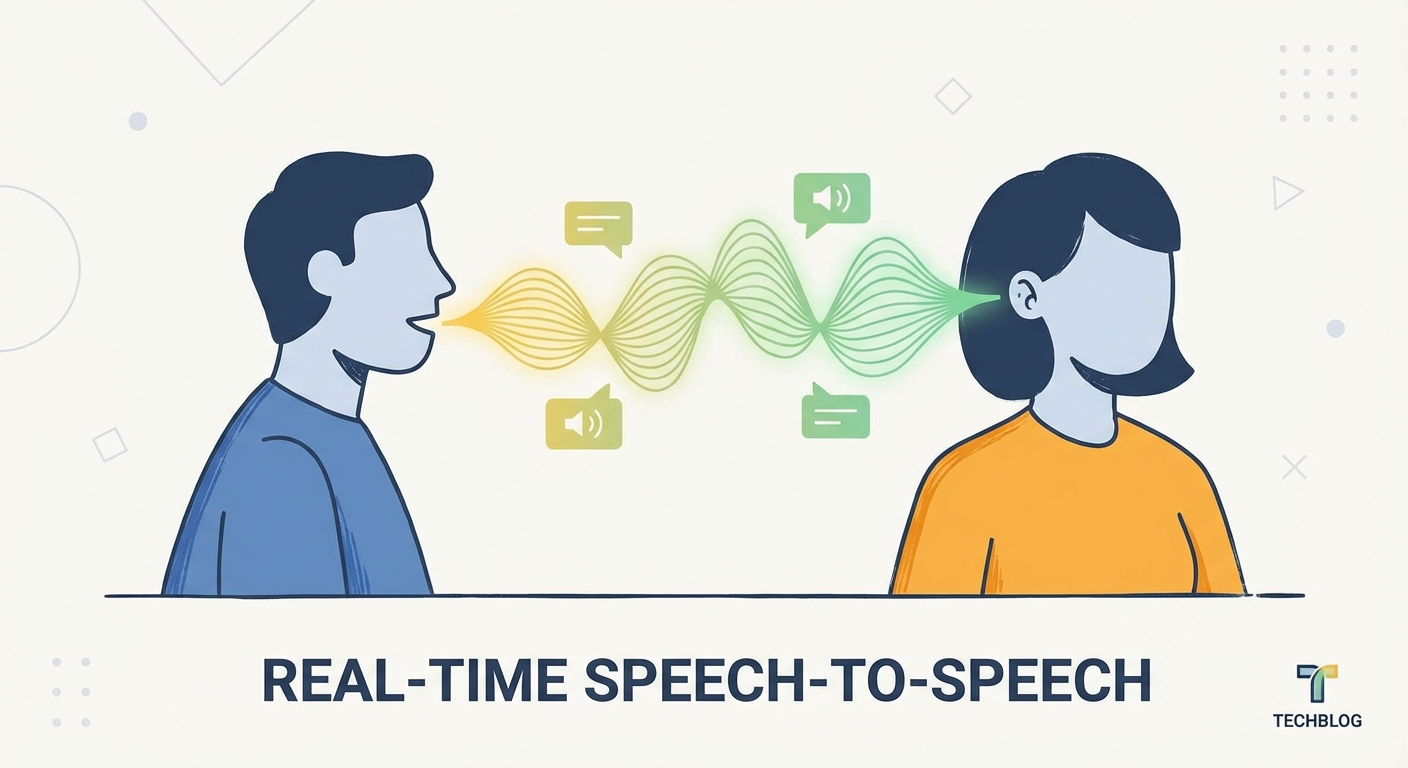
Publishers are integrating robust text-to-speech APIs directly into their Headless CMS environments. The workflow is seamless: an editor hits "Publish" on a text article, and the API instantly generates a high-fidelity audio version, embeds the player, and distributes it to RSS feeds.
This "Publish Text $\rightarrow$ Instant Audio" pipeline ensures that the audio experience is never lagging behind the breaking news.
The Tower of Babel, Solved
This technology also unlocks global reach through localization. A local news story breaking in London can be instantly translated and narrated in natural-sounding Spanish, French, or Mandarin.
This allows publishers to serve global diasporas and expand into new territories without the massive overhead of hiring foreign-language bureaus. You can be a local publisher with a global voice.
The Trust Factor: Navigating the Uncanny Valley
We cannot discuss AI voice technology without addressing the elephant in the room: Deepfakes.
Journalism trades on one currency: Truth.
If your audience suspects they are being tricked, you lose them forever. If your audio sounds like a scam call, you damage your brand.
The ethical obligation here is transparency. As noted by The Open Notebook, publishers must clearly label content. A simple tag saying "AI-Narrated" or "Spoken by AI" builds trust. It tells the reader, "We used technology to bring this to you, but the reporting is human."
Furthermore, generic robot voices erode brand identity. You don't want your investigative report to sound like a GPS navigation system.
Publishers are increasingly using custom voice cloning to create a proprietary "Brand Voice." This ensures that whether a user is listening to a political op-ed or a sports recap, the auditory experience feels distinctly like your publication. It maintains the editorial tone you've spent decades building.
Conclusion: The Newsroom of 2026
Text-to-Speech is no longer a futuristic novelty. It is a structural necessity.
It is the trifecta solution:
- Defense: It protects against traffic-cannibalizing answer engines.
- Offense: It opens new veins of revenue through high-engagement audio.
- Inclusion: It ensures your journalism is accessible to every member of society.
If your content strategy is still text-only, you are leaving 75% of potential engagement on the table. The audience is ready to listen.
The question is: Are you ready to speak?
Frequently Asked Questions
Q: How does text-to-speech technology benefit news publishers? A: It significantly increases accessibility (ADA compliance), boosts time-on-site (engagement) by allowing passive consumption, and opens new revenue streams through audio ads and premium subscriptions.
Q: Will AI-generated audio replace human journalists? A: No. TTS automates the delivery mechanism, not the reporting. It frees up journalists from the time-consuming task of recording their own articles, allowing them to focus on investigation and writing.
Q: What are the ethical risks of using AI voices in journalism? A: The primary risks involve "deepfakes" or user confusion. Best practices dictate that publishers must clearly label all audio as "AI-narrated" or "Synthetic Audio" to maintain transparency and reader trust.
Q: Can text-to-speech handle multiple languages for global news? A: Yes. Modern TTS solutions can instantly "localize" news content, converting an English article into natural-sounding Spanish, French, or Mandarin audio, allowing publishers to reach global audiences instantly.