Comprehensive Guide to Text-to-Speech Technologies

TL;DR
- TTS has crossed the 'Human Threshold' for indistinguishable synthetic speech.
- Modern systems achieve ultra-low latency under 300ms for real-time interaction.
- Comparison of top 2026 providers including ElevenLabs, Cartesia, and OpenAI.
- Shift from concatenative synthesis to high-fidelity neural sound generation.
- Rise of local AI allowing high-quality synthesis without internet connectivity.
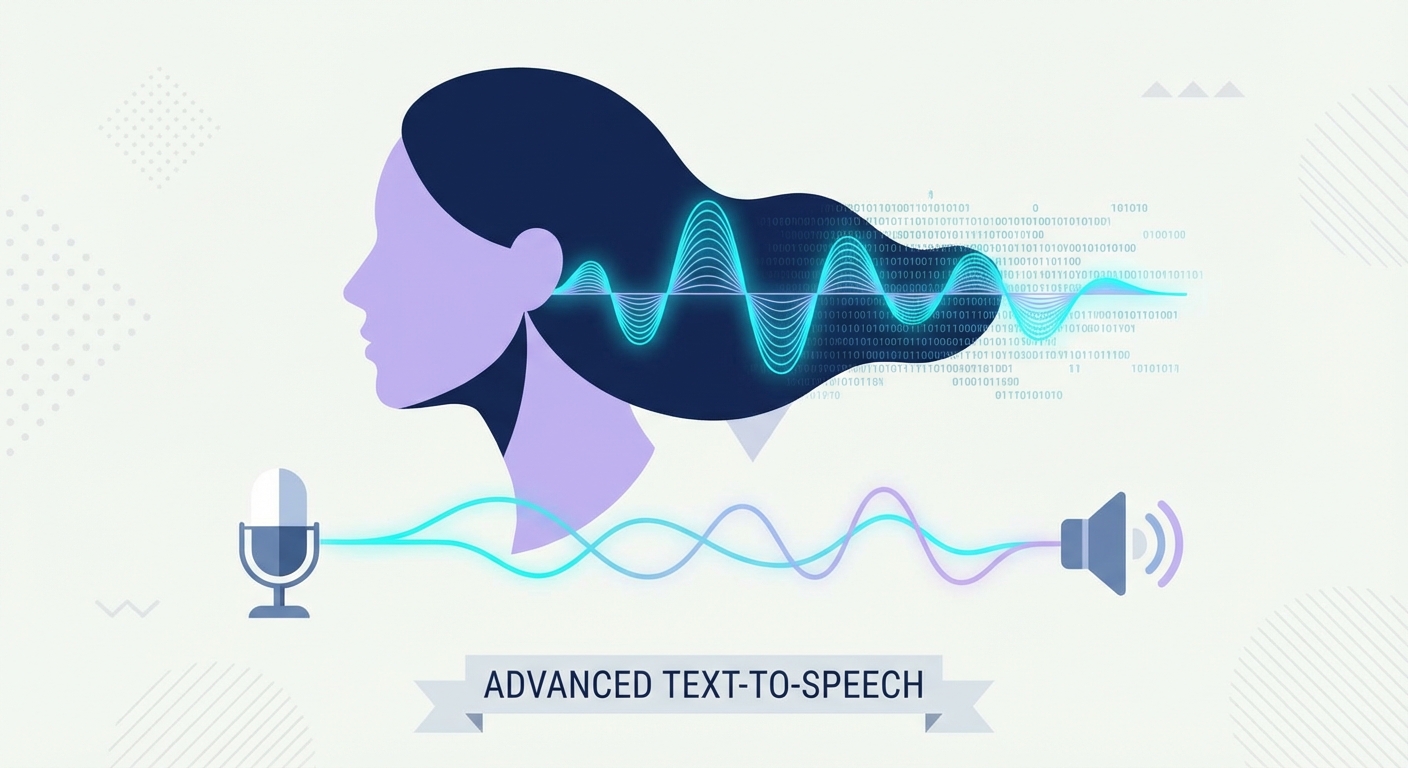
We’ve finally done it. Text-to-Speech (TTS) in 2026 has officially crossed the "Human Threshold." We are officially past the days of those grating, robotic voices that sounded like a GPS having a mid-life crisis. Today, synthetic voices aren't just "good enough"—they’re indistinguishable from the real thing.
The game has changed. We’re seeing ultra-low latency where the "Time-to-First-Audio" (TTFA) has plummeted below 300ms. More importantly, "Local AI" is exploding. You can now run high-fidelity neural synthesis directly on your own laptop or phone without needing an internet connection. Whether you’re a dev building a snappy voice agent or a creator trying to nail the emotional nuance of a story, there’s a tool for you.
The State of TTS in 2026: Why the "Robotic" Era is Dead
Let’s be honest: for a long time, TTS was a bit of a joke. It was a utility—a way to turn text into barely tolerable noise. But we’ve finally climbed out of the "uncanny valley."
In 2026, the benchmark is the "Human Threshold." This is a technical standard where the delay between hitting "play" and hearing sound is less than 300ms. Why does that matter? Because at that speed, your brain stops thinking "I’m talking to a machine" and starts treating the interaction like a real conversation.
As AI strategist Hamza Nabulsi puts it: "The era of 'robotic' voices is officially behind us. In 2026, the gap between human and synthetic speech has effectively closed."
It’s not just about the sound; it’s about the behavior. We’re seeing a massive surge in AI Voice Agents in places you wouldn't expect, like warehouse logistics. "Pick-to-Voice" systems now allow workers to talk to inventory databases using fluid, natural dialogue. The result? Productivity is jumping by 20% year-over-year because the tech actually works with the human, not against them.
Quick Comparison: Which TTS Provider is Right for You?
Choosing a provider in 2026 is all about your priorities. Do you need the raw emotion of a Broadway actor, or the lightning-fast response of a live translator?
| Provider | Best For | Latency (TTFA) | Key Feature |
|---|---|---|---|
| ElevenLabs | Narrative & Realism | ~800ms | Incredible emotional inflection |
| Cartesia | Real-Time Agents | ~40ms | Industry-leading speed |
| OpenAI | Versatility | ~250ms | Multimodal integration |
| Kokoro | Privacy & Local | 0ms (Network) | Runs on your own hardware |
How Does Modern Text-to-Speech Actually Work?
To understand why your phone no longer sounds like a 1980s sci-fi movie, we have to look under the hood. The jump from "choppy" to "fluid" wasn't an accident—it was an evolution in how machines think about sound.
From "Ransom Note" Audio to Neural Synthesis
Old-school TTS used something called "concatenative synthesis." Imagine a giant database of tiny sound clips recorded by a voice actor. The system would stitch these clips together like a ransom note. It was accurate, sure, but it was emotionally dead. There was no flow.
Modern systems use Neural Vocoders. Instead of stitching old clips, these models are trained on thousands of hours of speech to understand the statistical relationship between text and sound waves. They don’t just "say" the words; they predict the vibration, the breath, and those tiny micro-pauses that make a human voice sound alive.
The Death of the "Wait Time"
Back in the day, TTS used standard HTTP requests. You’d send a block of text, wait for the server to chew on it, generate a file, and then download it. It was slow.
Today, the pros use WebSockets. This allows for a continuous stream of data. The audio starts playing the second the first few words are ready, even while the rest of the sentence is still being "thought up" by the AI.
Why "Local TTS" is the Biggest Story of the Year
The biggest headline of 2026? The "de-clouding" of AI. The cloud is great for power, but it’s a nightmare for two things: latency and privacy.
Privacy and Zero-Latency
If you’re building a medical app or a private corporate tool, sending voice data to a server in Virginia is a massive liability. Local TTS keeps the data on the device. Since there’s no "round trip" to a server, the network latency is zero. It feels instantaneous because it is.
High-End Audio on Basic Hardware
You don't need a server farm anymore. Lightweight models like Kokoro-82M on HuggingFace have flipped the script. With only 82 million parameters, this model runs beautifully on M-series Macs or standard NVIDIA GPUs. It produces audio that rivals the big cloud providers, meaning indie devs can finally compete without a massive API bill.
The Heavy Hitters: Top TTS Providers for 2026
If you’re building at scale, these are the names you need to know.
ElevenLabs: The Emotional Heavyweight
When it comes to storytelling, ElevenLabs is still the king. Their models are built for "long-form" content where tone matters. They can handle shifts from excitement to a whisper, or even add a subtle sigh for dramatic effect. Their voice cloning is so good it can catch the "vocal fry" of a specific person with just a few minutes of audio.
Cartesia: The Speed Demon
Building a conversational AI? You want Cartesia. With a latency of about 40ms, their "Sonic" models are built for the back-and-forth of real talk. If a user interrupts the AI, Cartesia is fast enough to stop and pivot without that awkward two-second lag that kills the vibe.
OpenAI Realtime API: The All-Rounder
OpenAI has baked TTS directly into their multimodal ecosystem. It might not have the niche speed of Cartesia or the granular acting of ElevenLabs, but it’s a powerhouse if you’re already using GPT-4o. It keeps everything—the "thinking" and the "speaking"—in one seamless flow.
Tools for Creators and Productivity
Not everyone is writing code. For creators, it’s all about the interface and the "vibe."
Video and E-Learning
Nobody wants to be called out for using an "AI voice." Using a realistic AI voice generator lets YouTubers and teachers create professional voiceovers without spending thousands on voice talent. These platforms are designed for "paste and play"—high quality, zero friction.
Budget-Friendly Options
You don't always need a premium subscription. If you're just starting out, checking out a free online text to speech guide is a smart move. It’ll show you who has the best free tiers or which open-source models you can run yourself for $0.
Reading Apps
TTS has moved beyond accessibility; it’s now a productivity hack. We’re using it to "read" long articles while driving or at the gym. While Speechify is the big name everyone knows, smart users are looking for Speechify alternatives that offer better voices or more flexible pricing.
Pro Tips: How to Fine-Tune AI Voices
Getting a voice to sound "just right" takes a little bit of finesse. In 2026, two techniques separate the amateurs from the pros.
1. Master the SSML
SSML (Speech Synthesis Markup Language) is basically the "code" of speaking. By following W3C SSML standards, you can manually add pauses, change the pitch, or emphasize specific words. A simple <break time="500ms"/> can turn a rushed sentence into a thoughtful moment.
2. Speech-to-Speech (S2S)
This is the new frontier. Instead of typing, you record yourself saying the line. The AI then takes your performance—your pacing, your emotion, your energy—and swaps your voice for the AI voice. It’s "AI acting," and it’s the best way to get total control.
Real-World Use Cases: Who is Actually Using This?
TTS has moved from the fringes into the core of how business works.
- Customer Service: Companies are ditching "Press 1 for Sales" for conversational agents that actually solve problems.
- Warehouses: Workers receive hands-free instructions via headsets. High-quality voices reduce "brain fog" and keep people focused.
- Gaming: RPGs are using dynamic TTS so NPCs can say anything. Instead of pre-recorded lines, characters react to your specific actions in real-time.
The Bottom Line: Your 2026 Strategy
As you dive into TTS this year, let your goals lead the way:
- Need Speed? Go with Cartesia or OpenAI.
- Need Realism? ElevenLabs is your best bet.
- Need Privacy? Run Kokoro-82M locally.
The tech isn't the bottleneck anymore. The tools to sound perfectly human are right here—how you use them is up to you.
Frequently Asked Questions
What is the fastest Text-to-Speech API in 2026?
Cartesia Sonic 3 is the current speed champ with ~40ms latency. Speechmatics is right behind at ~80ms. These are the gold standard for conversational AI.
Can I run high-quality Text-to-Speech offline?
Absolutely. 2026 is the year of "Local AI." Models like Kokoro-82M and Fish Speech let you generate neural-quality audio directly on your own hardware (Macs or NVIDIA GPUs) with zero internet required.
What is the difference between Cloud TTS and On-Device TTS?
Cloud TTS (like ElevenLabs) gives you a massive library of voices and top-tier emotion but relies on your internet speed. On-device TTS is instant and private, making it the better choice for mobile apps or sensitive data.
How do I make AI voices sound more human?
Use SSML tags to add natural pauses and breathing. If you really want to nail it, use "Speech-to-Speech" to provide the AI with a "performance" track to follow. Text alone can only go so far; performance is where the magic happens.