
2026 Enterprise AI Update: GPT-4.1 and Llama Benchmarks Signal Shift in Multimodal Voice Infrastructure

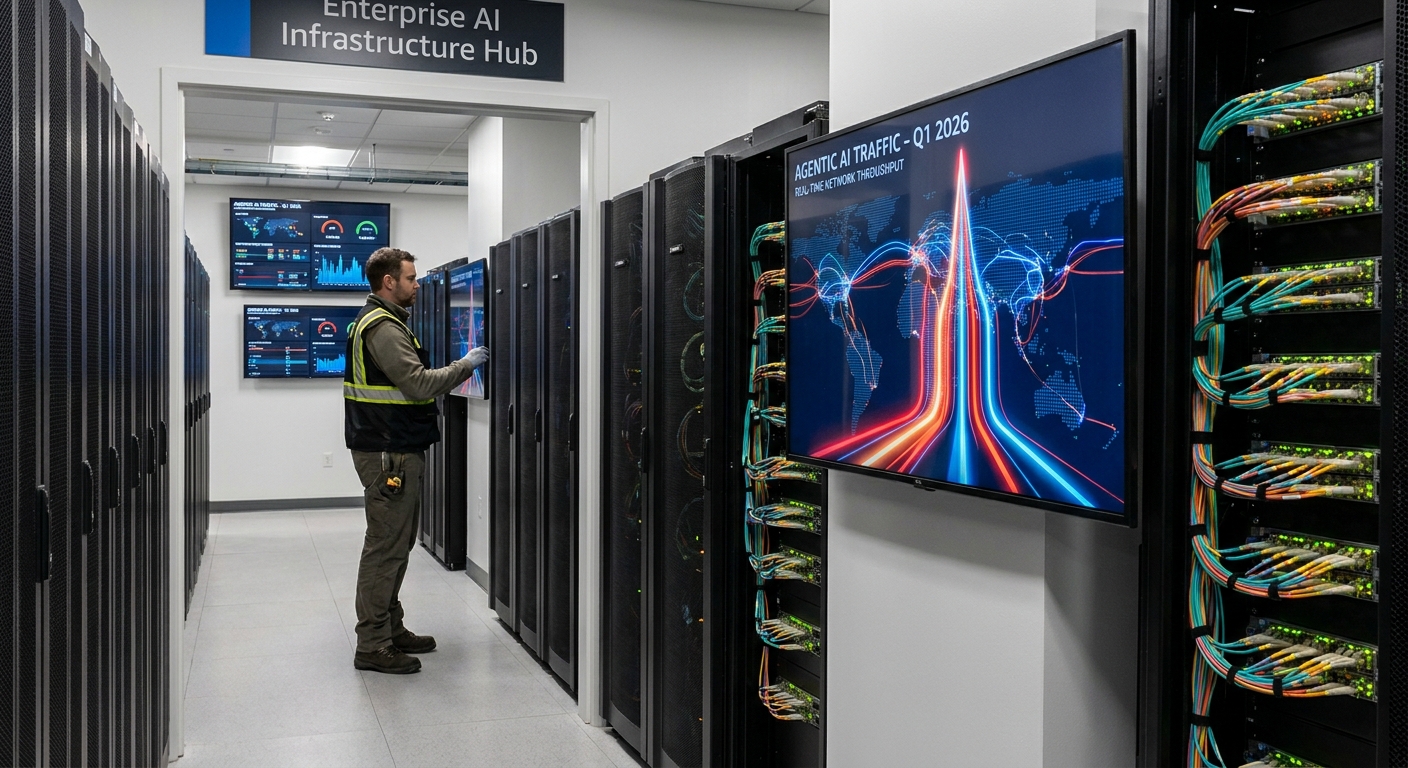
The AI landscape of early 2026 feels less like a slow evolution and more like a structural earthquake. We’ve moved past the novelty phase; we are now firmly in the era of agentic workflows and the total commoditization of synthetic voice. The numbers don’t lie: automated traffic is currently outpacing human-generated internet activity by a factor of eight. This isn't just a technical quirk—it’s a fundamental rewrite of how enterprise infrastructure handles bandwidth, security, and the sheer logistics of model deployment.
As of April 2026, the power centers have shifted. We’re seeing the fallout from the release of GPT-4.1, Claude 3.5, and the latest heavy-hitting iterations of Meta’s Llama series. But it’s not just the big names. There is a palpable surge in specialized, uncensored AI tools, signaling a market that is hungry for decentralization. Enterprises are scrambling to keep up, driven by a staggering 7,851% year-over-year explosion in agentic AI traffic. These agents are no longer just answering questions; they are doing the work, and they are doing it in massive volumes.
The Surge of Automated Traffic and Agentic AI
When we talk about "agentic AI," we’re talking about systems that don't just wait for a prompt—they execute complex, multi-step tasks on their own. This autonomy is putting a massive strain on global networks. According to the March 2026 AI Infrastructure Review, scraping alone now accounts for roughly 20% of all global traffic.
The traffic distribution remains heavily centralized, proving that despite the hype around open-source, the heavy lifting still happens in a few specific backyards:
- OpenAI: 69% of global AI-driven traffic.
- Meta: 16% of global AI-driven traffic.
- Anthropic: 11% of global AI-driven traffic.
This concentration creates a "single point of failure" anxiety for many CTOs. As these giants push out updates like GPT-4.1 and Claude 3.5, the technical requirements for enterprise integration are hardening. It’s a high-stakes game of catch-up, where organizations must balance the promise of these AI technologies against a tightening web of legal liability and federal oversight.

The Standardization of Synthetic Voice
If you want to know where the industry is heading, look at the commoditization of Text-to-Speech (TTS). We’ve landed on the 'speech-2.8-turbo' model as the de facto standard. It’s reliable, it’s fast, and it’s cheap—pricing has leveled off at roughly $30 per 1 million characters.
This standardization is a double-edged sword. On one hand, it makes integrating multimodal voice capabilities into enterprise apps as simple as plugging in a cord. On the other, it has effectively democratized the ability to create perfect deepfakes. As synthetic voice becomes indistinguishable from a human on the other end of the line, the focus for security teams has shifted dramatically. It’s no longer just about building voice features; it’s about building the "lie detectors" that verify if the person—or agent—you’re talking to is actually who they claim to be. This is forcing a rethink of how we secure ChatGPT and similar conversational interfaces.
Market Trends and Model Evolution
The pace of iteration is relentless. GPT-4.1 and Claude 3.5 aren't just incremental updates; they represent a push toward specialized, task-oriented intelligence. We are seeing a clear trend: users want tools that offer more autonomy and, in many cases, fewer guardrails.
| Metric | Status / Value |
|---|---|
| Agentic AI Growth | 7,851% YoY |
| Scraping Traffic | ~20% of Global Total |
| TTS Benchmark | 'speech-2.8-turbo' |
| TTS Cost | $30 / 1M characters |
| Traffic Growth Ratio | 8:1 (Auto vs. Human) |
This appetite for flexibility is driving developers toward platforms like 302ai. The goal is clear: enterprises want high-performance API solutions that allow them to swap models in and out without being shackled to a single ecosystem. Nobody wants to be locked into a walled garden when the next big breakthrough is only a few months away.
Regulatory and Operational Challenges
Federal regulators are finally waking up to the reality of autonomous agents. The legal landscape is shifting rapidly, specifically regarding who is liable when an autonomous agent crosses the line from "helpful assistant" to "unauthorized data scraper." The distinction is becoming dangerously thin.
Enterprises are now caught in a squeeze. They want the efficiency gains of agentic AI, but they are terrified of the network overhead and the security risks that come with it. With automated traffic growing eight times faster than human traffic, our current network infrastructure is being pushed to its breaking point.
The path forward is clear, if difficult: companies that survive the next year will be the ones that prioritize security protocols capable of handling large-scale, automated, and multimodal environments. We are moving beyond the "wow" factor of AI capability and into the "how" of managing it at scale. As we head into the second half of 2026, the question isn't whether these models are powerful enough—it's whether our infrastructure and regulatory frameworks can handle the sheer volume of what's coming next.