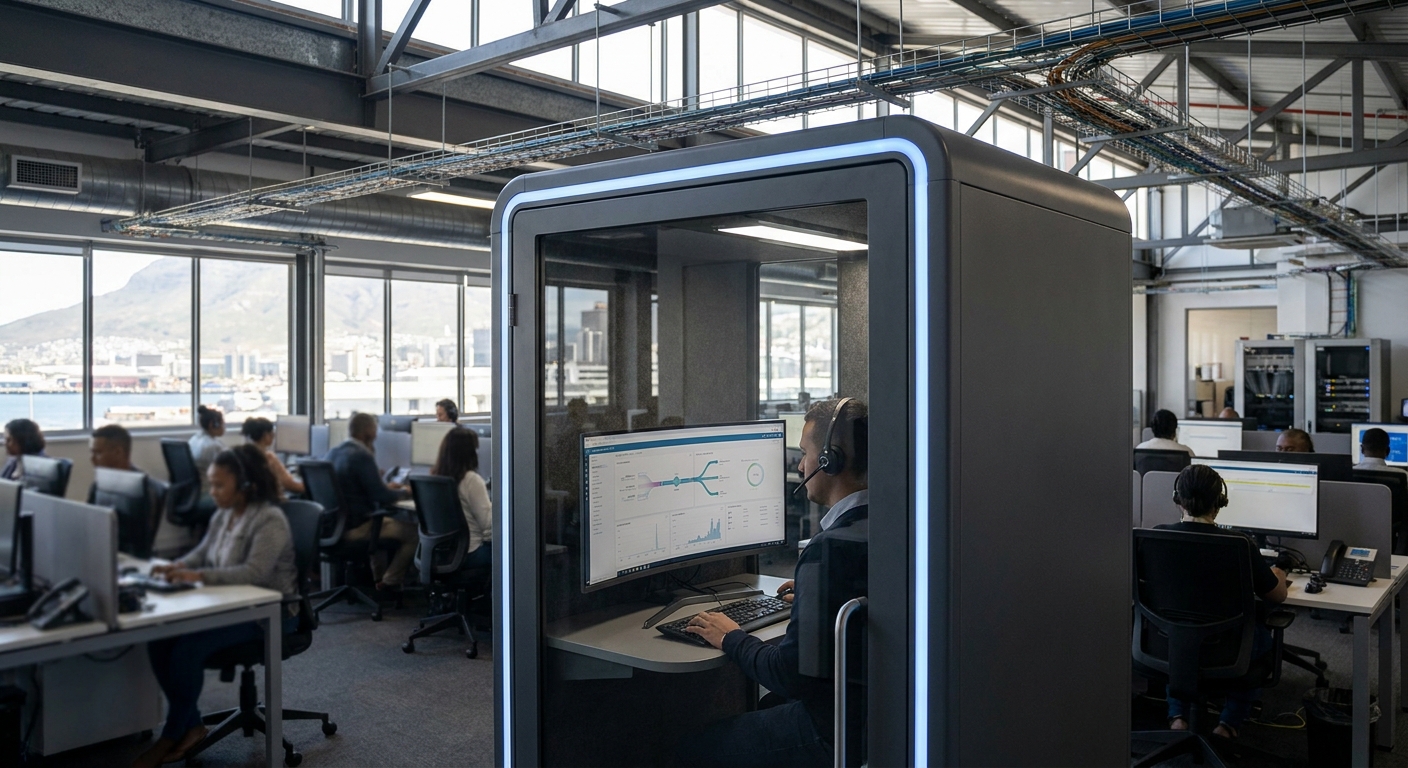
Agora Launches Infrastructure Updates to Enhance Real-Time Performance for Scalable Voice AI Agents

TL;DR
- Agora launches a platform to eliminate lag in conversational voice AI.
- New infrastructure utilizes an SDRTN to ensure sub-second response times globally.
- The platform features a no-code Agent Studio for rapid enterprise deployment.
- Integrated AI engine manages ASR, LLMs, and TTS for seamless voice interactions.
- Built-in voice locking and noise suppression improve reliability in noisy environments.
For years, the promise of voice-based AI has hit a frustrating wall: the "uncanny valley" of lag. We’ve all been there—the awkward silence, the robotic stutter, the feeling that you’re talking to a brick wall rather than a machine. On March 19, 2026, Agora, Inc. took a swing at those technical bottlenecks, rolling out a new Conversational AI Agent platform designed to make voice AI actually, well, conversational.
The goal here isn’t just to add another chatbot to the pile. It’s to fix the plumbing. By unifying a software-defined network, a centralized AI engine, and a no-code interface, Agora is trying to make deploying voice AI as simple as clicking a button—or at least, as simple as it should be for enterprise sales and support teams.
The Latency Problem
Why does voice AI still feel clunky? Usually, it’s the infrastructure. Real-time voice requires sub-second responses. If the data has to travel halfway around the world and back through a congested network, the "human-like" illusion shatters instantly.
Agora is betting on its Software-Defined Real-Time Network (SDRTN) to bridge that gap. By leaning on its existing infrastructure, the company aims to strip away the friction that has kept businesses from scaling these agents globally. It’s about speed, clarity, and, most importantly, reliability.
The Three Pillars of the Platform
The platform breaks down into three core components, each handling a different piece of the puzzle:
- Agent Studio: This is the "no-code" playground. It’s designed so that enterprises don't need a small army of engineers just to tweak a script. You build, you deploy, you move on.
- Conversational AI Engine: Think of this as the brain. It orchestrates the heavy lifting—Automatic Speech Recognition (ASR), Large Language Models (LLMs), and Text-to-Speech (TTS)—to ensure the AI doesn't just hear you, but actually understands the context of the conversation.
- SDRTN Infrastructure: This is the backbone. It handles the low-latency connectivity, but it also packs in some clever tricks like AI-driven noise suppression and "voice locking." If you’ve ever tried to talk to a voice assistant in a crowded airport, you know why this matters.
As analysts have pointed out, Agora removes barriers to scalable voice AI agents by effectively simplifying a stack that used to be a nightmare of fragmented integrations.

Real-World Impact: Service and Sales
Where does this actually get used? The obvious answer is customer service. We’re talking about the mundane, repetitive stuff: shipping updates, billing queries, and appointment reminders. But it’s also about knowing when to quit. The platform is built to hand off the conversation to a human agent the second things get too complicated for the machine to handle. This is a massive shift, especially as UK consumers call on AI to save broken customer service, signaling that people are finally ready to embrace automation—provided it actually works.
Then there’s the sales side. We’re seeing outbound tasks like lead qualification and debt collection being handed over to these agents. The early returns are surprisingly solid; FasesBI, for instance, reported a 10% conversion rate using these agents for survey recruitment. That’s not just "automation"—that’s a measurable bottom-line impact.
| Agent Category | Primary Functions | Key Benefits |
|---|---|---|
| Customer Service | Billing, shipping, troubleshooting | 24/7 availability, human escalation |
| Sales & Marketing | Lead qualification, debt collection | Scalable outreach, high conversion |
The Road Ahead: A 10-to-1 Ratio?
The timing of Agora’s conversational AI agent solutions is no accident. Market analysts are predicting a massive pivot in how companies manage customer relations. Gartner estimates that by the end of 2027, 70% of customer interactions will be handled by AI. Even more striking? By 2028, experts expect AI agents in the workplace to outnumber human sellers by a 10-to-1 margin.
That’s a staggering amount of traffic. If you’re an enterprise, you can’t just throw more servers at that kind of volume; you need a smarter architecture. Agora’s move to focus on noise suppression and environmental adaptability is a direct response to this. It’s not enough to have a smart AI; it has to be a robust one. It needs to work in a quiet office, a busy call center, or a noisy street corner.
The transition from human-led to agent-led isn't going to be a light switch; it’s going to be a gradual, often messy process. But by providing the tools to monitor, build, and deploy these agents in real-time, Agora is positioning itself as the plumbing for this new era.
Ultimately, the technology is maturing. The novelty of talking to a computer is wearing off, replaced by a demand for systems that are actually resilient. Whether this platform becomes the industry standard remains to be seen, but the focus on infrastructure over hype is a welcome change of pace. By standardizing the deployment process, the company is effectively lowering the barrier to entry, making it possible for more businesses to stop talking about AI and start actually using it.