
New Appinventiv Report Details Critical Biometric Authentication Risks in Enterprise AI Voice Cloning Systems

TL;DR
- Deepfake voice impersonation attacks have surged by over 300%.
- Traditional biometric systems are failing against synthetic audio threats.
- 70% of large enterprises are deploying voice AI, increasing risk exposure.
- Security requires a multi-layered, 'defense-in-depth' architecture.
- Protecting voice-assisted financial and operational workflows is now critical.
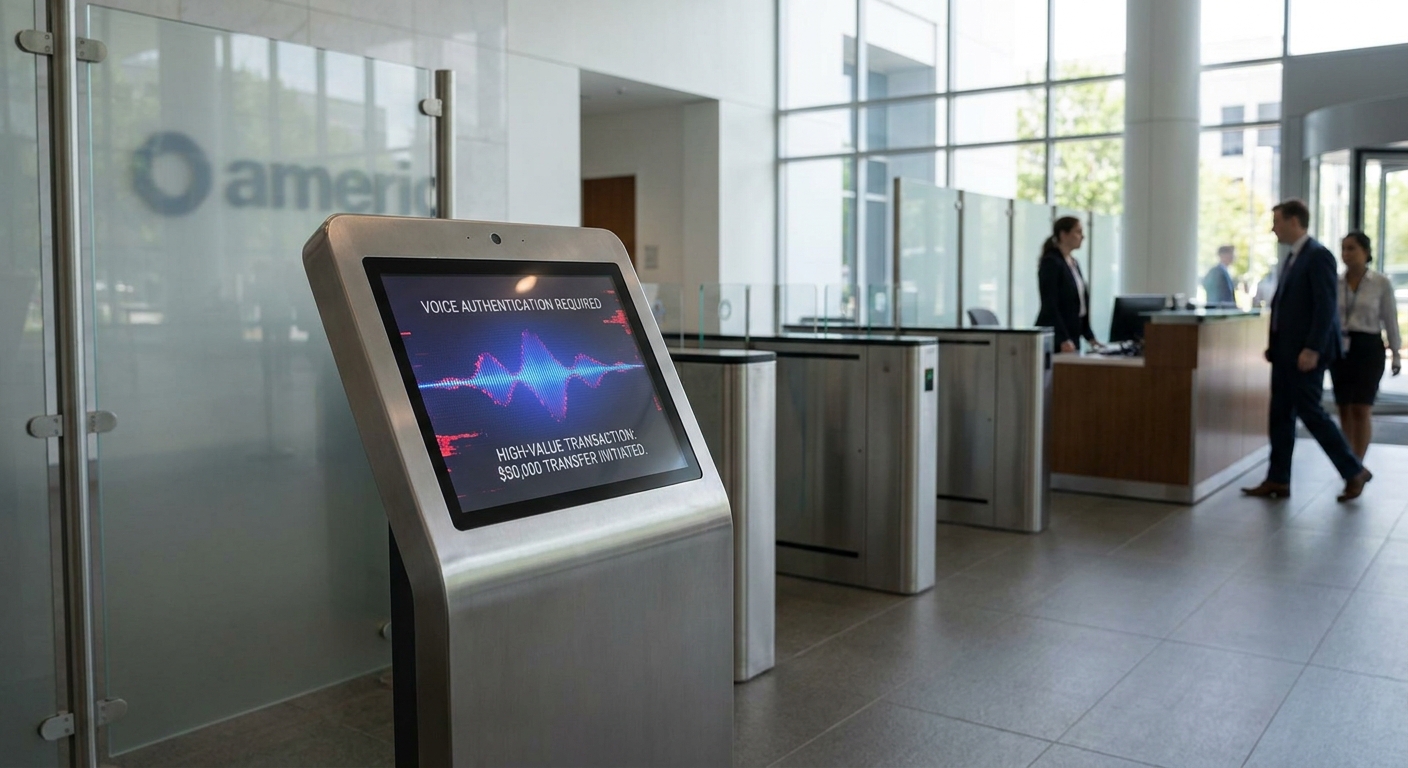
Voice AI has officially outgrown its "cute assistant" phase. We’ve moved past simple weather updates and calendar reminders; today, autonomous voice agents are handling high-stakes financial maneuvers and sensitive operational workflows. But there’s a catch—and it’s a big one. A new report from Appinventiv pulls back the curtain on a massive security blind spot: as these systems get smarter, they’re becoming prime targets for deepfake and voice impersonation attacks, which have spiked by over 300% in recent years.
The timing of this report is no coincidence. It mirrors the warnings found in the FIDO Alliance’s April 2026 publication, "The State of Biometric Security in the Age of AI Fraud." The message is blunt: traditional identity verification is crumbling under the weight of synthetic audio that can trick legacy systems with terrifying ease.
The Escalation of Voice AI Risk
It feels like every enterprise is racing to deploy conversational AI. With over 70% of large companies currently testing or running these systems, the push for efficiency is relentless. We see it everywhere—from AI agents in customer service streamlining support queues to voicebots in banking managing account inquiries.
But here’s the problem: the tech is moving faster than the security. We’ve hit a point where voice-assisted eCommerce transactions have ballooned to $19.4 billion—a fourfold increase in just two years. When these agents were just fetching information, a glitch was a nuisance. Now that they’re authorized to move money or update patient records, a glitch is a catastrophe. We aren't just talking about bad grammar anymore; we’re talking about systemic operational breaches.

The Five-Layer Security Model
If you’re running AI agents in enterprise environments, you can’t afford to rely on a single firewall. Security experts are pivoting toward a "defense-in-depth" architecture. Think of it like a castle—you need moats, walls, and guards at every gate. If you leave one layer of the voice AI stack exposed, you’re essentially leaving the front door unlocked for hackers.
To keep things airtight, security oversight needs to be granular. Here is where the battle is actually being fought:
| Layer | Primary Security Focus |
|---|---|
| Audio Input | Liveness detection and biometric verification |
| Speech-to-Text | Input sanitization and noise filtering |
| LLM Reasoning | Prompt injection and hallucination prevention |
| Text-to-Speech | Watermarking and synthetic output validation |
| Telephony/API | Authentication, encryption, and access control |
Benchmarking and Mitigation Strategies
Securing voice agent security isn't a "set it and forget it" task. It requires constant measurement. If you can’t track it, you can’t defend it. The FIDO Alliance makes it clear: as attackers get better at mimicking human biometric markers, your defensive benchmarks need to evolve just as quickly.
To keep your system from becoming a liability, you need to keep a close eye on these four metrics:
- False Acceptance Rate (FAR): How often is the system letting a fake user waltz in? If this number is climbing, your biometric gates are failing.
- Hallucination Rates: Is your LLM making things up? Malicious actors love to feed inputs that trigger these "hallucinations" to bypass safety protocols.
- Attack Success Rates: Run the simulations. If your deepfake tests are getting through, your security is purely theoretical.
- Runtime Compliance: Are your agents actually following the rules in real-time? You need automated monitoring that flags suspicious behavior the second it happens.
Closing the Biometric Gap
The era of trusting a voice just because it "sounds" like the user is over. Synthetic voice fraud has made standard voice recognition a relic. As noted in the FIDO Alliance report on biometric security and AI fraud, you need to stack your defenses. Multi-factor authentication (MFA) is no longer optional; it’s the bare minimum. You need non-biometric signals—like device metadata or behavioral patterns—to verify identity alongside audio.
The stakes are simple: the more power you give an AI agent, the more attractive it becomes to bad actors. We are seeing a necessary shift away from static voice recognition toward dynamic, context-aware systems capable of sniffing out the subtle, high-frequency artifacts that give synthetic audio away.
Building a secure future for voice AI isn't about stopping progress; it’s about making sure that when an agent executes a transaction, it’s actually the person it claims to be. It’s a game of cat and mouse, and for enterprises, the only way to win is to ensure your security framework is as sophisticated as the AI you’re deploying. As this tech matures, these security benchmarks won't just be "best practices"—they’ll be the cost of doing business.