
Google DeepMind Debuts Multilingual TTS Model Featuring Integrated SynthID Watermarking for Synthetic Voice Authentication

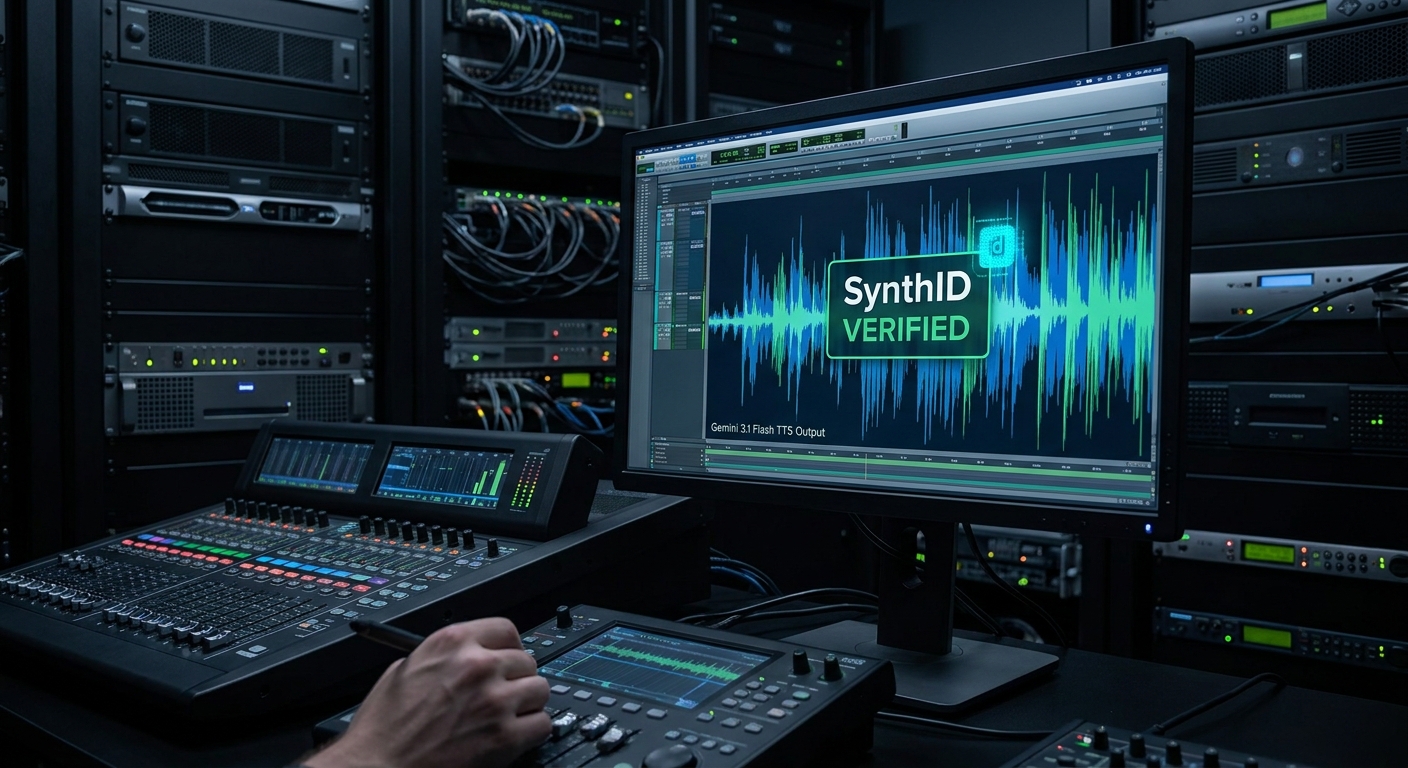
On April 15, 2026, Google pulled the curtain back on Gemini 3.1 Flash TTS. It’s a text-to-speech model that finally bridges the gap between "robotic" playback and genuine human expressiveness. By injecting this tech into its massive product ecosystem, Google isn't just chasing better audio—it’s trying to solve the "is this real?" crisis that’s been plaguing synthetic media.
For years, we’ve been stuck with speech synthesis that sounds, well, like a machine trying to read a grocery list. Gemini 3.1 Flash changes the math. It’s built to handle the subtle, messy parts of human language: the cadence, the emotional inflection, and the rhythm that makes a voice sound alive rather than just processed.
The Tech Behind the Voice
The architecture here is rooted in the official Gemini 3.1 Flash TTS announcement. What makes this iteration stand out isn't just the raw power; it’s the granular control. Previous models often felt like a black box—you fed them text, and you got a voice back, take it or leave it.
This model is different. As MarkTechPost noted in their breakdown of the launch, the real win is controllability. Developers can now tweak stylistic parameters on the fly without needing to spend weeks retraining the model or feeding it massive, specialized datasets. Whether you’re building a virtual assistant that needs to sound empathetic or an accessibility tool that requires crystal-clear, natural-sounding narration, the system adapts.

The "SynthID" Factor: Why It Matters
Here’s the kicker: Google has baked SynthID directly into the waveform. If you’ve spent any time tracking the rise of deepfakes, you know that verifying audio is a nightmare. Usually, watermarking is an afterthought—a layer slapped on top that can be stripped away with a bit of compression or some basic audio editing.
SynthID is different because it’s part of the generation process. It’s an imperceptible digital signature woven into the sound itself. Even if someone takes the output and runs it through a filter, converts the file format, or tries to hide the source, the watermark is designed to stick. In an era where AI-generated audio is becoming indistinguishable from a real human, this is a necessary line in the sand. It’s not just about making things sound good; it’s about making them accountable.
Under the Hood: Key Capabilities
Google is pushing this out across its services, and the technical objectives are clear: keep it fast, make it sound human, and keep it traceable.
| Feature Category | Objective | Implementation Method |
|---|---|---|
| Expressiveness | Natural prosody and cadence | Advanced neural pitch modeling |
| Controllability | User-defined vocal styles | Parameterized style tokens |
| Authentication | Synthetic media oversight | Integrated SynthID watermarking |
| Performance | Low-latency generation | Flash-optimized model architecture |
Beyond the specs, the operational reality of Gemini 3.1 Flash TTS comes down to four pillars:
- Multilingual Fluency: It’s not just for English. The model is tuned for high-fidelity output across a wide array of languages, ensuring the quality doesn't drop off when you switch locales.
- Near-Zero Latency: The "Flash" architecture is built for speed. If you’re using this for a conversational interface, you don't want to wait seconds for a response. This model is optimized to minimize the time-to-first-byte.
- Scalability: Whether it’s one person using a phone or an enterprise handling thousands of API requests, the backend is designed to hold up under pressure.
- Resilience: The SynthID watermark isn't fragile. It’s engineered to survive the real-world messiness of audio—noise, compression, and format changes.
Redefining Synthetic Audio
We are witnessing a shift in how we think about generative audio. For a long time, the industry was focused solely on "can we make it sound human?" Now, the question has shifted to "can we make it sound human and prove it’s AI?"
Gemini 3.1 Flash isn't just reading text; it’s interpreting semantic intent. It understands sarcasm, emphasis, and context-heavy sentence structures. It’s moving away from the "template" approach where every sentence is treated with the same flat, monotone delivery. Instead, it acts more like a performer, interpreting the text to produce a vocal performance that actually fits the mood.
This level of nuance is going to change the research landscape. We’re moving toward a future where "long-form" synthetic speech—like audiobooks or complex automated narrations—won't sound like a chore to listen to. It will sound like a conversation.
Looking Ahead
As Google continues to roll this out, expect to see it pop up everywhere: in your search results, your productivity apps, and the accessibility tools that millions rely on daily. The integration of SynthID is the most telling part of the strategy. It signals that Google is playing the long game, trying to establish a standard for how synthetic content should be labeled and tracked.
The tech community is already digging into the model to see how it holds up in the wild. Early reports suggest the watermark is remarkably stubborn, which is exactly what’s needed for platform-level moderation.
Ultimately, Gemini 3.1 Flash TTS represents the consolidation of Google’s audio research. It’s a balancing act: providing the high-performance tools developers crave while building in the guardrails required for a digital ecosystem that is increasingly skeptical of what it hears. By aligning creative output with digital provenance, Google is setting a new bar—not just for how AI sounds, but for how it behaves.