
Keywords Studios Report Outlines New Regulatory Frameworks for AI Voice Integration in Gaming Industry

TL;DR
- Keywords Studios report mandates ethical AI voice governance in gaming.
- Four pillars focus on oversight, talent rights, transparency, and risk.
- AI integration must augment, not replace, human performance and likeness.
- Operational transparency requires clear disclosure of AI-driven player support.
The gaming industry is hitting a wall—or, more accurately, a crossroads. We’ve spent the last few years sprinting toward AI-driven voice tech, treating it like a shiny new toy. But now that the novelty is wearing off, the hangover is setting in. How do you scale synthetic voices without losing the soul of a performance? How do you keep players happy without turning your support team into a digital ghost town?
Keywords Studios just dropped their latest report, The State of AI in Voice and Player Support, and it’s a wake-up call. The era of "let’s see what happens if we plug this in" is over. We’ve entered the age of the "Ethical Evolution of AI Voice in Gaming," a shift that’s less about what the tech can do and everything to do with what it should do.
It’s not just about efficiency anymore. It’s about survival. If developers don’t get a handle on data privacy, synthetic voice misuse, and the rights of the actors who actually build these worlds, they’re going to face a reckoning. The industry is finally waking up to the fact that speed without guardrails is just a recipe for a PR disaster.

The 2026 Playbook: Four Pillars of Governance
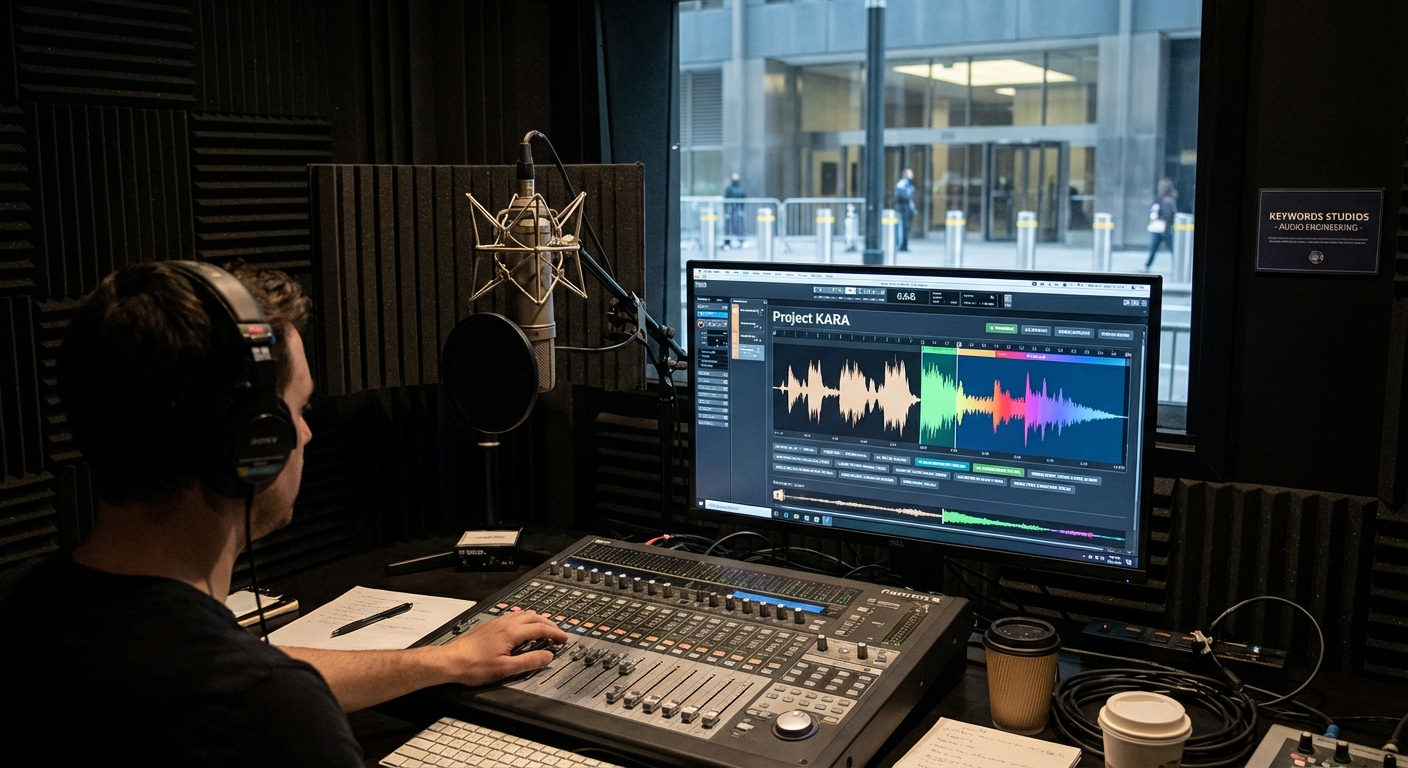
Transparency isn't just a buzzword here; it’s the bedrock. Take Project KARA, for instance. It’s become a bit of a blueprint for how to use high-tech tools while keeping human-centric design in the driver's seat. Keywords Studios argues that if you want to integrate AI without burning bridges, you need to build around four specific pillars:
- Ethical Oversight: We need mandatory "sanity checks" for every AI-generated voice asset. If it’s hitting a player's ears, it needs to be vetted against industry standards. No exceptions.
- Talent Preservation: This is the big one. AI should be a force multiplier for a human actor, not a replacement. We need ironclad protocols that lock down an actor's likeness and rights. If you’re augmenting a performance, the human still owns the performance.
- Operational Transparency: If a player is chatting with a bot, they deserve to know it. There’s no room for "uncanny valley" deception in support channels. Clear documentation and disclosure are non-negotiable.
- Risk Mitigation: Voice data is sensitive. Treating it like loose change is a liability. Studios need to lock down their pipelines to prevent unauthorized use, especially when you’re dealing with high-traffic player support.
These aren't just suggestions; they’re the findings detailed in the State of AI in Voice and Player Support. It’s a dense read, but it’s essential if you want to understand the friction points currently stalling development.
The Trade-offs: Where AI Actually Fits
It’s easy to get lost in the hype, but let’s look at the reality of where this tech is landing.
| Application Area | Primary Benefit | Regulatory Focus |
|---|---|---|
| Player Support | 24/7 responsiveness | Data privacy & transparency |
| NPC Dialogue | Dynamic, immersive experiences | Ethical content moderation |
| Localization | Real-time multilingual audio | Cultural nuance & accuracy |
| Voice Synthesis | Cost-effective scalability | Talent rights & consent |
Lessons from the Frontlines
Project KARA has been a massive learning laboratory. The takeaway? Stop trying to force AI into everything. When you treat it as a collaborative partner—someone—or something—that helps with the heavy lifting of localization rather than trying to mimic a lead actor, the results actually work. It’s about efficiency, not cutting corners on creative quality.
The report on the Ethical Evolution of AI Voice in Gaming makes one thing clear: reactive policy is dead on arrival. If you’re waiting for a problem to pop up before you define your ethics, you’ve already lost. The new standard is "ethics-by-design." You build the guardrails before you write the first line of code. That’s how you keep the player's trust.
Where Do We Go From Here?
We’re in a weird, transitional middle ground. The current state of AI is technically impressive but legally and ethically immature. We’re currently in the process of turning "oops, maybe we shouldn't have done that" moments into formal, codified policies.
These policies are going to dictate everything from how we cast voice actors for the next triple-A title to how we handle automated help desks. It’s a massive shift. The goal isn't to stop the train; it’s to make sure the tracks are actually laid down before we hit full speed.
The path forward is going to be messy. It requires constant monitoring, a willingness to pull the plug on tech that doesn't meet the bar, and a commitment to the people who make these games what they are. If the gaming industry can manage that, AI won't be a source of instability—it’ll be the engine that keeps the creative process moving forward. But that only happens if we stop treating ethics as an afterthought and start treating it as the main event.