TL;DR
- AI voiceover for healthcare training works for policy, software, procedure and SOP modules when a clinician or QA owner approves the pronunciation list and listens to every file.
On this page
AI voiceover for healthcare training works well for policy, software, procedure and SOP modules, and badly for consent, bad-news and crisis scenarios. The deciding factors are not the voice: they are an approved pronunciation list for drug and medical terms, and a named clinician or QA owner who listens to every file before release.
Last updated: October 16, 2026. Regulations and vendor documents below were read on their own pages on that date.
Use AI narration for policy, software, procedure and SOP modules. Build an approved pronunciation list first, generate one file per section, and have a clinician, pharmacist or QA owner listen to every file before release. Keep patient information out of scripts, and use a human for consent, bad-news and crisis scenarios.
Disclosure: Kveeky makes an AI voice generator. This guide is for L&D and clinical education teams in hospitals, clinics, pharmacies and pharma manufacturing who need narrated training they can update when a policy changes. Examples use US rules first; UK and other teams should check their own regulator's training requirements.
Is AI voiceover good enough for healthcare training?
It is good enough when the content is literal and the cost of an error is caught by review. Policy refreshers, software walkthroughs, procedure steps and SOPs fit. Anything that depends on empathy or judgment does not.
Pick the kind of module you are voicing. The verdict is our judgment, not a rule, and the review step it names is the minimum.
Healthcare policies change often, and re-recording a human narrator for a one-paragraph change is slow; a text script plus a regenerated section is a short edit. The risk is the reverse: generated audio carries errors until a person listens. That is why this guide treats review as the product and the voice as the cheap part.
For the general course method, see our e-learning voiceover guide; for why narration affects completion, read why students drop off your course.
How do you make a healthcare training voiceover, step by step?
Write and approve the script first, build the pronunciation list, test one voice on your hardest paragraph, generate one file per section, then review and record sign-off.
- Lock the script with the subject matter expert. Voice only approved text. Put a version number on the first line.
- Write for the ear. Spell out units and numbers the way they should be spoken, keep sentences under 25 words, and avoid reading on-screen text word for word.
- Build the pronunciation list. Every drug, device, acronym and procedure name gets an approved say-it-as entry (next section).
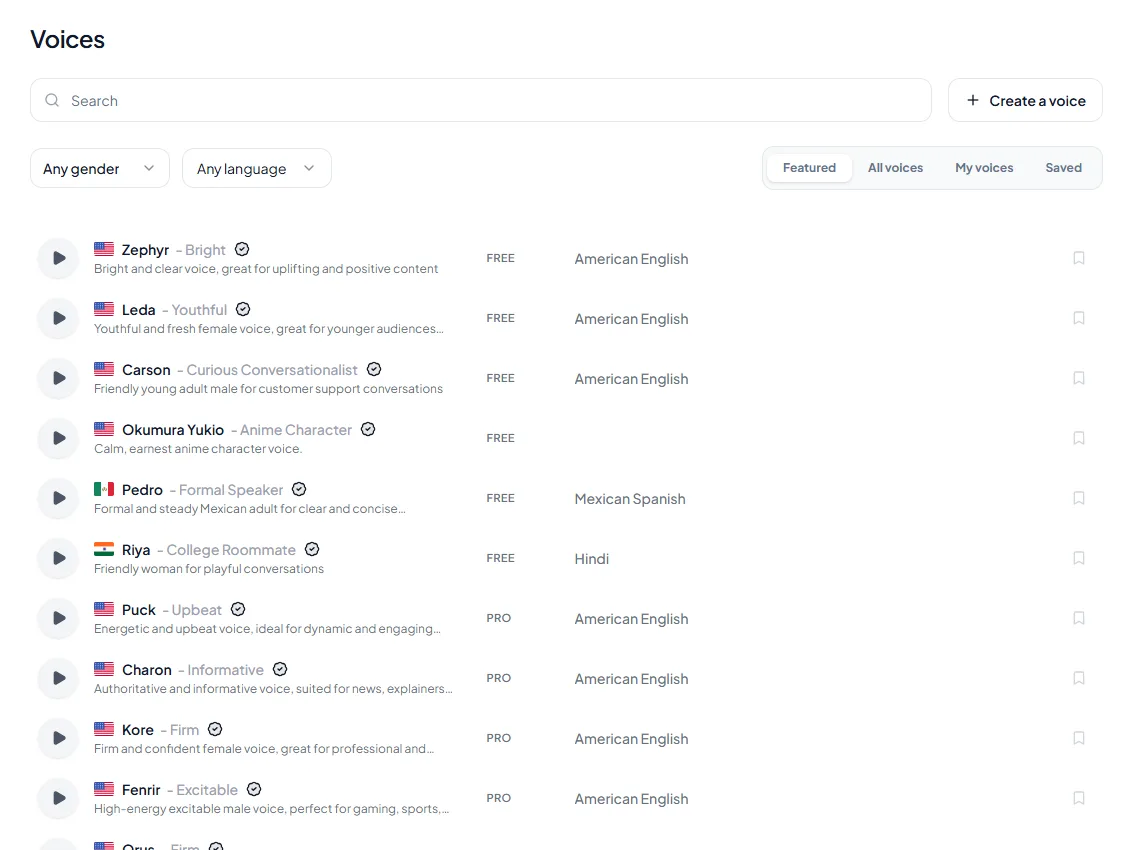
- Pick one voice and test the hardest paragraph. Filter the voice library by language, accent and gender, preview a few, and choose the one that stays clear on your densest paragraph.
- Generate section by section. One file per slide or section, named with the module ID and script version.
- Have the reviewer listen to every file. Not a sample. Use the script in hand and mark every mismatch.
- Regenerate, re-listen, record sign-off. Store the reviewer, date, script version and file names with the training record.
How do you get drug names and medical terms pronounced correctly?
Respell every risky term in the script, test it, and have a pharmacist or clinician approve the spelling.
Three practices keep it manageable:
- One list for the whole library. A term fixed in module 1 should sound the same in module 12. Keep one shared sheet of approved entries.
- Approval by a person who says the word daily. A pharmacist for drug names, a clinical educator for procedures, a QA lead for equipment and process names.
- Check look-alike and sound-alike pairs. Ask your pharmacist which terms in the script sound like another drug, unit or procedure, and make the difference audible with spacing and emphasis.
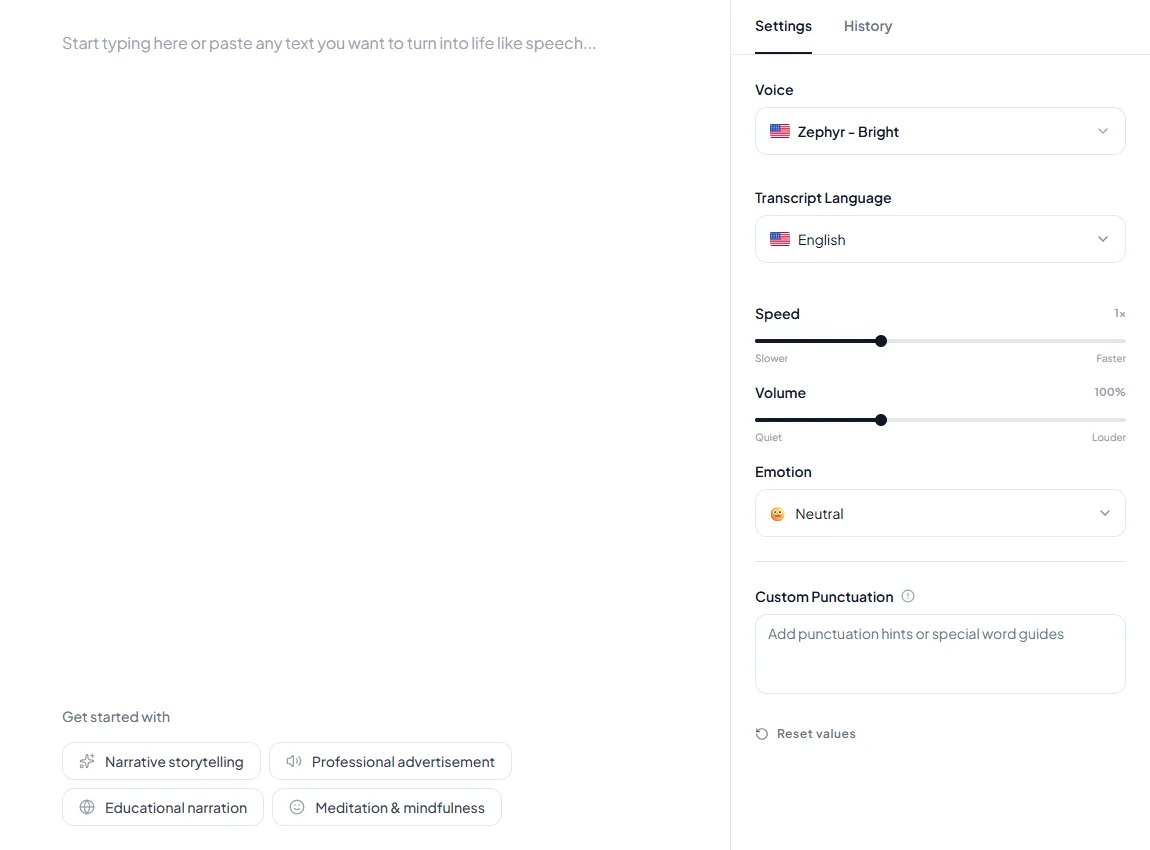
Tools differ in how you fix a word. The W3C speech standard (SSML 1.1) defines a phoneme element for a phonetic spelling and a sub element to speak different text than what is written. ElevenLabs documents pronunciation dictionaries and phoneme tags, and says phoneme tags work only on some models (ElevenLabs documentation, retrieved 2026-10-16). Kveeky's editor has a Custom Punctuation field for punctuation hints and special word guides; we have not verified that it accepts phonetic alphabets, so the dependable method there is plain respelling, tested by ear.
Paste it into a shared sheet, one entry per term. Nothing goes into a script until the Approved line is filled in.
Say it as (respelling): ____ (example: OSHA as OH-shuh)
Syllable stress: ____ (capitals on the stressed syllable)
Source of the pronunciation: ____ (pharmacist, clinician, internal style guide)
Sounds like another term? ____ (look-alike or sound-alike drug, unit or procedure)
Approved by / date: ____
Tested in voice / settings: ____ (voice name, speed, date)
Worked example: if "rivaroxaban" comes out with the wrong stress, try "riv-uh-ROX-uh-ban" in the script, generate that one sentence, and listen. Once the pharmacist approves the spelling, it goes on the list for every later module. For pacing and pauses in dense sentences, see 5-minute fixes for a robotic AI voice.
Who should review and sign off healthcare training audio?
Three roles cover it: an author who owns the script, a clinical or technical reviewer who listens, and a compliance owner who files the record. The reviewer should never be the script author.
| Role | Owns | Signs off |
|---|---|---|
| Author (L&D) | Script text, version number, section files | Script ready for review |
| Clinical or technical reviewer (nurse educator, pharmacist, QA specialist) | Accuracy of terms, numbers and sequence | Listened to every file, pronunciation list approved |
| Compliance or training owner | Training record, retention, annual refresh date | Module released, audio files and version stored |
Tick each step when it is true for your module. Your ticks stay in this browser only.
When a policy changes, update the script, regenerate only the changed sections, repeat steps 5 and 6 for those files and file the new version.
What rules shape healthcare and pharma training narration?
The rules regulate who is trained, how often and what is documented, not who narrates. AI narration does not change those duties. These are the primary-source rules most often cited for this kind of training.
| Rule | What it says | What it means for narrated modules |
|---|---|---|
| HIPAA Privacy Rule, 45 CFR 164.530(b) and (j) | A covered entity must train all workforce members on its PHI policies, new members within a reasonable time, and members affected by a material policy change. Training must be documented, and records kept for six years. | Keep a record per learner and per script version. A cheap regenerate-and-retrain loop suits policy changes. |
| OSHA bloodborne pathogens, 29 CFR 1910.1030(g)(2) | Training at initial assignment and at least annually. Material must be appropriate in content and vocabulary to the educational level, literacy and language of employees. Training must include an opportunity for interactive questions and answers with the person conducting it. | A narrated video is the content, not the whole session. Add a live Q&A contact, and offer a language version where staff need it. |
| FDA drug CGMP, 21 CFR 211.25(a) | Training in current good manufacturing practice must be conducted by qualified individuals, on a continuing basis and with sufficient frequency. | Your qualified trainer and QA owner still own the training. Narration is the delivery format, and QA approves the script version. |
| WCAG 2.2, success criterion 1.2.2 (Level A) | Captions are provided for all prerecorded audio content in synchronized media. | Publish captions or a transcript with every narrated video. Generate them from the approved script, not from the audio. |
This table is not legal advice. Your privacy officer and regulatory team decide what applies to you.
Is it safe to put patient information in a text-to-speech script?
No. Keep protected health information out of training scripts entirely. Use fictional or composite cases, and change names, dates and details so no real patient can be identified.
If a workflow ever needs real patient data, ask your privacy officer about the vendor contract first. Voice cloning of a real clinician needs their written consent, and Kveeky's cloning features depend on your plan, so check the pricing page rather than assuming. Our guide on commercial rights by plan shows what each plan allows for audio you publish, and Is AI voice safe? covers misuse and consent.
How much does AI voiceover for healthcare training cost?
For a typical onboarding series, one month of a mid-tier plan covers it: the cost driver is regeneration after review, not the first pass.
Enter the finished narration for the whole project, your speaking pace and how many lines you expect to regenerate after review. Plan allowances are the minutes on the Kveeky pricing page, checked October 16, 2026.
| Kveeky plan (monthly billing) | Price | Minutes per month |
|---|---|---|
| Free | $0 | 0.67 (500 credits, no credit card) |
| Basic | $9 | 100 |
| Pro | $19.99 | 133 |
| Premium | $29 | 200 |
| Business | $99 | 1,000 |
Worked example: 12 onboarding modules of 8 minutes each is 96 finished minutes. At 130 words per minute that is about 12,480 words. With 40 percent regeneration you generate about 134 minutes, which is just above Pro (133 minutes), so Premium at $29 for the build month fits. After release, a policy edit touching 2 modules needs only minutes of regeneration, so a smaller plan covers maintenance. For per-video numbers, see what AI voiceover costs per video.
How do you voice healthcare training in more than one language?
Generate each language from a script that a native-speaking clinical reviewer has approved, and only where the language has voices. Machine translation nobody has read is a patient safety risk, not a shortcut.
Check the language page first: Spanish text to speech shows what Kveeky offers, and the American English and British English pages help US and UK teams pick an accent that matches the audience (drug names and units differ between the two, so review separately). For the localization workflow itself, read multilingual voiceover with AI.
Open what you need.
How long should a healthcare training script be?
What do I write for a number, a dose or a unit?
What if the voice mispronounces an approved term?
Can I use the free plan for a real module?
Frequently asked questions
Can AI voiceover be used for healthcare training videos?
Yes, for policy, software, procedure and SOP modules, as long as a clinician or QA owner reviews the script and listens to the audio. Use a human for consent, bad-news and crisis scenarios.
How do you fix wrong drug-name pronunciation in an AI voice?
Respell the name in the script (for example in syllables with the stressed syllable in capitals), regenerate that section and listen again. Keep every approved respelling in a shared pronunciation list so later modules reuse it.
Is it safe to put patient information in a text-to-speech script?
No. Write training scripts with fictional or composite cases and keep patient information out of the text. If a workflow ever needs real patient data, confirm the vendor's contract terms with your privacy officer first.
Does AI narration satisfy HIPAA or OSHA training rules?
The rules cover who is trained, how often and what is recorded, not who narrates. OSHA's bloodborne pathogens standard also requires an opportunity for interactive questions and answers with the trainer, which a narrated video alone does not provide.
How much does AI voiceover for a training library cost?
A 96-minute onboarding series with 40% regeneration needs about 134 generated minutes, which fits Kveeky's Premium plan at $29 a month on monthly billing (checked October 16, 2026).
Can the same training be voiced in Spanish and English?
Yes, where the language has voices. Generate each language from a script a native-speaking clinical reviewer has approved, rather than from a machine translation nobody has read.
How we checked this guide
This guide is written by Hitesh Kumawat for the Kveeky team. Disclosure: Kveeky makes an AI voice generator. No Kveeky usage data is used. We ran no listening tests on drug-name accuracy, so we make no claim about how well any voice pronounces any term. The pace of 130 words per minute for dense clinical content, the 30 to 50 percent regeneration allowance and the module verdicts are our planning judgments.
- HIPAA training requirement and documentation: 45 CFR 164.530, eCFR, retrieved 2026-10-16.
- Bloodborne pathogens training: 29 CFR 1910.1030, OSHA, paragraphs (g)(2)(ii), (vi) and (vii), retrieved 2026-10-16.
- Drug CGMP personnel training: 21 CFR 211.25, Cornell LII, retrieved 2026-10-16.
- Captions for prerecorded audio: WCAG 2.2 Understanding SC 1.2.2, W3C, retrieved 2026-10-16.
- Phoneme and sub elements: Speech Synthesis Markup Language 1.1, W3C, retrieved 2026-10-16.
- Pronunciation dictionaries and phoneme tag support: ElevenLabs text to speech best practices, retrieved 2026-10-16.
- Kveeky plans, minutes and free plan: kveeky.com/pricing, retrieved 2026-10-16. Kveeky editor settings and voice library: the Kveeky app, free plan, observed October 15, 2026.
- Current top-ranking pages reviewed for gaps (not used as sources): Guidde's training-video voice guide and a human voiceover studio's healthcare procedure guide, both read 2026-10-16.
Your next step: take one approved module, list every drug and device name in it, and have your pharmacist or educator approve a say-it-as entry for each before you generate anything.
Keep reading: E-learning voiceover guide · Why students drop off your course · Accessible course design · Fix a corporate training voiceover · Multilingual voiceover with AI · AI voiceover cost per video · Kveeky language pages
Turn your script into a voiceover
Paste your text, pick a voice and download the audio. Free to start, no credit card.