Matching AI Voice Tone to Your Niche: Gaming vs. Finance vs. Self-Help

TL;DR
- ✓ Generic AI voices destroy viewer trust and signal low quality to your audience.
- ✓ Your voice is a core brand asset that directly impacts your video retention metrics.
- ✓ Gaming niches require high-energy voices while finance demands a steady and stable tone.
- ✓ Self-help content relies on empathic prosody to build a genuine connection with viewers.
- ✓ Choose agentic voice systems that offer control over micro-inflections and situational prosody.
The right AI voice tone depends on what your viewers came for. Gaming needs a fast, energetic voice with punchy delivery. Finance needs a calm, steady, lower-pitched voice that sounds trustworthy. Self-help needs a warm, slower voice with room to breathe. Match the tone to the niche first, then fine-tune speed, pitch and emotion.
Last updated: October 7, 2026.
This guide is for faceless YouTube channels, short-form creators and small brands choosing a voice for a series. It gives you a niche-by-niche matrix, settings to try and the mistakes that make a good voice sound wrong for the audience.
Key Takeaways
- Tone is a fit question, not a quality question. A great voice in the wrong niche still sounds off.
- Gaming: high energy, fast pace, short punchy lines and lots of pitch movement.
- Finance: calm, measured pace, steady pitch and no hype.
- Self-help: warm, slower pace, longer pauses and a personal tone.
- Keep one voice per series. Switching voices midway confuses viewers unless it's a deliberate creative choice.
On this page: Why tone matters · Niche matrix · Gaming · Finance · Self-help · Character voices · Script style · Testing · Influencer voiceovers · FAQ
Why does AI voice tone matter for your niche?
Viewers decide quickly whether a video feels right for them, and the voice is a big part of that first impression. A tone that clashes with the topic makes the content feel cheap or untrustworthy.
A hyperactive voice on a serious money video sounds like a scam. A slow, soft voice on a fast gaming montage sounds bored. Neither is a bad voice; each is in the wrong place.
Your voice also becomes part of your brand. When viewers hear the same tone every week, they start to link it with your channel. That's why it pays to choose carefully before you publish the first video.
AI voice tone by niche: the quick matrix
Use this matrix as a starting point. Every voice is different, so treat the settings as directions, not exact values.
| Niche | Tone | Pace | Pitch | Script style |
|---|---|---|---|---|
| Gaming | Energetic, playful | Fast | Higher, lots of movement | Short, punchy lines |
| Finance | Calm, confident | Moderate, steady | Lower, stable | Clear, plain, numbers spelled out |
| Self-help | Warm, empathetic | Slow, varied | Mid, soft | Longer, flowing sentences |
| Tech tutorials | Friendly, clear | Moderate | Mid, neutral | Step-by-step, short |
| Documentary and true crime | Serious, measured | Slower | Lower | Vivid but restrained |
| Kids and stories | Bright, expressive | Moderate | Higher, varied | Simple words, clear pauses |
| Customer service and reception | Friendly, patient | Moderate, unhurried | Mid | Short, polite, one idea per line |
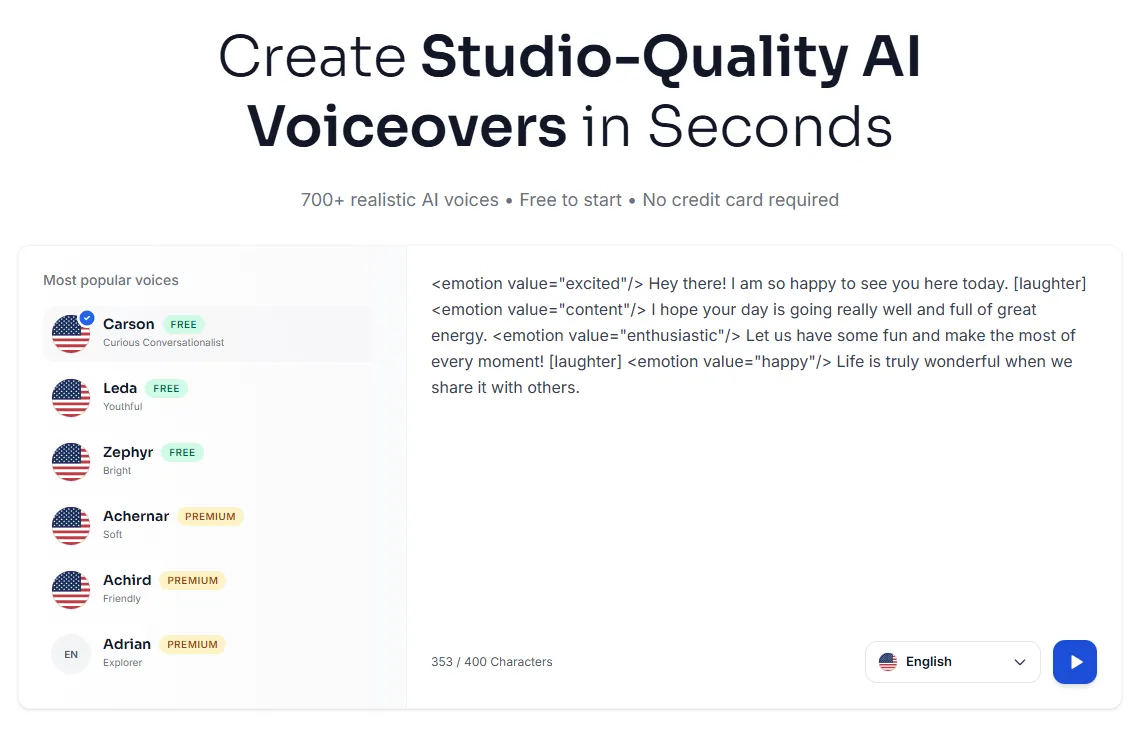
In Kveeky, you can browse 700+ AI voices, then adjust tone, pitch and speed. Emotion tags such as <emotion value="excited"/> change the energy of a single line.
How to set an AI voice tone for gaming content
Gaming viewers expect energy. Your voice should feel like it's inside the action, not reading over it.
- Choose a bright, energetic voice. Look for a voice that already sounds excited in its preview.
- Speed it up slightly. A little faster than default keeps up with quick edits.
- Use excitement on purpose. Tag the clutch play or plot twist with an excited emotion, not every line.
- Write short lines. "He's down. One left. Here we go!" works better than one long sentence.
- Cut to the beat. Generate the voice first, then line up your edits with its rhythm.
Don't push energy so high that it becomes tiring. A 10-minute video at full volume wears viewers out, so let calmer moments breathe.
What AI voice tone works best for finance?
A calm, steady voice with a lower, stable pitch works best for finance. Viewers want to feel the speaker is careful and confident, not selling something.
- Skip the hype. Fast, excited delivery makes money content sound unreliable.
- Slow down for numbers. Read key figures a little slower, and write them the way you'd say them.
- Use a confident, even tone. Keep pitch movement small, and let sentences fall at the end.
- Pause after the main point. Give viewers a second to take in the figure before you explain it.
A calm voice keeps attention on the data, not the delivery. If the read still sounds stiff, our checklist on how to make an AI voiceover sound less robotic covers the quick fixes.
How to sound warm and empathetic for self-help
Self-help feels like a one-on-one conversation. The voice should sound like a friend across the table, not a machine reading a ledger.
- Go slower. A fast voice sounds impatient, which is the opposite of what a mentor should sound like.
- Add longer pauses. Give the listener room to think after an important line.
- Use a warm or calm emotion. Keep it gentle; too much emotion sounds forced.
- Talk to "you". Direct, personal sentences feel warmer than general statements.
Pauses do most of the work here. See our guide to pacing, pauses and emphasis for exact techniques.
How to match tone for character and anime voices
Character content needs the voice tone to match the character's personality. A calm, deadpan detective needs a quiet, even, low-energy delivery with flat pitch and deliberate pauses. An excitable sidekick needs the opposite: fast, bright and full of pitch jumps.
Describe the character in 3 words first, such as "calm, flat, precise". Then pick a voice and settings that match those words. Browse our library of character and anime AI voices for starting points.
Fan content with recognizable characters can raise rights questions if you monetize it. Treat it as fan content, and check the platform's rules.
How should your script change with the voice tone?
Your script is the sheet music, and the voice is the instrument. The same words can fight the voice if the sentence lengths don't match its pace.
| Voice tone | Sentence length | Punctuation | Example |
|---|---|---|---|
| Energetic (gaming) | Very short | Periods, the odd exclamation mark | "Last round. No shields. Let's go!" |
| Calm (finance) | Medium | Commas and periods | "Rates rose this month. Here's what that means for your savings." |
| Warm (self-help) | Longer, flowing | Commas, ellipses, line breaks | "Take a breath... you've already done the hardest part, which was starting." |
Long, winding sentences make an energetic voice sound breathless. Very short, choppy lines make a warm voice sound cold. Match sentence length to pace.
How to test a voice tone before you commit
Test before you publish the first episode, because changing voices later is harder.
- Pick 3 candidate voices that roughly fit your niche.
- Write a 30-second test script from a real episode, including your hook.
- Generate all 3 with the same script and similar settings.
- Listen on a phone, where most viewers will hear it.
- Ask 2 or 3 people from your audience which voice fits the channel best.
- Lock the voice and settings in a note, so every episode sounds the same.
To keep that voice consistent across a whole channel or brand, read our guide to voice customization for video producers.
Common voice tone mistakes
- The monotone trap. A voice that stays at one pitch for 10 minutes is easy to tune out. Use emotion and pacing to create variety.
- Over-processing. Heavy compression or "radio" filters make AI voices sound unnatural. Keep effects light.
- Hype everywhere. If every line is excited, nothing stands out.
- Switching voices midway. Viewers link a voice with your channel. Change it only for a clear creative reason.
- Ignoring the language. If you publish in several languages, test the tone in each one, because energy reads differently across languages.
Influencer voiceovers: quick answers to common questions
Creators and brands running influencer campaigns ask the same tone questions. Here are short answers that build on the matrix above.
What is the influencer voice?
The influencer voice, also called "TikTok voice" or influencer speak, is a speaking style common among creators. NPR describes it as a mix of uptalk, where statements rise at the end like questions, and vocal fry, a low, creaky sound (NPR, "Do you have 'TikTok voice'? It's OK if you don't want to get rid of it", January 31, 2024, retrieved 2026-10-07). For an AI voiceover with a similar casual feel, pick a bright, relaxed voice and write short, chatty lines, but don't copy a real creator's voice without permission.
Why are voiceovers important for influencer videos, and do they make content more relatable?
A voiceover lets a creator talk straight to the viewer while the screen shows the product, the place or the routine. That feels like a friend explaining something, not an ad reading a list. Relatability comes mostly from the script: first person, plain words and one honest detail, such as "I almost sent this back." Add captions too, for viewers who watch with the sound off.
How do you choose the right voiceover for an influencer campaign?
Start with the creator. If their own voice is part of why people follow them, have them record or approve the voiceover, and never clone their voice without written consent. If you use an AI voice, match it to the creator's niche with the matrix above and test 2 or 3 voices on the real script. Keep the sponsorship disclosure in the video itself: the FTC says viewers are more likely to notice disclosures made in both audio and video (FTC, Disclosures 101 for Social Media Influencers, retrieved 2026-10-07).
What's the best tone for influencer voiceovers?
Conversational and warm, with energy that fits the niche: brighter for beauty, gaming and lifestyle, calmer for money, health and learning. It should sound like one person talking to one viewer, not an announcer. Lift the energy on the hook and the reveal, then settle down so the call to action sounds sincere. In Kveeky, that usually means a casual voice at default or slightly faster speed, with an excited emotion tag on the hook only.
How do influencers use voiceovers for storytelling?
Most story-led creator videos follow a simple voiceover arc: a hook that names the problem or surprise, 2 or 3 short beats, a reveal and one takeaway. The voice carries the story while the clips show it, so cut the video to the voice, not the other way round. A pause before the reveal does more than extra words. Our AI voiceover script guide shows how to write each beat for the ear.
How can voiceovers boost influencer branding?
A consistent voice works like a sound logo. The same voice, the same opening line and the same sign-off make a channel recognizable before the face or logo appears. Keep one voice per series, save its settings and keep a short list of catchphrases and pronunciations. Our brand voice guide template for AI voiceovers turns those choices into a 1-page document.
Frequently asked questions
Which AI voice tone is best for building trust in finance?
A calm, steady voice with a lower, stable pitch and a measured pace. Avoid hype and fast delivery, which can make money content feel unreliable.
What voice tone works best for gaming videos?
An energetic, bright voice with a slightly faster pace and lots of pitch movement. Use short lines and save the most excited delivery for big moments.
Can I switch AI voices midway through a series?
You can, but it usually confuses viewers who link the voice with your channel. Switch only for a clear creative reason, and tell your audience if it's permanent.
What tone should a friendly receptionist or phone voice have?
A warm, patient tone with a mid pitch and an unhurried pace. Keep each line short, with one idea per sentence, so callers can follow easily.
How do I keep the same AI voice tone across every video?
Write down your voice, speed, pitch and emotion settings, and reuse them for every episode. Test new scripts against an older episode before you publish.
How we checked this guide
This guide is written by Govind Kumar for the Kveeky team. Disclosure: Kveeky makes an AI voice generator. The tone matrix is editorial guidance from common voiceover practice, not the result of a measured study.
- Kveeky features come from kveeky.com, retrieved October 7, 2026.
- The description of the influencer voice comes from NPR, published January 31, 2024, retrieved 2026-10-07.
- The disclosure rule comes from the FTC's Disclosures 101 for Social Media Influencers, retrieved 2026-10-07.
- No external statistics are used, and no Kveeky usage data is used in this guide.
Your next step: write a 30-second test script from your next episode and run it through 3 voices that fit your niche's row in the matrix. If you're starting a faceless channel, see how creators set up AI voiceover for YouTube videos, and use emotion control in AI voiceovers to fine-tune key lines.