Turning One Webinar Into 10 Short-Form Videos With AI Voice

TL;DR
- ✓ Transform one long webinar into ten high-value short-form video assets using AI.
- ✓ Leverage content atomization to feed structured data into AI search engines for visibility.
- ✓ Use semantic extraction to identify the most engaging segments from your webinar transcripts.
- ✓ Enhance your brand authority by creating query-responsive content for modern AI search tools.
To repurpose webinar content into short-form videos, start from the transcript, not the recording. Mark the 10 strongest moments, cut each into a 30 to 90 second clip, and add captions. Use an AI voice where the original audio can't carry the clip: a new hook, a short recap, or narration over slides.
Last updated: October 6, 2026. We rewrote the workflow and removed statistics and tool claims we could not verify.
This guide is for marketers, founders and educators who run webinars and want more from each one. It covers how to pick 10 clips, how to cut them, where AI voice helps and how to publish them.
Key Takeaways
- Work from the transcript. It's faster to scan text for strong moments than to scrub through an hour of video.
- Use a 10-clip mix: 2 hooks, 4 Q&A answers, 3 how-to segments and 1 summary with a call to action.
- Keep the speaker's real voice when you can. Use AI voice for new intros, recaps and slide narration.
- Get consent before cloning anyone's voice, including guests and co-hosts.
- Make each clip stand alone. Add a one-line context hook so viewers understand it without the full webinar.
On this page: Why repurpose · Workflow · Pick 10 clips · Where AI voice helps · Captions and descriptions · FAQ
Why repurpose webinar content into short-form videos?
A webinar is an hour of expert answers, but most people never watch the full recording. Short clips put the best answers where people already watch: LinkedIn, YouTube Shorts, Instagram Reels and TikTok.
Each clip answers one question or makes one point. That makes it easier to share, easier to find and easier for viewers to act on.
The workflow: from 1 webinar to 10 clips
- Get the transcript. Most webinar and meeting tools can export one, or you can generate it with a transcription tool.
- Mark strong moments. Highlight clear answers, surprising points and short stories. Note the timestamps.
- Choose 10 clips using the mix below.
- Cut each clip to 30 to 90 seconds. Start on the first strong sentence, not on "So, um".
- Fix weak audio or add context with an AI voice where needed.
- Add captions and a title card, then export in vertical and square formats as needed.
- Schedule the clips across the following weeks.
If you produce several webinars' worth at once, the same steps work in batches. See our guide to batch-producing 30 videos in a weekend.
How to pick the 10 best moments
Use this mix so your clips cover different jobs, from grabbing attention to driving action.
| Clip type | How many | What to look for |
|---|---|---|
| Hook | 2 | A bold claim, a myth you corrected or a surprising number you can source |
| Q&A answer | 4 | Audience questions with a clear, direct answer |
| How-to | 3 | One framework, process or demo explained in steps |
| Summary and call to action | 1 | A 30 to 60 second recap that points to the full recording or next step |
Tip: check where chat activity or questions spiked during the live session. Those moments usually make the strongest Q&A clips.
Where AI voice helps in webinar clips
Your speakers' real voices are the main asset. AI voice fills the gaps around them.
- New hooks and intros. Add a 3 to 5 second voiced line that sets up the clip: "Here's why most onboarding emails fail."
- Recap clips. Voice a short summary over slides or B-roll when the original explanation was too long to cut down.
- Narrated slide clips. Turn one slide section into a narrated clip with a clean voiceover.
- Translated versions. Voice a translated script for viewers in another language, after a native speaker checks it.
- Weak original audio. If a section is too noisy to use, re-voice a summary of what was said and label it clearly.
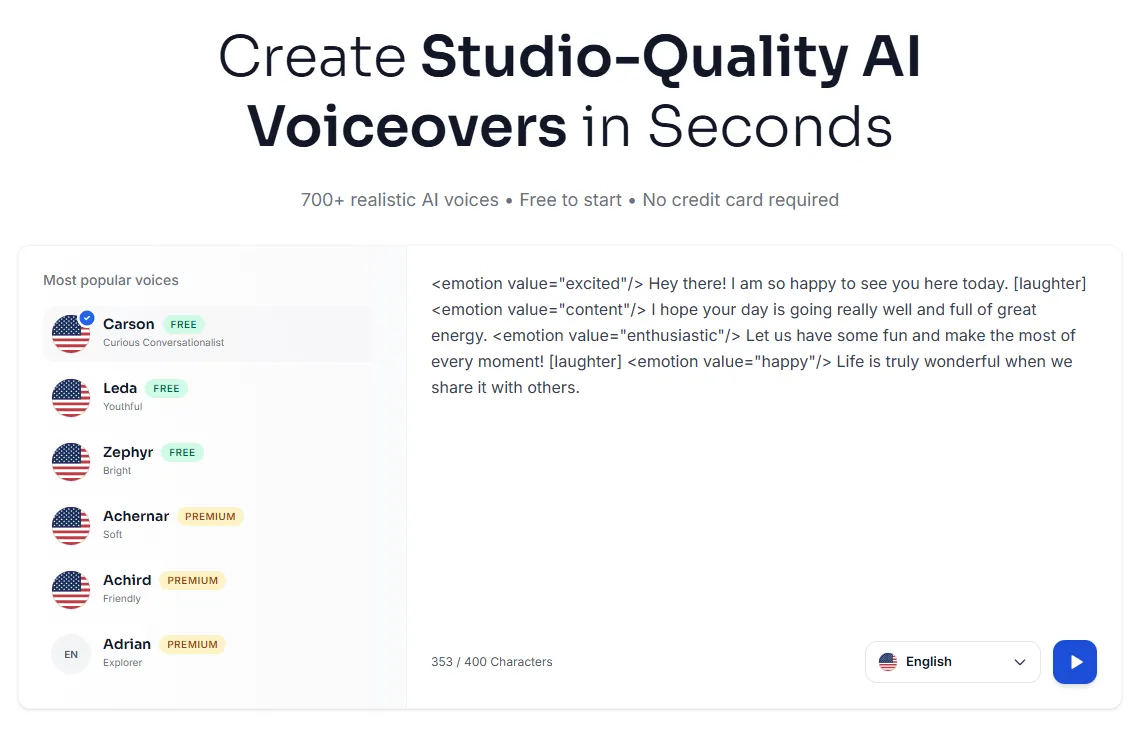
In Kveeky, you write the line or script, pick one of 700+ voices in 40+ languages, and download an MP3 or WAV. You can also create a voice clone of your own voice (5 clones even on the free plan) so new lines match the host. Only clone a voice with that person's clear permission.
Short voiced lines still need good writing. Our guide to scriptwriting for AI voiceover covers pacing and pronunciation. If your webinar came with a slide deck or report, AI chat with PDF tools can help pull key points for recap scripts.
Write captions and descriptions that stand alone
Each clip will be seen by people who never saw the webinar. Give them context in the first line.
- Open with the question or problem the clip answers.
- State the answer in one sentence in the description, then add the speaker's name and role.
- Add on-screen captions for viewers watching with the sound off.
- Link to the full recording for people who want more.
Not sure whether a voiced hook beats the speaker's original opening? Test 2 voiceover styles on the same clip before you roll it out to the rest.
Frequently asked questions
How many short videos can you get from one webinar?
A 60-minute webinar usually has enough strong moments for about 10 clips. Use a mix of hooks, Q&A answers, how-to segments and one summary clip.
Is it OK to use AI voice in webinar clips?
Yes, for new intros, recaps and narration you write yourself. Only clone a real person's voice with their clear permission, and label AI-generated audio where a platform or your audience expects it.
How long should each webinar clip be?
Most clips work at 30 to 90 seconds. Start on the first strong sentence and end right after the key point.
How do I choose which webinar moments to clip?
Scan the transcript for clear answers, surprising points and short stories. Moments where the live chat or questions spiked are often the strongest.
Should I edit the speaker's original audio with AI?
Keep original audio when it's clear. If a section is too noisy, re-voice a short summary instead of rewriting what the speaker said, and make it clear that the recap is narrated.
How we checked this guide
This guide is written by Deepak Gupta for the Kveeky team. Disclosure: Kveeky makes an AI voice generator.
- The 10-clip mix and workflow are editorial recommendations, not results from a measured study.
- Kveeky features (700+ voices, 40+ languages, voice clones including 5 on the free plan, MP3 and WAV export) come from Kveeky pricing and kveeky.com, retrieved 2026-10-06.
- No Kveeky usage data is used in this guide.
Next step: export the transcript from your last webinar, highlight 10 moments using the table above, and voice one new hook to test. For slide-based clips, see our page on AI voiceover for presentations.